


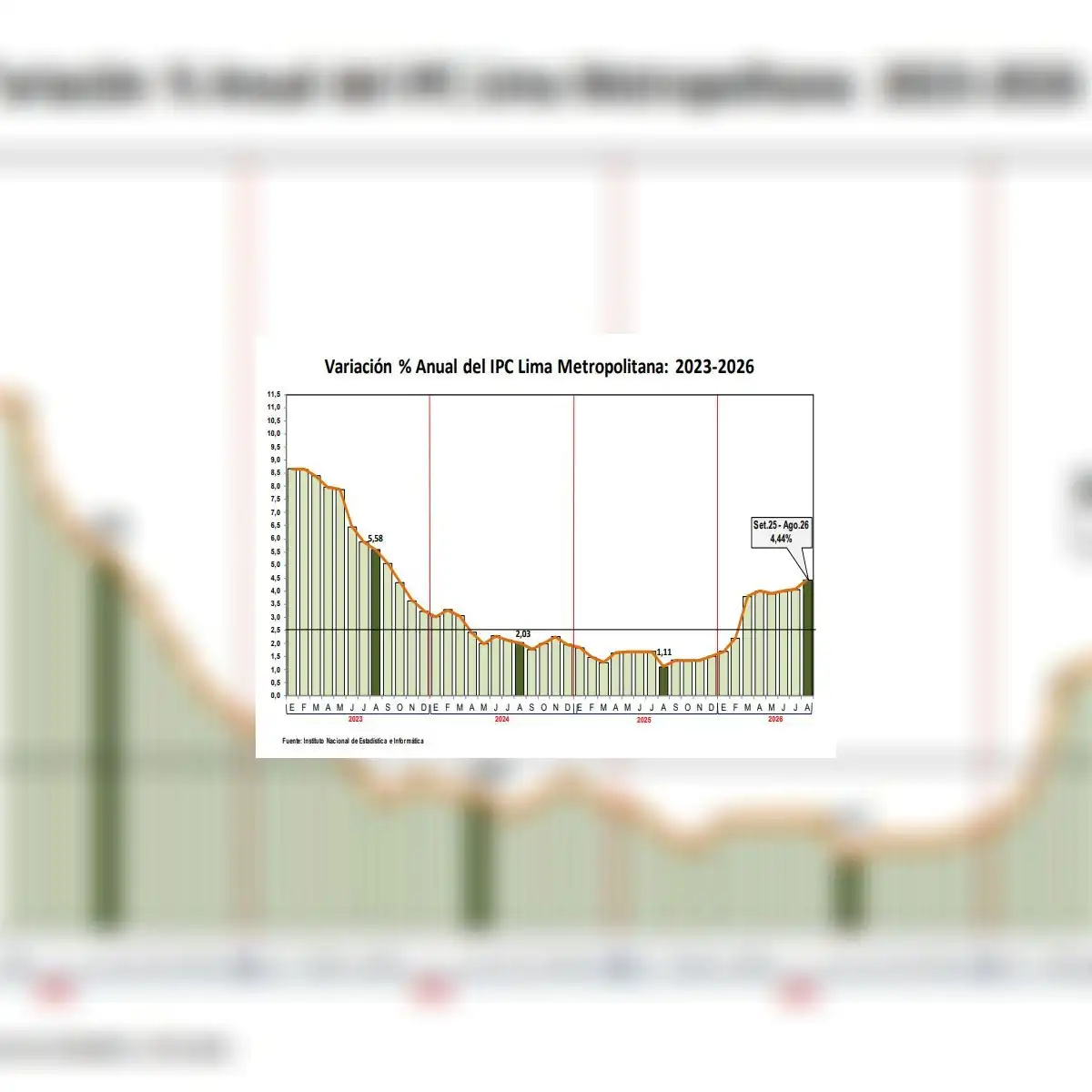
Annual inflation in Metropolitan Lima rose to 4.44 percent in August 2026, reaching its highest level in nearly three years, government statistical data showed.
Consumer prices in Peru's capital registered a modest monthly increase of 0.07 percent in August, bringing cumulative inflation for the first eight months of the year to 4.16 percent, according to the National Institute of Statistics and Informatics (INEI).
The annual inflation rate accelerated from 4.07 percent recorded in July, remaining well above the official target corridor established by the Central Reserve Bank of Peru (BCRP), which seeks to keep annual price increases between 1.0 percent and 3.0 percent.
The overall monthly inflation figure came in slightly above forecasts made by economic analysts. Sharp price hikes in residential electricity and motor fuels pushed overall living costs higher, despite significant price drops across several essential food items.

Metropolitan Lima is the capital and primary commercial hub of Peru, housing approximately one third of the nation's total population. Due to its economic prominence and demographic concentration, consumer price measurements in the capital serve as the benchmark for national inflationary trends across the South American country.
The Central Reserve Bank of Peru serves as the nation's independent monetary authority, utilizing benchmark interest rate decisions to maintain currency stability and keep annual consumer inflation within its target range. Persistent inflation above the 3.0 percent upper threshold complicates central bank monetary policy decisions.
Energy and utility costs drive price growth
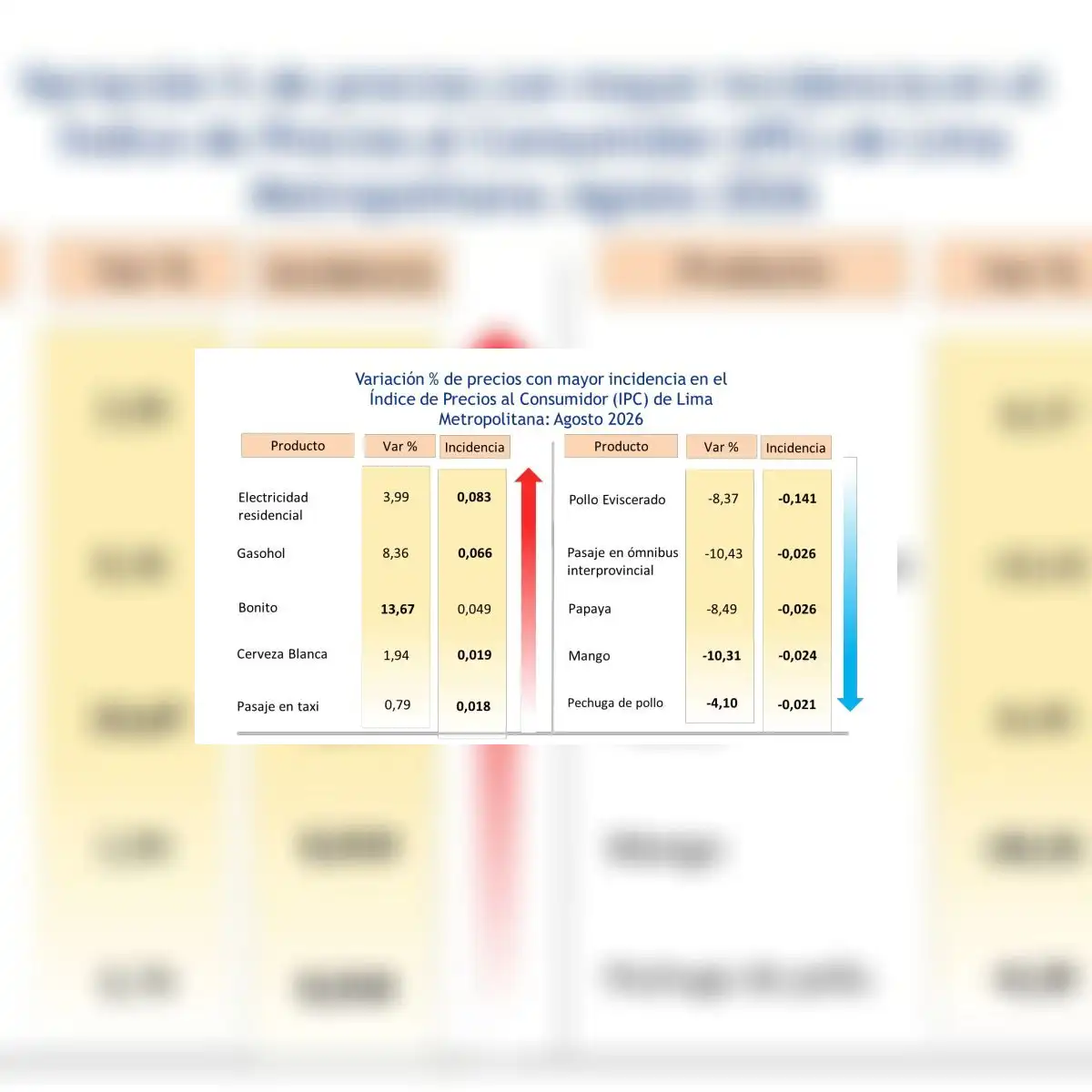
Energy tariffs represented the single largest driver of upward price pressures in August. Residential electricity bills increased by 3.99 percent over the month, while gasohol and motor vehicle lubricants surged by 7.33 percent.
Other residential fuel categories displayed mixed price trends. Bottled domestic liquid petroleum gas fell by 0.69 percent during August, whereas residential piped natural gas prices rose by 0.65 percent.
Utility tariff increases affect household budgets directly while creating indirect cost pressures across commercial sectors. Higher electricity rates for businesses and elevated fuel costs for transport operators frequently translate into price adjustments for consumer goods and commercial services over subsequent billing cycles.
Food prices drop despite spikes in specific produce
Food and non-alcoholic beverage prices offered partial relief to consumers, declining by an average of 0.66 percent in August. Meat prices decreased by 3.26 percent, while overall fruit prices fell by 2.23 percent.
The most notable price reduction within the grocery basket occurred in whole dressed chicken, which dropped by 8.49 percent during the month. Because poultry is a staple protein in Peruvian households, the drop played a major role in moderating monthly headline inflation.
Conversely, fish and seafood prices rose by 5.0 percent overall in August, led by a 13.67 percent increase in the price of bonito fish. Ground yellow pepper experienced the largest single price hike in the food category, rising 28.57 percent, while Chinese onions also became noticeably more expensive.
Vegetables, legumes, and tubers recorded a minor overall price increase of 0.25 percent. The opposing price movements across various food items resulted in a net decline for the food category, which partially countered energy price increases.
Core inflation remains stable as transport fares fall
When volatile components such as food and energy are excluded, August inflation stood at 0.02 percent. The contrast between core inflation and headline inflation illustrates the disproportionate impact that electricity and fuel price adjustments had on the overall monthly result.
Core inflation is an economic indicator that removes volatile items such as unprocessed food and domestic energy from consumer price calculations. Central banks monitor core metrics to gauge underlying monetary trends without distortion from seasonal supply shocks or international oil market swings.
Transport fare reductions also helped offset rising fuel expenses in August. Fares for interprovincial passenger buses dropped by 10.43 percent, while national airfares fell by 7.56 percent over the course of the month.
Wholesale price index reflects broader supply costs
Inflationary pressures were also reflected in wholesale trade statistics across Peru. The National Wholesale Price Index rose by 1.22 percent in August, accumulating a total increase of 5.42 percent between January and August 2026.
Prices for domestically produced wholesale goods increased by 1.29 percent in August, driven primarily by manufactured products, which rose 1.55 percent. Imported wholesale goods recorded a smaller gain of 0.95 percent.
The Wholesale Price Index measures price changes at the primary commercial level before products reach retail stores and final consumers. Persistent growth in wholesale prices signals potential future price pressures for retail businesses and consumers as input costs rise.
The August price data highlights conflicting economic forces for consumers in Metropolitan Lima, where cheaper poultry and fruit were offset by rising utility bills and fuel pump costs. With annual inflation standing at 4.44 percent, overall price growth remains above the central bank target range, prolonging inflationary pressures in Peru's capital.


