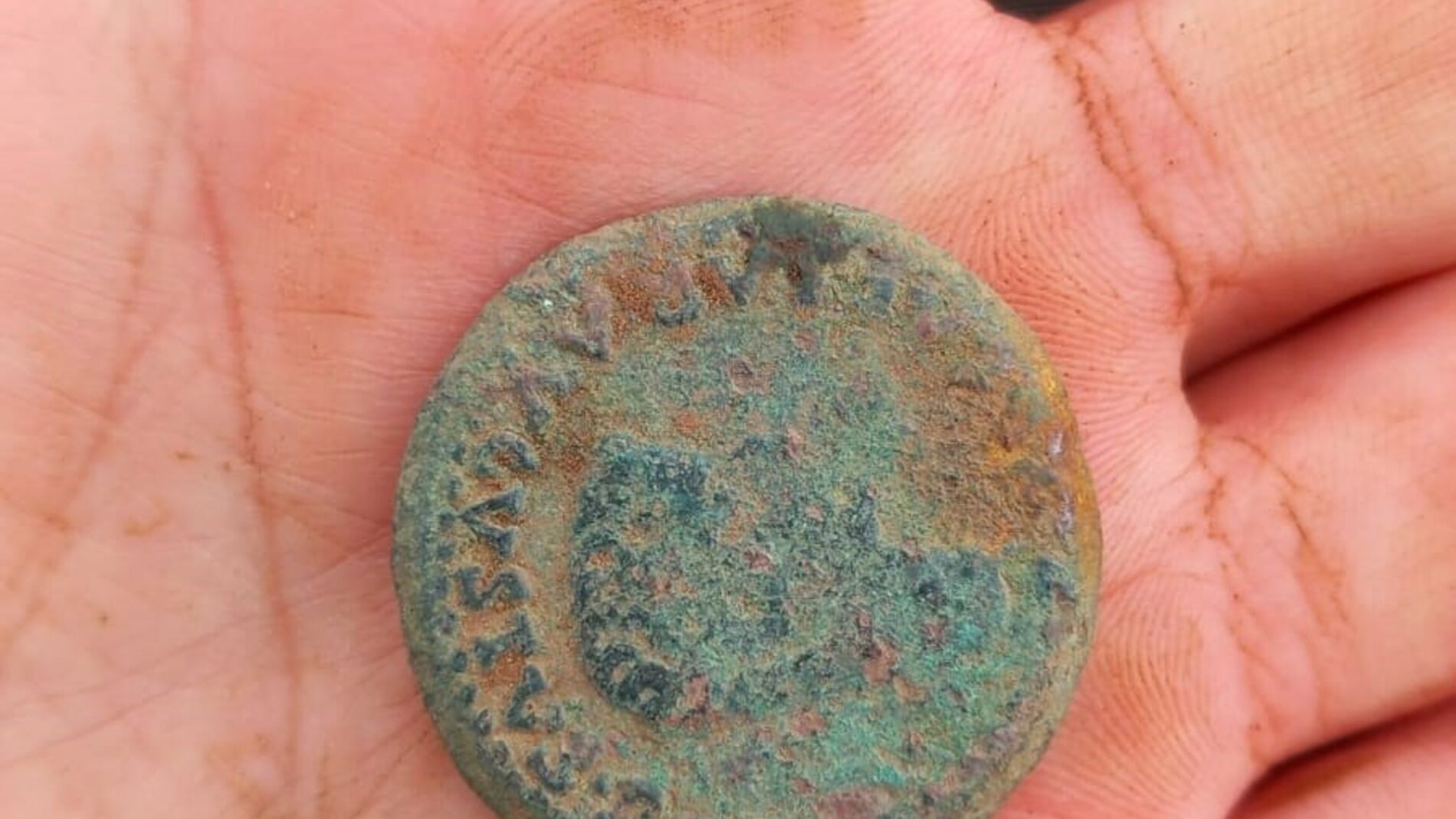
Archaeologists excavating the La Cerca Roman military camp, situated between Anguita and Aguilar de Anguita in the province of Guadalajara, Spain, have completed mapping the site's perimeter defences and recovered Roman coins alongside metal tacks from sandals worn by legionaries.
The recent findings indicate that the 12.4-hectare fortification remained active until the reign of Emperor Tiberius in the first century AD, extending its previously established timeline of occupation well into the early Roman Empire.
The research resumed more than 110 years after the first archaeological investigations at the site, which took place between 1913 and 1914 under the direction of Enrique de Aguilera y Gamboa, the Marquess of Cerralbo. Remains of the test pits dug during those pioneering early 20th-century excavations can still be identified inside the camp's perimeter, alongside stone enclosures constructed from the Middle Ages onward for livestock grazing.
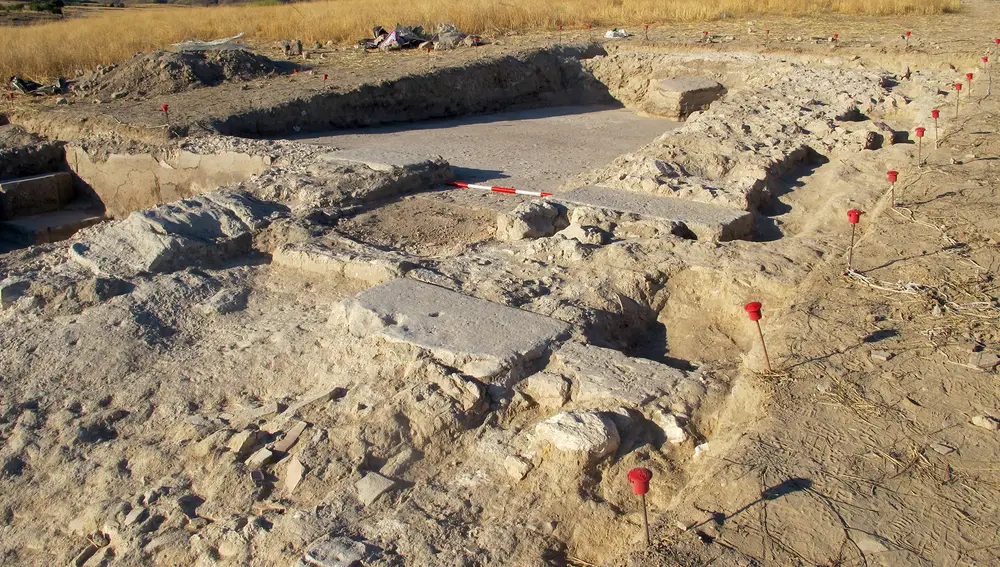
To resolve questions left open by the historic digs, archaeology firm Heroica Arqueologia initiated a new research campaign featuring updated field surveys and the systematic excavation of the camp's North Gate. The new fieldwork has brought the complete outline of the perimeter defensive wall into view on the surface for the first time.
Perimeter Defences and Artifact Discoveries
The excavation revealed that the outer defences of La Cerca were constructed using dry-stone walls made from small ashlar masonry. Defensive towers were built at strategic points along the wall to house soldiers and military artillery, while built-in stone staircases provided guards access to the top of the ramparts.
The layout of the defensive wall was tailored to the local topography. While the southern and western sides of the camp followed straight lines, the northern wall ran at an oblique angle and the eastern perimeter adapted irregularly to the natural terrain.
Enclosure Layout and Military Architecture
Spanning 12.4 hectares, the rectangular encampment features four main entrance gates positioned at the cardinal points of north, south, east and west. In keeping with classical Roman military architecture, these gates were connected internally by the Cardo and Decumanus, the two perpendicular main avenues that organized the layout of Roman military camps and urban settlements.
Roman military camps, known as castra, were standard defensive structures built to house legions during military campaigns and secure strategic territory. The presence of formal avenues and permanent stone ramparts demonstrates that La Cerca served as a major logistical hub for Roman operations in central Hispania.
Chronology from Celtiberian Wars to Emperor Tiberius
Artifacts recovered from the site indicate that La Cerca was originally established as a Roman fortification following the Celtiberian Wars, a series of conflicts fought between the Roman Republic and native Iberian tribes between roughly 181 BC and 133 BC.
The camp remained in active use during the Sertorian Wars, a Roman civil war fought across Hispania between 82 BC and 72 BC. Following the end of major military conflicts, the site maintained a more limited operational presence tied to Roman iron mining activities in the surrounding region.
The latest coinage and sandal hobnails push the site's active Roman timeline further than previously documented, proving that activity at La Cerca continued into the reign of Emperor Tiberius, who ruled from 14 AD to 37 AD.
Excavation Methods and Institutional Support
The excavation campaign is co-directed by archaeologists Jesus Francisco Torres of the research institute Inbeac and Santiago David Dominguez of Heroica Arqueologia. The team utilized metal detectors authorized by the Regional Government of Castilla-La Mancha, enabling the recovery of smaller metallic artifacts that had eluded early 20th-century excavators.
Project directors explained that the use of modern metal detection permitted the recovery of small items that the Marquess of Cerralbo's team was unable to detect using traditional digging methods. They noted that the discovery of legionary sandal tacks and additional coins confirmed that Roman occupation persisted into the Imperial era under Tiberius.
Financial support for the investigation was provided by the Anguita Town Council. Archaeologist Emilio Gamo, representing the National Archaeological Museum in Madrid, is participating in classifying and cataloguing the recovered materials to establish their precise chronological context.
Public Access and Site Musealisation
Following the completion of the latest field campaign, project leaders and regional authorities are focusing on opening the historical site to the public.
The Regional Government of Castilla-La Mancha has collaborated on turning the site into an open-air museum. Informational panels and directional signage have already been installed across the terrain to guide visitors and explain the surviving stone structures of the ancient Roman camp.