

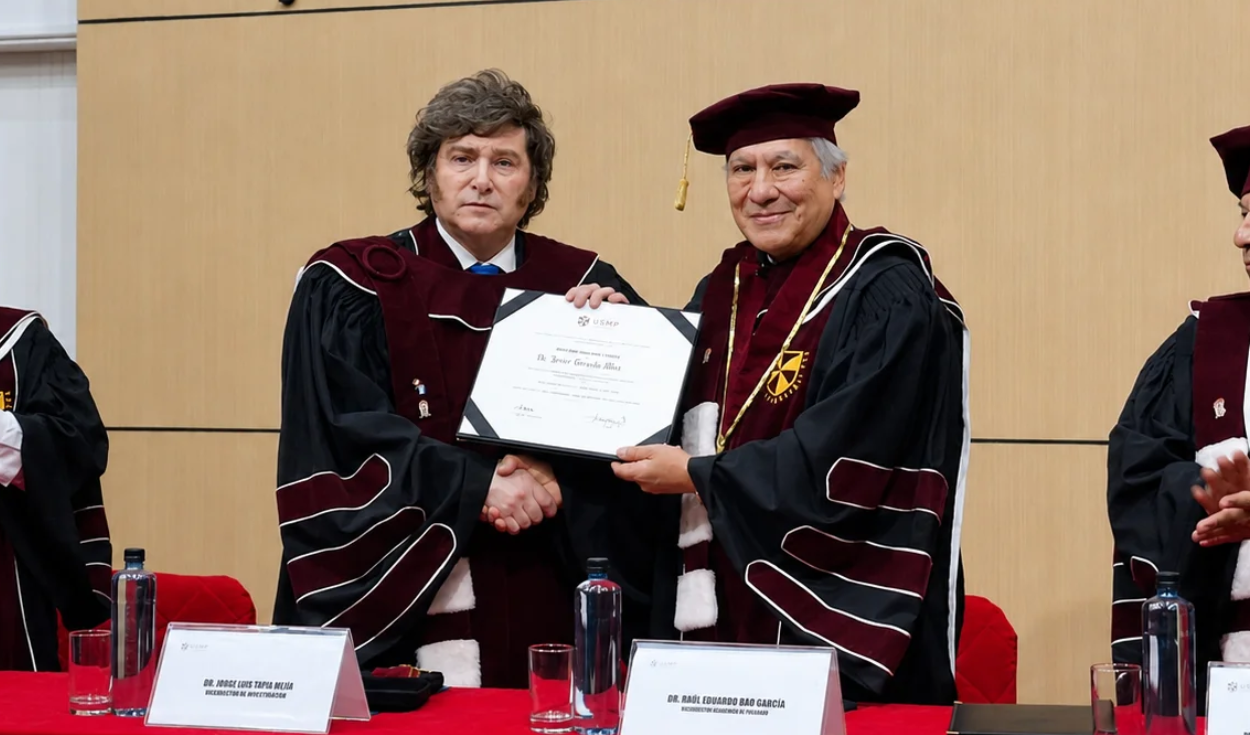
A group of more than 100 criminal law and criminology professors has rejected the honorary doctorate awarded to Argentine President Javier Milei by Universidad de San Martín de Porres in Lima. The Peruvian university granted the honoris causa on July 28, 2026, hours after the presidential inauguration in Lima during an official visit.
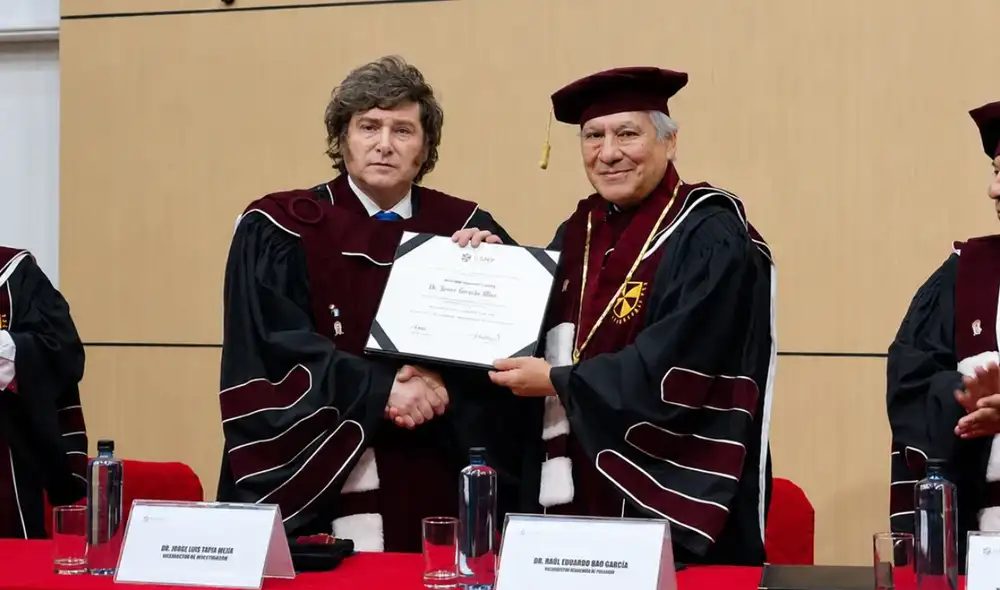
The signatories called the award an institutional stance that the university should not have taken and asked authorities to annul the degree. The statement dated August 6, 2026, includes academics from universities in Spain, Argentina, Chile, Brazil, Colombia, Ecuador, Costa Rica, and Italy. Prominent figures among the signers include Eugenio Raúl Zaffaroni, Baltasar Garzón, and Luis Arroyo Zapatero.
In addition to demanding the annulment of the degree, the professors announced a suspension of all academic participation with the university while the title remains in place. This measure applies to courses, seminars, thesis evaluation panels, and editorial committees of university publications.
Academic boycott and return of previous honors
The protest statement highlighted the symbolic action of Zaffaroni, who received an honorary doctorate from the university in 2009. He announced he is returning his degree in rejection of the decision to honor Milei. The signers invited other past recipients of honorary titles from the institution to consider taking the same action.
The document appealed to the history of the university's law faculty, citing Peruvian criminal law scholars Raúl Peña Cabrera and Felipe Villavicencio Terreros, who previously taught at the institution. The signers stated that both scholars built their work on the principle that criminal law must limit state power rather than expand it, arguing that honoring Milei breaks with that tradition.
Objections to government policies and political discourse
The academics also questioned specific policies of the Argentine government. They cited Milei's veto of a university funding law, which the Argentine Congress later ratified despite the presidential rejection.
The statement included figures on business closures, job losses, and rising suicide rates in Argentina, citing local media outlets Crónica and Nueva Ciudad. The source report noted that these figures were part of the statement's arguments and were not independently verified.
The signatories criticized the repression of social protests in Argentina, pointing to press photographer Pablo Grillo as a primary example. They also questioned Milei's political discourse, noting that he called his opponents the worst thing that exists on Earth in statements after the ceremony. The academics clarified that their criticism is directed at university authorities who granted the award, not at students or the wider university community.


