

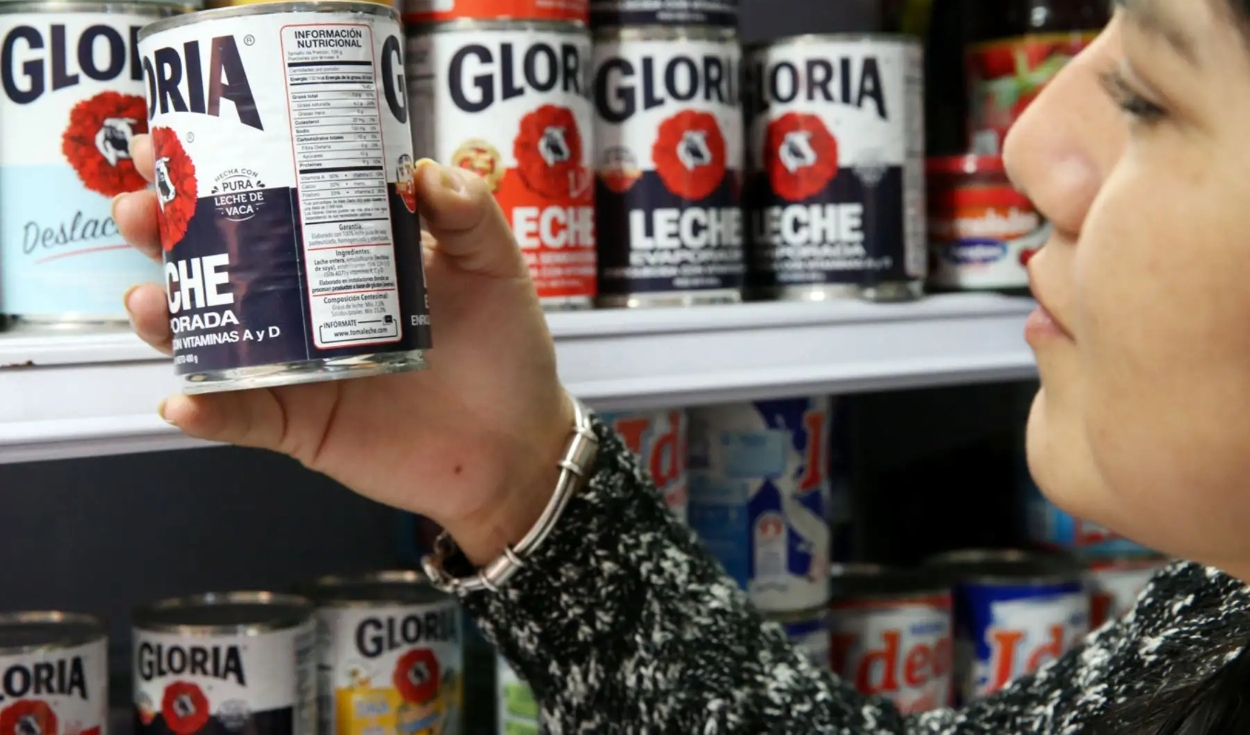
Peru's Constitutional Court has entered the final stage of resolving a lawsuit by dairy company Leche Gloria S.A. challenging government restrictions on evaporated milk production.
The court's jurisdictional plenary will issue a ruling after the reporting magistrate ordered the case elevated to the full bench, with a decision expected in the coming days according to a filing by consumer group AINCUS.
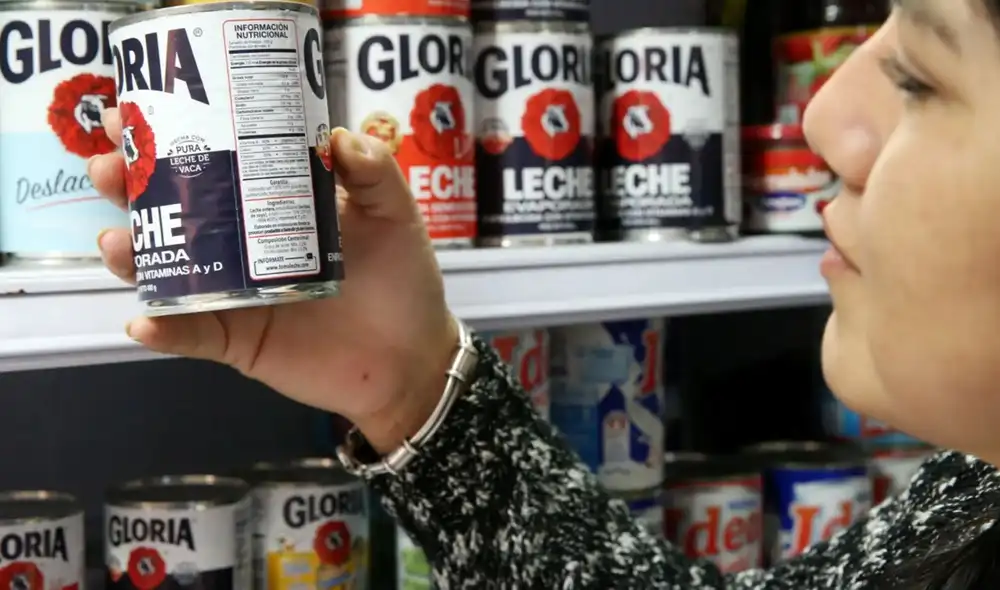
Leche Gloria S.A. filed the amparo suit to set aside Supreme Decree 004-2022-MIDAGRI, arguing that the regulation violates its constitutional rights. The process reached the country's highest court after previous legal instances failed to produce a decision in favor of the company, according to documents submitted by the National Association of Consumers and Users (AINCUS).
The Constitutional Court functions as Peru's tribunal for constitutional matters, evaluating whether executive decrees comply with basic legal rights. An amparo action serves as a legal mechanism for individuals and corporations to challenge state actions that allegedly infringe upon constitutional protections.
Supreme Decree 004-2022-MIDAGRI rules
The disputed decree, in force since October 2022, established new composition and labeling requirements for evaporated milk manufactured and sold in Peru. Under the regulation, evaporated milk is defined strictly as a product obtained through the partial removal of water solely from liquid milk.
In practice, the rule requires processors to start with fluid milk and extract a portion of its water content, prohibiting manufacturers from blending in reconstituted milk powder to produce items sold under the evaporated milk label.
Following the enactment of the decree in October 2022, Leche Gloria S.A. ceased marketing its traditional blue-label evaporated milk under that specific name. The company instead split its flagship line into a reconstituted milk product bearing a blue label and a new evaporated milk carrying a purple label.
Labeling definitions and consumer disputes
The regulatory distinction centers on manufacturing methods. While evaporated milk is produced by removing water directly from raw milk, reconstituted dairy products are created by adding water to concentrated or dehydrated ingredients, such as milk powder, to restore their liquid form.
AINCUS stated that Gloria's former blue-label formula contained milk powder that no longer complied with government standards. The consumer association also questioned the composition of the current purple-label product, pointing out that its label lists raw milk, 30 percent concentrated milk, and anhydrous milk fat among its ingredients.
AINCUS argued in its legal filing that mixing concentrated milk and milk fat fails to satisfy the definition of evaporated milk laid down by the decree. The group contended that the inclusion of secondary milk fats and concentrates departs from the requirement of relying solely on partial water extraction from whole milk.
Injunctions and administrative extensions
During the legal proceedings, Leche Gloria S.A. requested a preliminary injunction that would have allowed the firm to manufacture and sell its original blue-label formula while the court reviewed the lawsuit. The court denied the request, requiring the company to pull the original product name from store shelves in October 2022.
AINCUS further challenged an administrative extension that allowed Gloria to utilize the old blue label for a temporary period during 2023. The association raised the extension as part of its arguments before the bench, noting that the Constitutional Court has not issued a formal ruling on the legality of that administrative permission.
Codex Alimentarius standards
The dispute references international benchmarks set by Codex Alimentarius, which governs global standards for dairy products. Codex rules specify that food product names must accurately reflect their true nature so that consumers are not misled when purchasing goods.
The international framework relies on protected dairy terms, establishing that commercial names must align strictly with a product's physical makeup. Under these international definitions, clear boundaries separate standard milk, generic dairy products, and reconstituted milk items.
Codex Alimentarius was established jointly by the Food and Agriculture Organization and the World Health Organization to harmonize international trade rules and safeguard consumer health. AINCUS noted that international standards active since 1971 mandate that evaporated milk be produced exclusively from liquid milk through water reduction.
Historical controversy and market impact
AINCUS cited the 2017 Pura Vida controversy as context within its filings against Gloria. That episode involved national public outcry in Peru over the composition and labeling of Gloria's Pura Vida brand, which was found to contain ingredients other than pure milk, leading to regulatory sanctions and widespread public debate.
While AINCUS cited the Pura Vida precedent to highlight ongoing labeling issues, the Constitutional Court's scope remains focused on determining whether Supreme Decree 004-2022-MIDAGRI should be rendered without effect.
The pending decision by the full tribunal will carry consequences far beyond Gloria's product range. The ruling will determine binding market rules for dairy labeling across Peru and clarify how much leeway processors have to incorporate milk powder or other additives into evaporated milk products.
The court record includes submissions from multiple government bodies, cattle rancher organizations, and consumer rights advocates. With the case formally submitted to the full plenary, the Constitutional Court holds the final authority on whether the government's dairy regulations stand.


