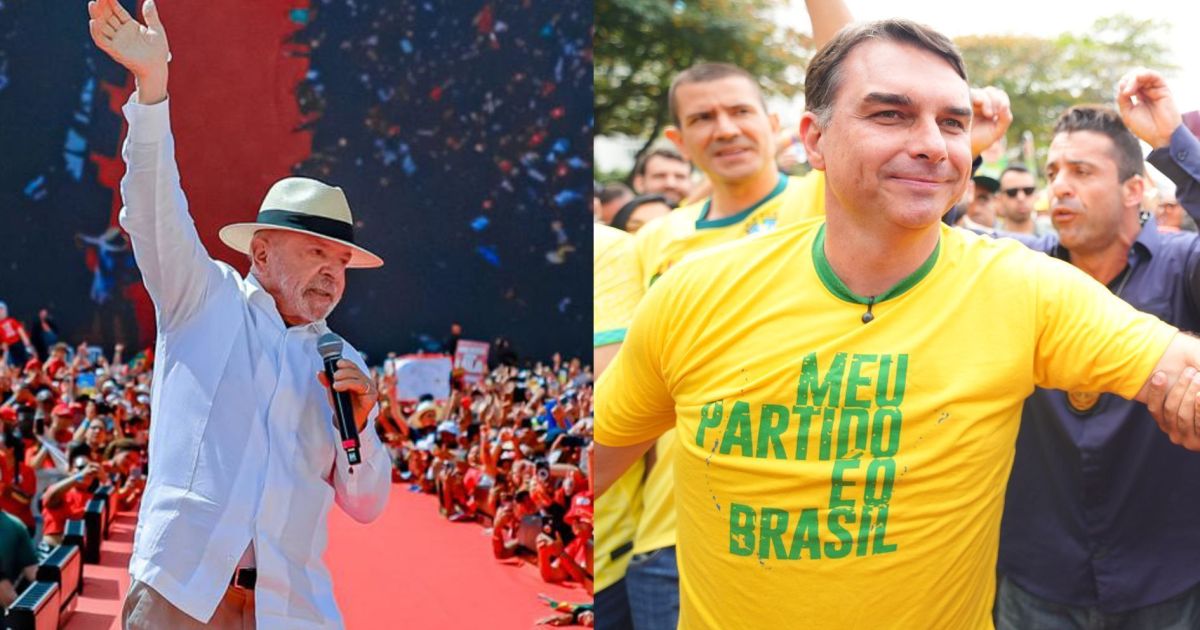
Luiz Inacio Lula da Silva and Flavio Bolsonaro are focusing their campaigns on undecided voters ahead of Brazil's presidential election first round. Although this undecided group represents an increasingly small share of the electorate, both political camps view these remaining voters as strategic in the final stretch of the race.
Political analyst Isabel Mega detailed the movements of the two main presidential campaigns during CNN's Bastidores CNN broadcast on Monday. According to Mega, the Workers' Party campaign has defined a specific profile for the undecided voter Lula needs: a low-income woman who heads her household, earns up to two minimum wages, and worries about living costs, public safety, education, and healthcare.
That exact profile is also the primary target for Flavio Bolsonaro's campaign. Mega noted that Flavio faces greater difficulties with female voters and lower-income families. To overcome that resistance, the Bolsonaro campaign has adopted the cost of living as its main campaign banner in an effort to capture those crucial ballots.
Mega described this target voter as someone willing to listen to Flavio's policy proposals and open to stepping away from a left-wing stance. She explained that such voters do not prioritize ideological consistency or stick to a single political camp, meaning they may vote for the left in one election and back the right in another.
Turnout concerns and the elderly vote
Beyond the contest for undecided voters, Lula's campaign is also concerned about voter abstention, particularly among citizens aged 70 and older. Lula has publicly stressed the need for this age group to turn out at the ballot boxes because many older citizens face physical mobility challenges.
According to Mega, the Workers' Party is conducting public campaign activities focused directly on the 70-plus vote, repeating an outreach strategy previously used during the 2022 presidential election.
Under Brazilian electoral law, voting is compulsory for literate citizens between 18 and 69 years of age. Voting is optional for citizens aged 70 and over, as well as for 16- and 17-year-olds. For a presidential candidate to win the election outright in the first round, Brazilian election rules require them to secure more than 50 percent of all valid votes, excluding blank and null ballots. If no candidate crosses that threshold, the top two finishers advance to a head-to-head runoff.
Mega emphasized that abstention concerns extend beyond older voters. She said that voters who are not legally obligated to vote will weigh unpredictable factors such as their mood on the day or whether it rains, which ultimately influences their turnout behavior. She added that even among voters of mandatory voting age, the ease of justifying an absence with the Electoral Justice creates an uncertain environment for both campaigns.
First round victory prospects
Growing discussion has also centered on whether the presidential election could be settled in the first round. With support for third-way alternatives drying up, the central question has become where those unaligned votes will go.
Mega explained that if those votes shift toward Flavio Bolsonaro, it would assist a potential first-round resolution for the Bolsonaro political camp. However, if those votes do not go to Flavio and Lula manages to expand his margin among undecided voters, the Workers' Party campaign would emerge with a clearer advantage.
Speculation about a first-round victory drew attention following remarks by Lula on the Canal Livre program on TV Bandeirantes, where he stated that he hopes the election will be decided in the first round. Mega concluded that this message is one the Workers' Party campaign will preach throughout the decisive week ahead.