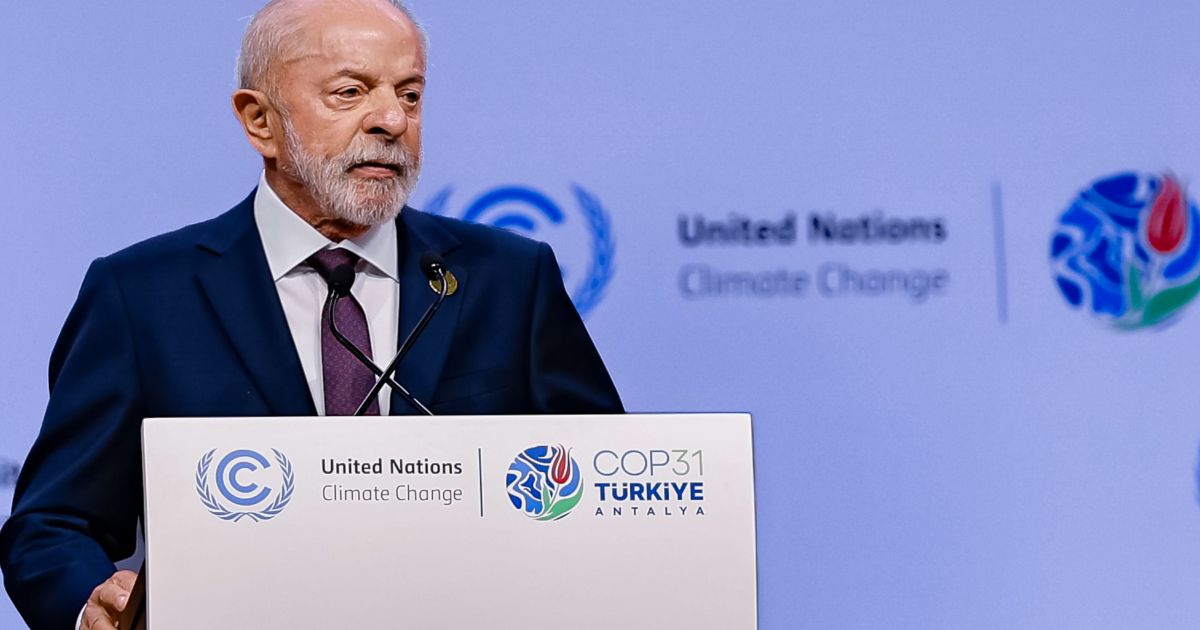
Brazilian President Luiz Inácio Lula da Silva paused an address at the COP31 climate conference on Wednesday after struggling with a noticeably hoarse voice.
During the speech, the 81-year-old leader stopped his remarks to drink water after experiencing vocal difficulties. For a second appearance scheduled later at the same event, Lula asked Brazil's Minister of the Environment and Climate Change, João Capobianco, to step in and read his prepared text.
The appearance followed Lula's victory in Brazil's 2026 presidential election representing the Workers' Party, known locally as the Partido dos Trabalhadores. The veteran statesman, who previously governed the country between 2003 and 2010 before returning to the presidency following the 2022 election, has maintained an intensive schedule of speeches and public appearances.
Medical history and radiation therapy
Lula's vocal strain quickly attracted public attention because of his medical history. The Brazilian president was diagnosed with laryngeal cancer in 2011, subsequently undergoing a treatment regimen that included both chemotherapy and radiotherapy.
Dr Márcio Salmito, an otolaryngologist at Hospital Alemão Oswaldo Cruz in São Paulo, told CNN Brasil that the disease and its treatments can alter local anatomy and diminish vocal quality. Salmito explained that both laryngeal cancer and radiation therapy cause physical changes to the throat that affect how sound is produced.
According to Salmito, some of these anatomical changes are temporary, while others can become permanent. Patients who undergo radiotherapy or surgery to remove tumours in the larynx frequently experience vocal alterations, and the natural progression of the disease can also compromise the voice. Salmito added that these changes tend to be more aggressive initially before improving over time.
Causes of vocal strain and ageing
Medical specialists note that hoarseness can stem from various sources beyond oncology treatments. One key factor is presbyphonia, the natural ageing process of the larynx. Over time, individuals experience a reduction in muscle mass and elasticity within the vocal cords, which leaves the voice weaker and raspy.
Intense voice use also causes noticeable strain. Salmito pointed out that delivering prolonged speeches, a regular demand of Lula's political life, can trigger acute vocal exhaustion. When excessive vocal demand becomes recurrent, as seen among teachers and broadcasters, it can lead to longer-lasting damage, including the formation of vocal cord nodules.
Chemical and environmental irritants present another significant hazard to the larynx. Cigarette smoke is among the primary irritants, and Lula was a smoker for roughly 50 years. In addition, gastroesophageal reflux can contribute to vocal deterioration when stomach acid moves upward and irritates the lining of the larynx.
Vocal traits and medical evaluation
Specialists examine vocal cord performance by evaluating specific acoustic characteristics, including hoarseness, breathiness, asthenia and muscular tension. Under normal conditions, the vocal cords vibrate evenly as air flows from the lungs. When scar tissue, an inflammatory process or another structural alteration is present, that vibration becomes uneven.
Salmito observed that hoarseness appeared to be the most obvious feature in the Brazilian president's voice during his summit appearance. Other vocal patterns point to different mechanical issues: breathiness happens when air escapes because the vocal cords fail to close fully, asthenia reflects vocal weakness, and tension indicates excessive effort from the muscles used to speak.
Despite the vocal traits visible during the event, Salmito stressed that doctors cannot establish a formal medical diagnosis simply by analyzing a speech or video recording. An accurate assessment requires an in-person clinical examination by medical specialists.