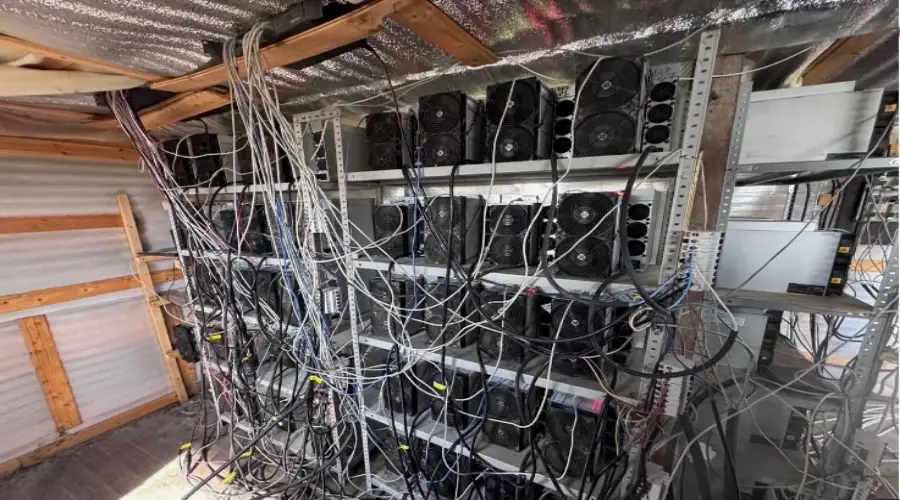
Blockchain developers are refining Proof of Useful Work consensus models to redirect cryptocurrency mining energy toward real-world computational tasks while addressing persistent technical limitations.
The mechanism aims to replace arbitrary hash calculations with valuable off-chain processing, such as scientific research and artificial intelligence workloads, to curb energy waste across distributed networks.
Under standard Proof of Work systems, such as Bitcoin, miners compete to solve mathematical problems that secure the network and prevent double spending. This process requires calculating block header hashes that incorporate a random nonce, a hash of pending transactions, and the hash of the preceding block. The miner who correctly computes the target hash receives newly minted coins alongside transaction commission fees. However, critics point out that this computational effort consumes immense amounts of electrical power without generating secondary benefits.
To resolve this inefficiency, blockchain architects have pursued two primary paths: abandoning mining entirely through Proof of Stake consensus, or modifying mining algorithms so that calculations serve dual purposes. Proof of Stake networks replace energy-intensive hardware racing with validator staking models, whereas Proof of Useful Work channels hardware processing toward external computing challenges.
Origins of Proof of Useful Work
In a broad sense, Proof of Useful Work represents an architectural framework where the computational energy required to maintain network consensus simultaneously solves external real-world problems. Developers have explored methods to make crypto mining productive for over a decade. In 2017, an international team of researchers comprising Marshall Ball, Alon Rosen, Manuel Sabin, and Prashant Nalini Vasudevan published a foundational paper titled Proofs of Useful Work, outlining formal criteria for useful computation in distributed consensus systems.
Traditional consensus mechanisms rely on mathematical protocols to ensure all nodes agree on ledger history without central governance. While conventional mining guarantees network resilience through cryptographically heavy operations, adapting these systems to run general computations introduces significant structural complexity.
Challenges Facing Useful Computation
Despite the environmental appeal of replacing SHA-256 hash iterations with medical research, astronomical analysis, or machine learning workloads, practical implementation faces severe technical roadblocks. Researchers emphasize that balancing external computational utility with cryptocurrency price stability and network security remains difficult.
The first major hurdle involves the supply of uniform tasks across global networks. Traditional Bitcoin mining enforces a uniform task where all global participants execute identical hashing operations, allowing network difficulty adjustments to scale alongside total hashrate. Finding parallel, uniform tasks for useful computations proves difficult. If task difficulty varies randomly, miners are incentivized to process only lightweight tasks while ignoring complex computations, undermining system stability.
The second challenge relates to the blockchain scalability trilemma, which states that a distributed network cannot simultaneously achieve maximum decentralization, scalability, and security. Standard Proof of Work allows nodes to verify block validity trivially and quickly. In contrast, Proof of Useful Work requires nodes to verify complex task solutions, creating computational bottlenecks that degrade network throughput and security. Furthermore, if a centralized group determines task selection, network decentralization becomes compromised.
Solution uniqueness presents a third critical obstacle. Similar to how each block hash in standard mining is unique, tasks within a Proof of Useful Work system must be unique to every block. The architecture must strictly prevent participants from submitting previously solved results to claim rewards repeatedly.
Finally, networks must guarantee predictable and uniform miner effort to preserve fair competition. Minor hardware advantages must not create overwhelming market dominance, and robust validation protocols must prevent miners from claiming rewards by submitting formally valid answers that lack genuine utility.
Economic Models and Security Costs
Beyond raw technical barriers, Proof of Useful Work models challenge established cryptocurrency economic assumptions. Industry analysts debate whether standard mining can truly be categorized as useless work, given its role in securing decentralized ledgers.
Although Satoshi Nakamoto deployed the first functional cryptocurrency mining model in Bitcoin, the underlying concept originated earlier with cypherpunk and Blockstream founder Adam Back. Back developed the Hashcash protocol as a defense mechanism against email spam, requiring senders to perform small computations to create a costly barrier against automated mass distribution. In Hashcash, complex computation was explicitly designed to support an external functional objective.
In Bitcoin, intensive hashing is essential precisely because its difficulty secures the network against hostile attacks. Miners make substantial capital investments in specialized hardware and pay ongoing electricity bills, exchanging capital, technical knowledge, and time for network rewards. These tangible expenses establish an economic baseline that contributes to the production cost and market value of the digital asset. If miners stopped committing capital and incurring operational risks, network security and token valuation could deteriorate.
This dynamic mirrors CAPTCHA security tests used across the web. While completing image verification puzzles might seem conditionally unproductive compared to scientific tasks, the core function of a CAPTCHA test is defending systems against spam and unauthorized access. Consequently, computational tasks do not need independent scientific utility to deliver operational value.
Real World Blockchain Implementations
Several cryptocurrency projects have attempted to incorporate Proof of Useful Work principles into their network design with varying approaches.
Flux, a project initially centered on graphics processing unit calculations, transitioned to a Proof of Useful Work v2 model in October 2025. Developers stated that Flux functions as decentralized Web3 cloud infrastructure, where network nodes perform hosting, image rendering, and artificial intelligence tasks alongside consensus duties.
Primecoin, launched in 2013, became the first cryptocurrency to tie mining directly to practical mathematical problems. Its proof-of-work algorithm requires miners to search for prime number chains known as Cunningham chains. Developers noted that the network achieved multiple world mathematical records while securing its blockchain.
Gridcoin, also launched in 2013, integrated with the BOINC open distributed computing platform created by the University of California, Berkeley. Gridcoin rewards users for participating in scientific computing projects, though its core protocol relies on Proof of Stake consensus rather than native Proof of Useful Work.
Other networks redistribute computational capacity without fully adopting Proof of Useful Work consensus. Bittensor coordinates distributed compute power for machine learning applications, while Render Network allocates GPU capacity for digital rendering tasks.
Limitations and Network Outlook
Proof of Useful Work strives to combine the robust security of traditional crypto mining with meaningful problem-solving outside the blockchain ecosystem. However, severe technical challenges surrounding task uniformity, verification overhead, and economic security continue to restrict broad deployment. Despite these limitations, ongoing experimentation across decentralized networks demonstrates sustained industry interest in harnessing global compute power for useful applications.