ROMEO Roma, a hotel housed inside the 16th-century Palazzo Capponi in central Rome, is one of the last projects personally designed by the architect Zaha Hadid before her sudden death in March 2016. The hotel opened at the end of 2024, according to newmoney.gr, almost eight years after she died.
Hadid was an Iraqi-British architect whose buildings, including the London Aquatics Centre built for the 2012 Olympics, the MAXXI museum in Rome and the Guangzhou Opera House in China, became known for showing that architecture could be more than an engineering exercise. Among the projects she left behind, few people knew of one in particular: not a museum, not a skyscraper, not another striking cultural center, but a hotel. She was asked to bring her signature architectural style into a Renaissance palace from the 16th century, in the heart of historic Rome, a city where history does not forgive mistakes.
A hotel hidden inside a historic palazzo
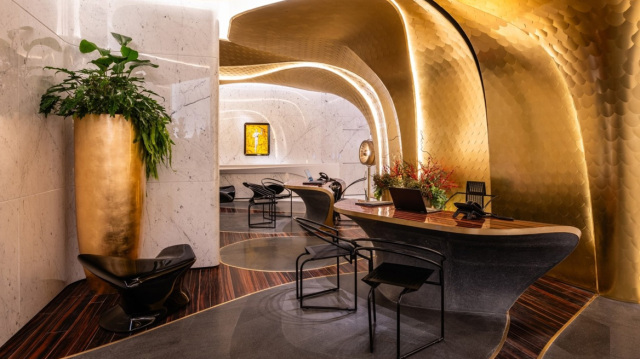
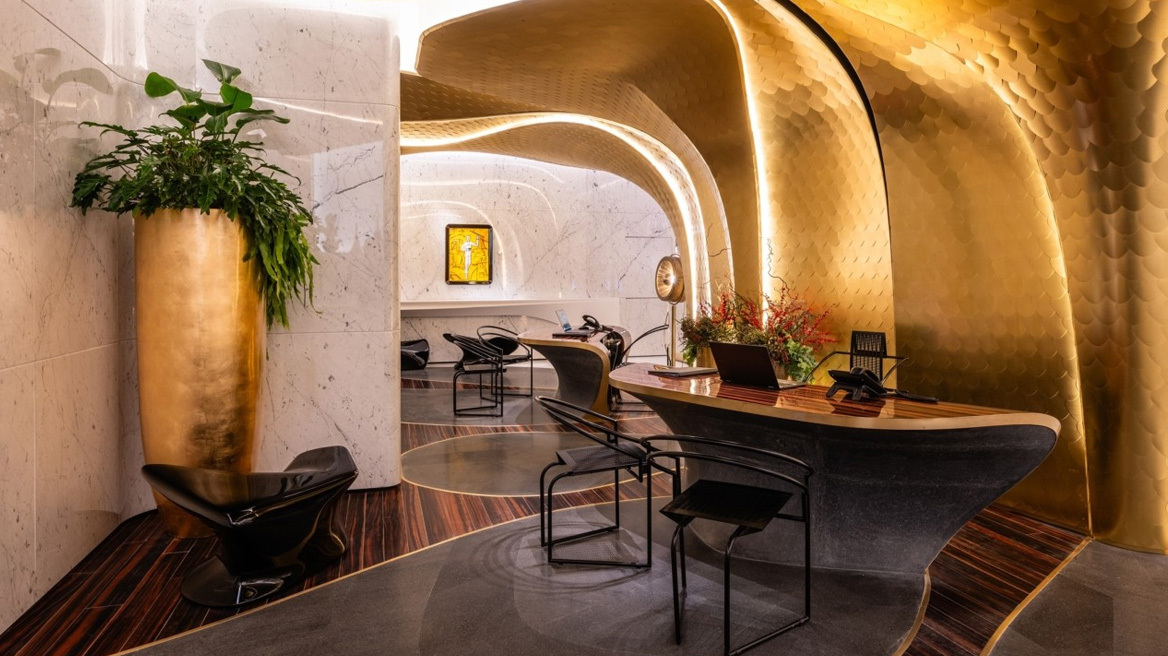
Housed just a few steps from the Piazza del Popolo, ROMEO Roma reveals almost nothing from the street. Its facade remains true to its period, with no showy ornamentation or architectural flourishes to catch a passerby's eye. The real transition begins once a visitor crosses the threshold, where the strictness of the Renaissance gives way to the organic curves that made Hadid recognizable worldwide. The walls appear to flow rather than end, and light reflects off white marble, glass and metal in a way that makes the space feel constantly in motion. Rather than fighting the historic building, Hadid let it take the lead.
Ancient Rome uncovered during renovation
The project's biggest surprise was archaeological rather than architectural. During the renovation, work uncovered successive layers of ancient Rome, remains from different historical periods that forced archaeologists, engineers and architects to rework much of the design. Where such discoveries often delay or derail a project, at ROMEO Roma they became part of the experience. The finds were not covered up or moved elsewhere. They were built into the design, a constant reminder that in Rome, every new building sits literally on top of the city's earlier eras.
74 rooms and a marble lobby
The hotel has 74 rooms and suites, though the number feels almost secondary to the experience. It begins in the lobby, where white Carrara marble meets black marble in a space that resembles a sculptural composition more than a hotel reception, with a strong interplay of light and shadow likened to a modern chiaroscuro. In the rooms, Hadid's fluid curves take on softer tones, set alongside walnut and ebony paneling, while original frescoes, historic details and sculptures uncovered during the restoration of Palazzo Capponi remain on display. The result is not a clash between old and new but a dialogue in which each era tells its own part of the story.
A pool overlooking ancient ruins
That dialogue reaches its peak at the Sisley Paris Spa, arguably the hotel's most striking space. Its indoor-outdoor pool has a transparent bottom that lets guests look down at the archaeological remains uncovered beneath the building, an image that makes clear the architecture at ROMEO Roma does not hide the past but puts it on display.
Alain Ducasse's restaurants and a rooftop bar
Food is an equally important part of the experience. The chef Alain Ducasse oversees Il Ristorante Alain Ducasse Roma as well as the breakfast served exclusively to hotel guests, treating each meal as a natural extension of the stay. In the summer months, the focus shifts to Il Cortile, the palazzo's interior garden of nearly 1,000 square meters, which becomes an open-air stage for Ducasse's Cuisine de la Naturalité philosophy, set among centuries-old trees, next to the pool and overlooking the archaeological excavations. A few floors up, the Champagne Bar, run in partnership with the Champagne house Krug, offers views from the rooftop terrace over the domes, tiled and sloped roofs of Rome, underlining that the hotel was designed to be part of the city rather than stand apart from it.
Businessman Alfredo Romeo's cultural project
The hotel was developed by the Italian businessman Alfredo Romeo, founder of the ROMEO Collection. With a strong interest in architecture and contemporary art, he approached the project not as another hospitality investment but as a work of culture. He said he wanted an architect capable of creating a destination hotel that could stand alongside Rome's history without copying it, which is why he chose Hadid. Romeo has said in interviews that the project involved intense creative discussions with Hadid over material and aesthetic choices, describing the relationship not as a typical client-architect arrangement but as an ongoing creative back-and-forth.
Completing Hadid's vision after her death
ROMEO Roma opened at the end of 2024, almost eight years after Hadid's sudden death. Although she did not live to see the finished hotel, she had already shaped its architectural vision. Her firm, Zaha Hadid Architects, carried out the execution, staying faithful to her design and turning what became her last major hotel project into reality. Ten years after her death, the hotel now carries a significance that goes well beyond hospitality, a reminder that her most important work mattered not just for its curves or technical daring but for changing the way people experience space.