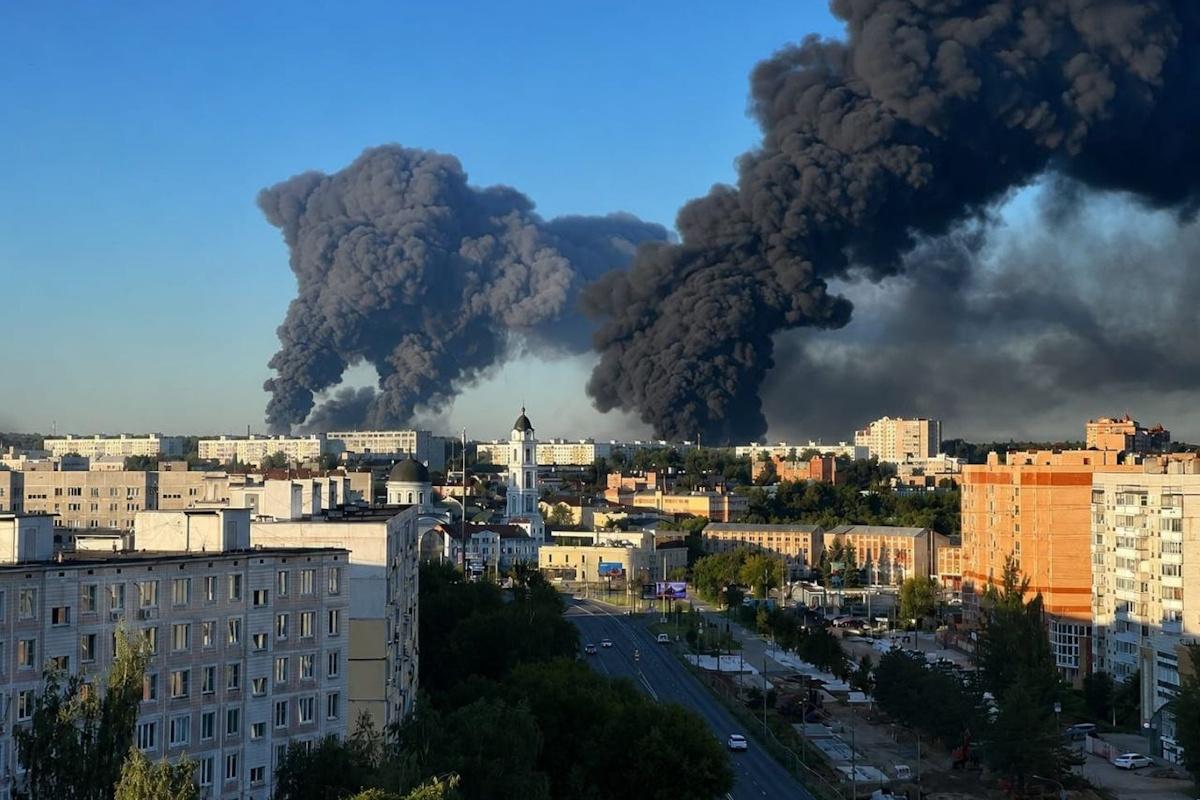
Russia is on the brink of a fresh gasoline crisis that could prove worse than the shortage earlier this year, The Moscow Times reported, after Ukrainian drones resumed strikes on the country's largest oil refineries.
The newspaper said oil companies had been able to build up additional reserves during the period when Ukraine was not striking Russian refineries. But now that the attacks have resumed, those reserves are likely to last only about one week of nationwide consumption, leaving Russia vulnerable to further gasoline disruptions.
Sergey Vakulenko, a senior fellow at the Carnegie Russia Eurasia Center in Berlin, said the gasoline situation in Russia was becoming very serious. He said the strikes on Omsk and Volgograd had hit plants that produce around 55% of Russia's commercial gasoline and hold roughly the same share of the domestic market.
Vakulenko said the intensity of the strikes was so high that some of the affected plants may have had to halt production altogether.
The Moscow Times said the scale of the attacks had revived fears over Russia's ability to maintain domestic gasoline supplies, particularly if several major refineries remain offline at the same time.
Vakulenko said the current situation differed significantly from the earlier crisis. He said that if Ukraine could repeat strikes against Russian oil refining with the same scope and intensity every two to three weeks over several months, it would create a fundamentally new reality for the functioning of the Russian economy.
Repair problems mount
According to the report, refineries have tried to defend themselves from drone attacks using nets strung with steel cables and fences built from shipping containers. These measures have proved ineffective, and the strikes continue to cause serious damage.
Repairing damaged equipment has become a major problem because of sanctions. The newspaper noted that Western spare parts for the damaged units can no longer be bought, while Chinese and Russian substitutes often take months to arrive and are frequently incompatible with the equipment already installed.
All five largest refineries hit
Ukraine has struck Russian refineries at least 120 times since the start of the year, according to the report. Over the past two weeks, drones have attacked all five of Russia's largest refineries.
The Omsk refinery, with a capacity of 22 million tonnes a year, was attacked on November 11. The Kinef plant in the Leningrad region, with a capacity of 21 million tonnes, was struck on November 9.
Drones also hit two large refineries that supply Moscow: the Ryazan refinery, with a capacity of 17 million tonnes, on November 5, and Slavneft-YANOS, with a capacity of 15 million tonnes a year, on November 3.
On November 1, drones attacked Lukoil's NORSI refinery near Nizhny Novgorod, which has a capacity of 17 million tonnes a year and is Russia's second-largest producer of motor gasoline. The Volgograd refinery, with a capacity of 14 million tonnes, was attacked on November 13.
Other targets included Rosneft's Novokuibyshevsk refinery, with a capacity of 8.3 million tonnes a year, the Bashneft-UNPZ refinery, with a capacity of 6.6 million tonnes, and the Afipsky refinery, with a capacity of 7.2 million tonnes.
Fuel restrictions already in place
The strikes, which began in late October, have covered Russia's largest refineries across different regions, from Siberia to the Baltic Sea.
The campaign has already led to fuel restrictions inside Russia. On November 9, Rosneft introduced limits on gasoline sales at its filling stations in all regions of the country.
Test yourself
According to Sergey Vakulenko, what share of Russia's commercial gasoline is produced by the plants hit in the Omsk and Volgograd strikes?
How long are Russia's gasoline reserves likely to last after the renewed attacks, according to the report?
How many times has Ukraine struck Russian refineries since the start of the year, according to the report?
Have your say
Do you think repeated strikes on refineries will significantly affect Russia's economy?