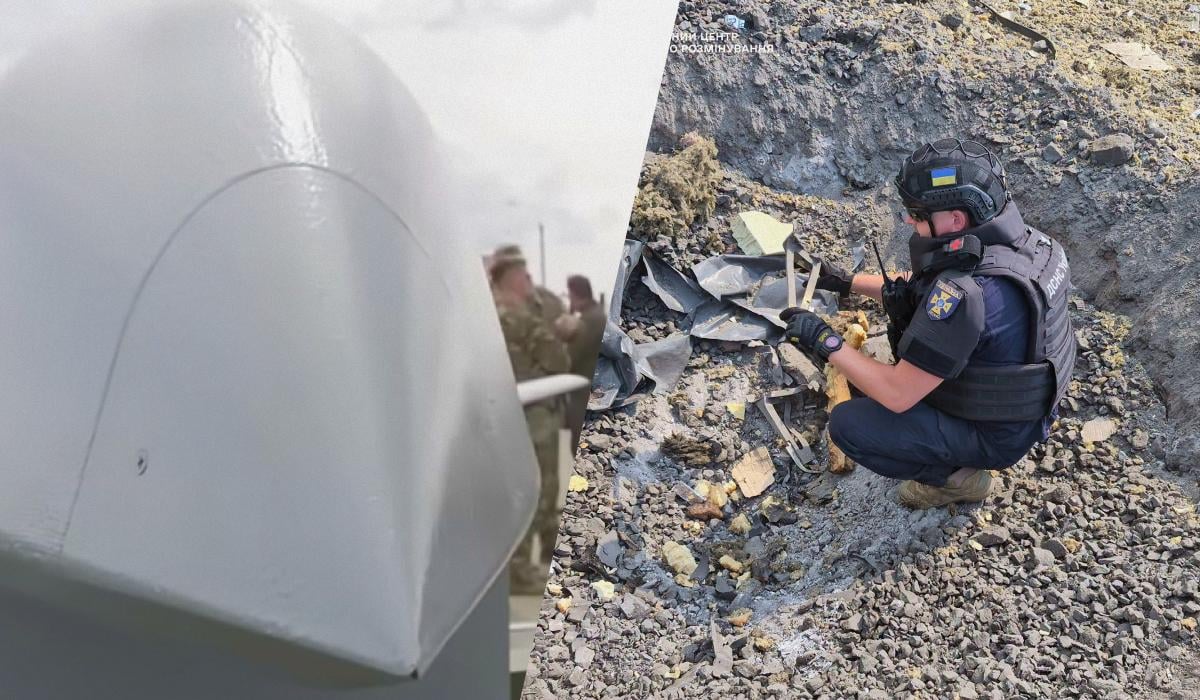
Russian forces deployed new jet-powered Banderol missile drones during a large-scale overnight attack across Ukraine on Thursday, according to a report by European news network Euronews and statements from the Ukrainian Air Force.
The Ukrainian Air Force confirmed that several Banderol weapons were intercepted alongside conventional cruise missiles and Iranian-designed Shahed strike drones during the mass barrage.
First recorded in combat operations in Ukraine in the spring of 2025, the Banderol is an increasingly frequent component of Russian aerial attacks designed to strain Kyiv's air defense inventory.
Also designated as the S8000, the device is a small unmanned munition powered by a jet engine that combines the speed and characteristics of a cruise missile with the design of a strike drone.
Cost and air defense impact
The hybrid missile drone is significantly cheaper to manufacture and carries a smaller warhead than a standard cruise missile, yet shooting it down can require Ukraine to use the same sophisticated air defense systems.
Euronews reported that this financial and material imbalance makes the weapon particularly problematic for Kyiv, allowing Moscow to produce and launch Banderols at low cost while forcing Ukrainian forces to expend scarce interceptors.
Unlike heavy strategic cruise missiles launched from long-range bombers, deploying the Banderol does not require aircraft takeoffs that provide Ukrainian early warning radars with advance notice of an attack.
The weapon is manufactured by Russian drone producer JSC Kronstadt, a Saint Petersburg-based aerospace company. It is launched primarily from Orion reconnaissance drones built at the same plant, but is also integrated into Mi-28 attack helicopters.
Euronews cited technical data indicating that the Banderol can reach flight speeds exceeding 500 kilometers per hour and has an operational range of up to 500 kilometers.
Warhead specifications and infrastructure targeting
Vladyslav Vlasiuk, the Ukrainian presidential commissioner for sanctions policy, stated that Banderol missiles are used in approximately 80 percent of Russian attacks targeting infrastructure in the Black Sea port city of Odesa.
The weapon carries a 114-kilogram fragmentation warhead containing up to 50 kilograms of high explosives. This payload is substantially smaller than the 400 to 500-kilogram warheads carried by Russian Kh-101 and Iskander-K cruise missiles.
Building a single Russian cruise missile can cost approximately 685,000 euros, whereas a Banderol is estimated to cost between 42,500 euros and 127,500 euros depending on the components used.
This price point puts the weapon in roughly the same cost bracket as the Iranian-designed Shahed loitering munition, which Russia has used extensively in mass aerial attacks against Ukraine since 2022.
Navigation systems and production capacity
Euronews noted that Russia can use Banderol drones to strike targets directly or to stretch Ukrainian defense networks responsible for countering heavier cruise missiles.
The weapon relies on satellite navigation for guidance and can be brought down by electronic warfare countermeasures, but it also features an autonomous navigation system.
Ukrainian military intelligence reported that Russian defense enterprises are operating in three shifts to produce up to 80 S8000 Banderol missiles per month.
Intelligence findings indicate that Russia continues to procure Western-made components for the munitions through third-country intermediaries linked to Russian oligarchs and defense industry firms, despite Western sanctions and export controls.
Anatolii Khrapchynskyi, a reserve officer in the Ukrainian Air Force and development director at a defense company, said Russian forces are increasing their use of Banderol hybrid missiles as they seek lower-cost attack options.
Khrapchynskyi explained that Kh-59, Kh-69, and Kh-101 missiles require complex production processes involving Western components or Russian and Belarusian manufacturing facilities. By contrast, he noted that the Banderol relies mostly on Chinese-manufactured components.