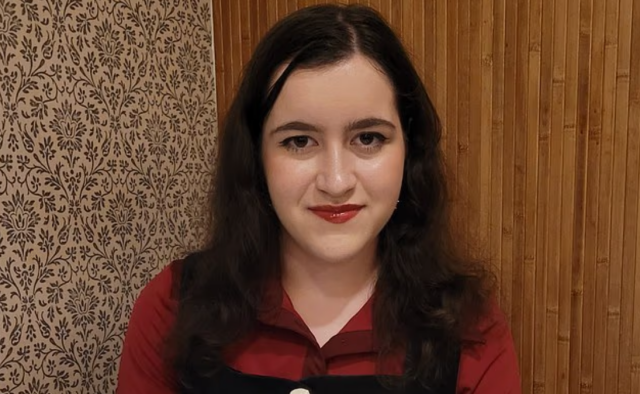
Seattle Mayor Katie Wilson is facing a potential recall election after local residents filed formal charges blaming her administration for deteriorating public safety across the city.
Local couple Melinda Jacobson and Dale Osterud submitted the recall charge to King County Elections on Tuesday, just seven months after the Democratic mayor took office.
The legal petition accuses Wilson of being "derelict in her duties for public safety of the city of Seattle," according to the Seattle Times, which first reported the filing after the document was published by local radio station KUOW.
Jacobson told the newspaper on Friday that the mayor had "sort of ignored the public safety part of her job, which is a huge part, and that is not right." She added that Seattle requires "a big-city-type mayor who knows how to deal with everything."

The recall filing comes amid heightened scrutiny of Wilson, a former workers' rights activist who was elected last November and sworn in on January 2. She had never previously held elected public office before assuming leadership of Washington state's largest city.

Forced resignation of police chief
A primary grievance cited in the recall petition is Wilson's decision to force the resignation of Seattle Police Chief Shon Barnes, 55. The mayor demanded his departure following a shooting at the Bite of Seattle food festival on July 27 that left three people dead.

The couple's letter characterized Barnes' ouster as a "hasty, rash decision" that demonstrated a "lack of fiscal responsibility" and fostered "distrust among the citizens of Seattle" toward the mayor's office.
The removal of Barnes also sparked swift condemnation from prominent Black community organizations across the city. Leaders from the NAACP, the Urban League of Metropolitan Seattle, Byrd Barr Place, and Community Passageways publicly criticized Wilson over her handling of the police chief's departure.

Neighborhood crime and safety complaints
The recall petition outlines widespread community concerns regarding crime, open-air drug activity, and public squalor across several prominent Seattle neighborhoods, including areas near city landmarks like the Space Needle and the Museum of Pop Culture.
In the North Aurora neighborhood, the letter detailed severe conditions between January and June, including "frequent gun battles by pimps, bullets through resident's homes and businesses in the area, and ongoing human sex trafficking and prostitution."
Residents had repeatedly attempted to contact Wilson regarding the "serious and life-threatening conditions" in North Aurora without receiving a response. The recall document noted that Wilson only took notice on June 6, when hundreds of neighborhood residents and city officials held a widely publicized march along Aurora Avenue.
However, after acknowledging the situation, Wilson ordered the removal of temporary street barriers that local residents had installed to protect their neighborhood from gunfire.

Similar concerns were raised regarding the Chinatown International District, where business owners and residents had "pleaded with [Wilson] to stop the open-air drug use and market." According to the recall letter, conditions in the historic neighborhood remain unimproved, marked by recent shootings and stabbings.
In the downtown neighborhood of Belltown and along 3rd Avenue, open-air drug sales and use have reportedly re-emerged. The recall petition stated that while the area was temporarily "cleaned up for the World Cup," it has since deteriorated, leaving residents and visitors "fearful."
Additionally, the recall petition criticized Wilson for turning off security cameras in the Stadium District following the conclusion of the World Cup tournament. The letter emphasized that the cameras had "proven to be a crime-fighting help" and noted that surrounding businesses and residents were clamoring for them to remain active.
Mayor's office defends record
Responding to the filing, a spokesperson for Mayor Wilson's office told the Daily Mail on Saturday that the administration was aware of the recall charges brought by Jacobson and Osterud.

"While it does not appear to have merit, our focus remains where it belongs: on making life safer and more affordable for the people of Seattle," the spokesperson said in a statement.
The mayor's office defended its performance over Wilson's first seven months, highlighting initiatives launched since she took office. "Since taking office, we're delivering meaningful progress: expanding community crisis responder hours, launching universal school meals this September, banning rental junk fees, accelerating shelter expansion, expanding transit, investing in our libraries, and taking on unfair pricing at grocery stores," the spokesperson stated.
The spokesperson added that "the courts will address any questions" regarding the recall petition while the mayor's office continues to "address the needs of Seattle."
Legal steps for the recall process
The recall petition submitted to King County Elections must now undergo a technical review by the King County prosecuting attorney's office.
Under Washington state recall procedures, if the charges meet technical legal standards, the prosecutor's office has 15 days to formulate a ballot synopsis and file it with the King County Superior Court for a judicial hearing.
A Superior Court judge will then evaluate the legal sufficiency of the charges to determine whether the recall process may proceed. If approved by the court, organizers will have 180 days to collect approximately 69,000 valid signatures from registered Seattle voters to place the recall measure on an election ballot.
Tax policies and corporate strain
The recall effort follows months of political friction surrounding Wilson's broader policy agenda, particularly her fiscal positions. The mayor has faced pushback for supporting Washington state's new 9.9 percent tax on annual personal income exceeding $1 million, which was enacted by the state legislature this year and is set to take effect in January 2028.
Wilson has also proposed additional municipal tax increases targeted at Seattle's highest earners and major businesses. The city serves as the corporate birthplace or headquarters for global companies including Amazon, Microsoft, and Starbucks, relying heavily on corporate tax revenue to fund municipal operations.
Fears over corporate migration have grown as Starbucks began relocating select corporate positions from its Seattle headquarters to Nashville, Tennessee. Although Starbucks, founded in Seattle in 1973, maintains that it intends to remain in the city, the shift has fueled concerns among local business leaders.
Tax policy concerns intensified in June when Wilson was asked during an interview with FOX 13 about claims that wealthy residents were fleeing the state. When questioned about being "dismissive" of high-earner departures, Wilson chuckled and responded, "I don't remember this."
Wilson added during the interview that she believed "claims of a large exodus of rich people due to our statewide millionaire tax that the legislature passed this year are overblown." Her comments came around the time prominent billionaires including Zillow co-founder Rich Barton and former Starbucks chief executive Howard Schultz relocated their residences out of Washington state.
The Daily Mail has reached out to the King County Elections system for further comment on the recall proceedings.