

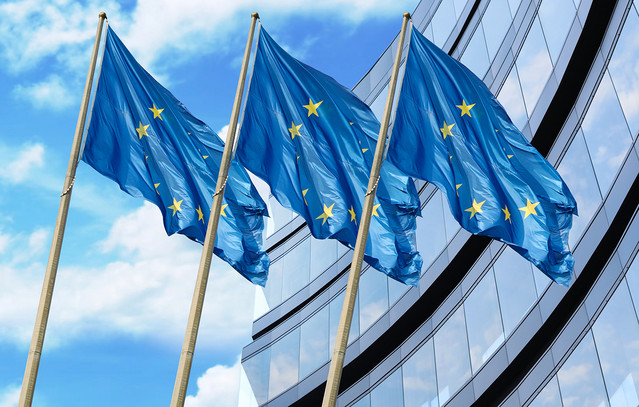
Six European Union member states have demanded cuts to the European Commission's proposed budget for the 2028 to 2034 period during a meeting in Berlin.
Germany, Austria, Denmark, Finland, the Netherlands, and Sweden issued a joint statement from the German capital stating that the bloc must make clear choices and redefine its financial priorities in the same way individual nations manage their domestic spending.
Speaking at the opening of a press conference in Berlin, German Chancellor Friedrich Merz said the six nations account for 40 percent of the European budget. He was joined in person by the leaders of Finland, Austria, and Denmark, while the prime ministers of Sweden and the Netherlands participated via video link.
Ahead of intense confrontations expected over the budget this autumn, Merz warned that while the group is not stingy, the distribution proposed by the Commission simply does not correspond to current times.
Proposed spending increase and fiscal divide
Under German leadership, the six fiscally conservative member states are rejecting any increase in public spending beyond current levels. Their opposition targets the European Commission's proposal, presented last year, which calls for a total allocation of 2 trillion euros for the 2028 to 2034 financial period, marking an increase of about 60 percent compared with the current budget.
The European Commission serves as the executive branch of the 27-member European Union, drafting legislation and managing the bloc's long-term multiannual financial framework. The proposed budget sets the binding spending limits across all EU programs and policy areas over a seven-year timeline.
The group's demand for stricter fiscal discipline sets up a traditional clash with member states favoring higher collective spending, including Spain, Italy, and Poland.
Defence priorities and summit disputes
The six countries are pushing to redirect available EU funding toward defence capabilities and technological competitiveness. They argue that defence spending must take precedence while the NATO military alliance faces an aggressive Russia, and that tech investment is required to keep pace with the United States and China.
Disagreements over how to fund the next budget have already sparked high-level friction. At the European summit in June, Merz clashed with French President Emmanuel Macron over proposals to issue joint EU borrowing to finance future spending obligations.
Upcoming summit timeline and political pressures
European leaders will attempt to reach a common position on the budget before the end of the year, with negotiations planned across upcoming summits in October, November, and December.
Diplomats aim to finalize the budget framework ahead of elections scheduled for 2027 in several member states. Those contests include elections in France, where the far-right could potentially score a victory.


