United States stock markets suffered a massive five trillion dollar sell-off on Thursday, November 5, 2026, as technology shares plummeted following Democratic mid-term election victories. The technology-heavy Nasdaq Composite dropped 5.5 percent, while the broad-market S&P 500 sank 4.4 percent in a session marked by intense selling across Wall Street.
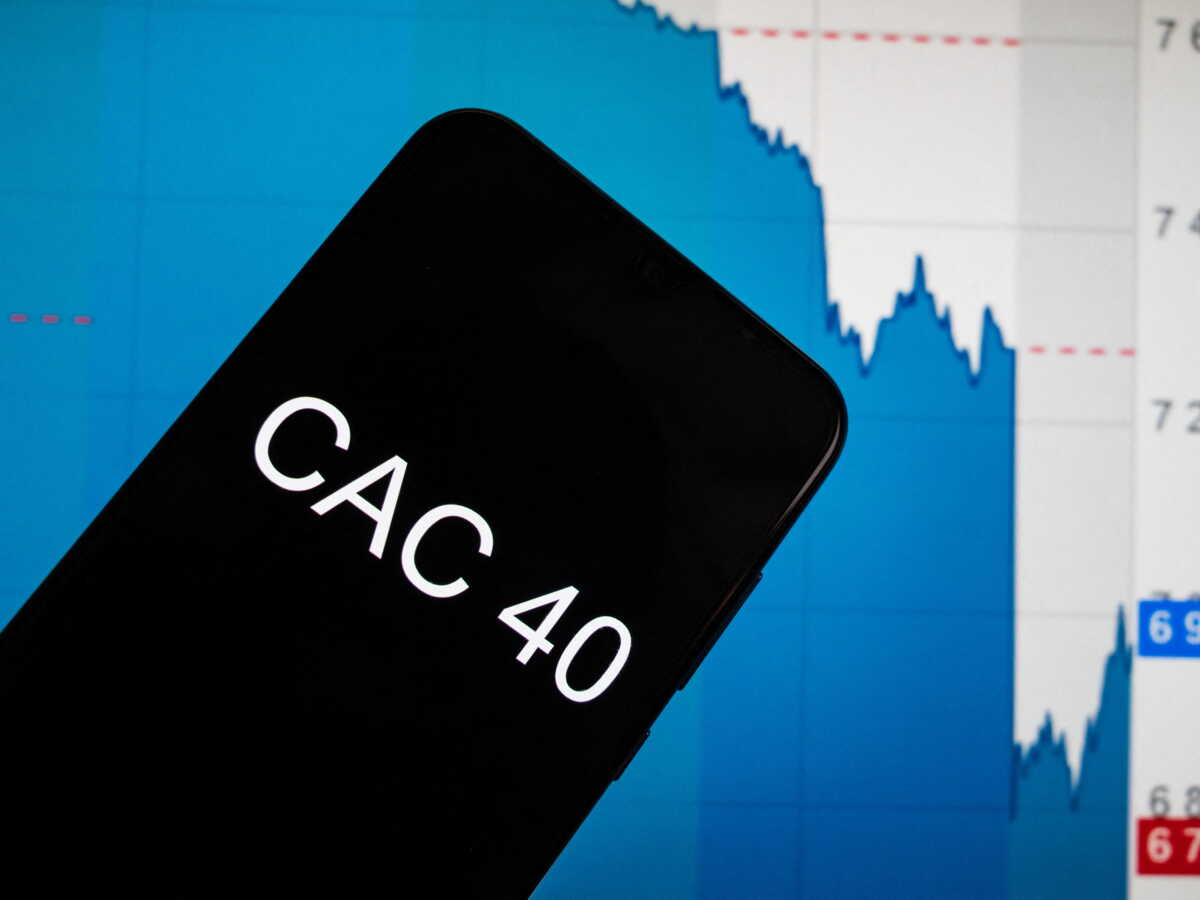
The single-day rout wiped out nearly five trillion dollars in market value, an amount representing approximately twice the combined value of every company listed on France's benchmark CAC 40 index. Artificial intelligence market leaders suffered severe declines, with electric vehicle maker Tesla sliding 11 percent, semiconductor firm Nvidia tumbling 9 percent, and aerospace manufacturer SpaceX shedding 9 percent.
The sudden downturn was triggered by the Democratic Party's victory in the United States mid-term congressional elections. Investors feared increased regulatory scrutiny for the technology sector and faced concerns over potential restrictions on the construction of data centres, which are essential to the expansion of artificial intelligence.
Despite the deep losses on November 5, the market quickly bounced back, with the Nasdaq regaining nearly 4 percent across the following two trading sessions. Financial history indicates that such risks should be kept in perspective, especially by investors who spread their holdings across numerous companies and diverse sectors rather than placing all their capital in one basket.

Long-Term Recovery and the Paris Market
Long-term records show that patient stock market investors have consistently recovered from severe declines. Since the creation of the French CAC 40 index in 1988, even the most unfortunate investor who purchased Paris-listed shares at the absolute market peak has always erased their losses in less than seven years.
Those calculations were carried out in 2023 by Sandy Campart, a lecturer and researcher at the IUP Banque Finance Assurance at IAE Caen and the author of the book Et si on osait investir en Bourse, speaking in an interview with French business magazine Capital.
The CAC 40 index tracks forty of the largest and most heavily traded companies on the Euronext Paris exchange, representing key industries across France including aerospace, luxury goods, banking, and energy.
Two Decades of Stock Returns Through Global Crises
Equity investment has continued to generate substantial returns over the long run despite recurring market shocks. Over the twenty-year period from November 2006 to November 2026, the CAC 40 produced an average annual return of 5 percent with dividends reinvested.
That steady performance came despite a series of major international downturns. The two decades witnessed the subprime mortgage crash, which triggered the collapse of investment bank Lehman Brothers and the 2008 to 2009 global financial crisis, followed by the eurozone debt crisis and the market plunge caused by the Covid-19 pandemic.
The French index also absorbed the impact of the war in Ukraine, political disruption after the dissolution of the French National Assembly, import tariffs introduced by Donald Trump, military conflict with Iran, and a surge in France's long-term borrowing costs that began in the summer of 2026.
For disciplined investors, purchasing shares during market bottoms has multiplied annualised returns over time. Stepping into the market when prices fall allows buyers to secure assets at steep discounts and capture rapid rebounds as conditions stabilise.

Missing the Strongest Trading Days
Periods of extreme volatility often rattle investors, but historical market patterns show that steep declines tend to be concentrated in short spans. Peak gains are also grouped together, and sharp market rallies frequently follow directly after steep downturns, according to United States asset management firm Fidelity.
Fidelity warned that international equity investors should never panic and sell off all their shares during a market shock. The investment firm stressed that staying invested is critical because missing the best individual trading days inflicts severe damage on overall returns.
Between 2015 and 2025, the global equity market delivered an average return of 11.8 percent per year, Fidelity noted. However, an investor who missed just the forty best trading sessions across that ten-year span would have suffered an overall net loss instead of achieving strong double-digit gains.
When stock markets turn suddenly higher or lower, investors often feel tempted to rush into buying or selling shares to ride a wave or stop a drop. Fidelity cautioned that knee-jerk impulses rarely produce sound financial decisions, noting that hurried actions make it easy to commit expensive mistakes like selling at market bottoms or buying at the top. The asset manager advised investors to keep a cool head during volatile periods and avoid letting emotions guide their portfolios.
Market Timing and the Momentum Strategy
Capital highlighted the results achieved by its daily premium investment newsletter, Momentum, which relies on technical and financial analysis to identify market entry and exit points. Following the stock market crash of April 2025, Momentum urged subscribers to purchase heavily discounted CAC 40 shares, including industrial equipment group Schneider Electric, generating rapid and substantial returns.
The publication reported that Momentum successfully guided readers through recent volatility by anticipating major price shifts. The newsletter predicted the decline in the CAC 40 in August 2026 and forecast its dramatic rebound in early November, enabling subscribers to avoid the brunt of the summer drop and participate fully in the recovery.
Since its launch in May 2021, Momentum reported that its portfolio selections have outperformed the broader CAC 40 index. Capital offers an annual subscription to the daily newsletter, which covers listed shares and exchange-traded funds, with five free months included.

Analysis and Leadership at Capital
The market report was written by Nicolas Gallant, an economic journalist, financial analyst, and technical analyst at Capital, which is owned by Louis Hachette Group. Gallant created the Momentum newsletter covering listed equities and the Trackers newsletter focusing on exchange-traded funds.
Gallant specialises in equity markets and macroeconomic trends, covering listed and unlisted companies, bonds, foreign currencies, precious metals, and commodities through technical, financial, and economic analysis. He has authored two books on chart analysis, titled Les figures chartistes de l'analyse technique and L'analyse technique en 50 cas pratiques, and serves on the board of administrators of the French Association of Technical Analysts, known as Afate.