

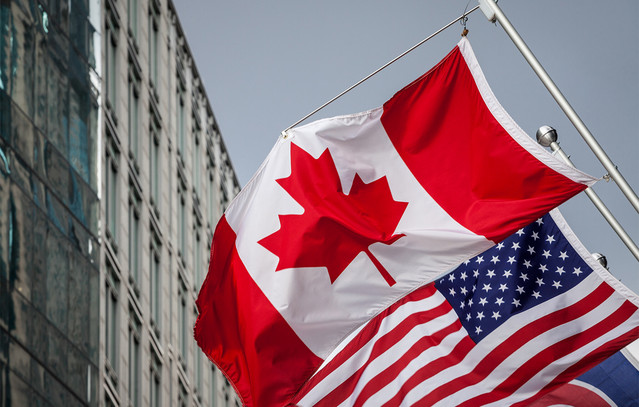
US President Donald Trump has agreed to suspend proposed 50 percent tariffs on Canadian imports for three days following last-minute talks with Ottawa.
The temporary pause was announced after Canadian negotiators held late discussions in Washington to avert the new trade measures, which were set to target 20 billion dollars worth of Canadian exports.
The additional duties, first announced in mid-July, cover a broad range of products exported to the American market, ranging from cement and beer to ice hockey sticks. While Canada exports 383 billion dollars of goods to the United States annually, the latest tariffs specifically targeted items imported under the North American trilateral free trade agreement between the US, Canada, and Mexico.
Canadian Prime Minister Mark Carney held direct telephone conversations with Trump on Monday and Tuesday in an effort to reach a resolution. Carney instructed his negotiating team in Washington to offer targeted concessions to prevent the new levies and potentially reduce tariffs already in place.
Announcing the move on his social media network, Truth Social, Trump said he had suspended the 50 percent duties for three days because the two sides had reached an agreement, pending final documentation.
Escalating trade tensions
The White House described the planned tariffs as retaliation for discriminatory treatment of American products by Canada's federal government and several provinces. According to reports from Agence France-Presse and the Athens-Macedonian News Agency, Washington cited retaliatory duties previously imposed by Ottawa to justify its latest action.
Jamieson Greer, the United States Trade Representative, stated that Canada and China were the only two countries that implemented retaliatory measures against US efforts to rebalance trade. Greer also criticized a Canadian boycott of American alcoholic beverages, which had been introduced in response to repeated comments by Trump suggesting Canada should become the 51st US state.
When the tariffs were initially announced, Carney condemned them as a direct violation of the trilateral free trade deal and pledged that Canada would enact equivalent retaliatory measures.
Future of the free trade agreement
Negotiations between the two neighboring nations remain ongoing, with Carney stating on Tuesday that further work was required as both sides attempt to secure a broader deal governing cross-border commerce.
The current trade framework, which replaced the North American Free Trade Agreement during Trump's first presidential term, includes a provision for joint review and extension. Under original terms, the three signatory nations could renew the pact for 16 years, but reluctance from Washington means it will instead face annual reviews for a decade before expiring.
Relations between the neighboring allies have faced repeated strains since Trump returned to the White House in January 2025. Although Canada and Mexico rank among the largest trading partners of the US, with government data showing that over 80 percent of Canadian and Mexican exports to the US are covered under the trilateral agreement, both nations were targeted by broad tariffs early in Trump's second term. Those earlier measures were subsequently struck down by the Supreme Court in late February.


