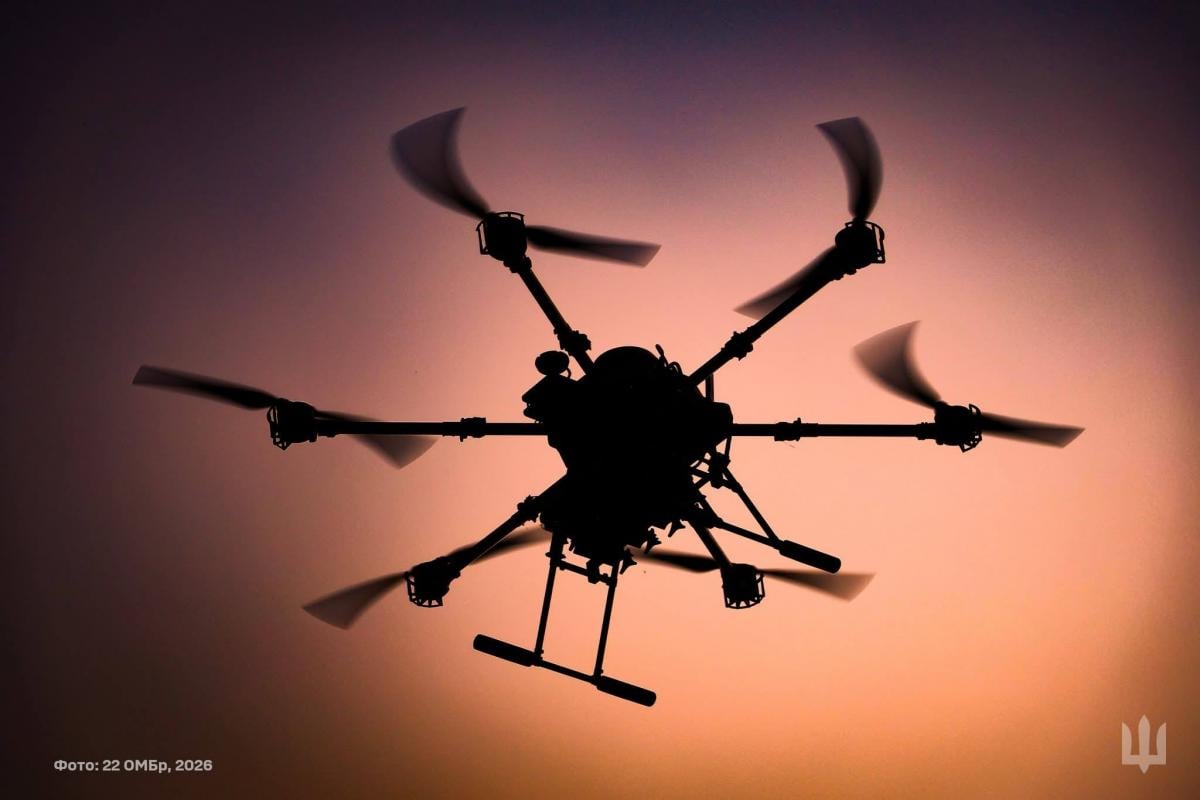
Ukraine's Ministry of Defence aims to ensure that 100 percent of drones deployed on the front line are equipped with artificial intelligence and machine vision systems, according to a report by Business Insider España.
Units of the Armed Forces of Ukraine are already utilizing more than 70 different systems relying on artificial intelligence and machine vision to execute strikes against enemy targets. More than 200 Ukrainian companies are currently manufacturing AI-enabled drones to meet frontline demand.
Military units can purchase weapons and uncrewed aircraft through Brave1 Market, a dedicated online procurement platform that currently lists 46 AI-based solutions. The available technologies include automated target recognition, optical image stabilization, and self-contained target homing.
Brave1 is Ukraine's official defence technology cluster, established to accelerate the development and integration of advanced equipment for the military. Machine vision refers to specialized computer algorithms that allow automated hardware to process visual inputs from optical cameras and infrared thermal sensors in real time.
Battlefield deployment and target tracking
Data from the Ministry of Defence of Ukraine indicates that Ukrainian forces have neutralized more than 260,000 fixed-wing and multi-rotor drones since the start of 2026, with artificial intelligence playing a central role in counter-drone operations. The Ukrainian government's strategic focus on artificial intelligence is transforming uncrewed warfare by transferring core combat functions to automated algorithms, including terrain navigation, object identification, and direct strikes, while human operators retain final decision-making control over weapon engagement.
To operate in environments affected by electronic warfare, where satellite navigation signals are jammed or unavailable, machine vision algorithms analyze ground terrain and visual landmarks beneath the drone. By matching real-time imagery with pre-loaded digital maps, the software maintains precise coordinate tracking without GPS reliance during day and night operations.
Neural networks process visual feeds to detect hostile personnel and armored vehicles. Once an optical guidance system locks onto a target during approach, the drone can autonomously maintain its trajectory toward the objective even if electronic warfare severs radio communication between the drone and its human operator.
Business Insider España reported that artificial intelligence now plays a critical role across Ukraine's entire attack chain, spanning target location, engagement execution, and post-strike battle damage assessment.
Data platforms for AI model training
Developing effective combat algorithms requires large quantities of verified military data. Ukrainian developers obtain structured datasets through Brave1 Dataroom, a secure digital environment used to test, train, and refine artificial intelligence systems for tasks such as aerial target interception.
More than 100 Ukrainian defense companies have been granted access to the Brave1 Dataroom platform. Developers train machine learning models using real battlefield information gathered across varying weather conditions and times of day, utilizing data gathered from both optical and thermal imaging sensors.
The Ministry of Defence of Ukraine has also provided defense manufacturers with access to Avengers Labs, a specialized platform designed for training drone artificial intelligence models on battlefield imagery. The platform features an expanding database containing five million labeled frames of military equipment and targets, including tanks, artillery pieces, air defense installations, infantry units, Shahed loitering munitions, and reconnaissance uncrewed aerial vehicles.
Defense AI Center A1 and international context
In March, the Ministry of Defence of Ukraine established the Defense AI Center A1. The facility analyzes operational combat data to accelerate target destruction cycles and advance military technology. The center's team has launched strategic initiatives aimed at building an AI-integrated military force, with several experimental systems currently undergoing operational testing by frontline units.
The rapid adoption of artificial intelligence in Ukraine reflects a broader international trend toward algorithmic warfare. UNIAN, a Kyiv-based Ukrainian news agency, previously reported that the People's Liberation Army of China has increasingly integrated artificial intelligence into military command structures to process data and accelerate decision cycles, even as it faces shortages of experienced commanders.
A research study published in Foreign Affairs, an American foreign policy journal, in March 2026 noted that Chinese forces have actively tested artificial intelligence for automated weapon targeting, cyber operations, underwater surveillance, and command decision support, while maintaining human oversight for final strike authorization.