Ukrainian forces have achieved their strongest frontline positions in years following a successful new offensive in northern Donetsk, a military expert said on Tuesday.
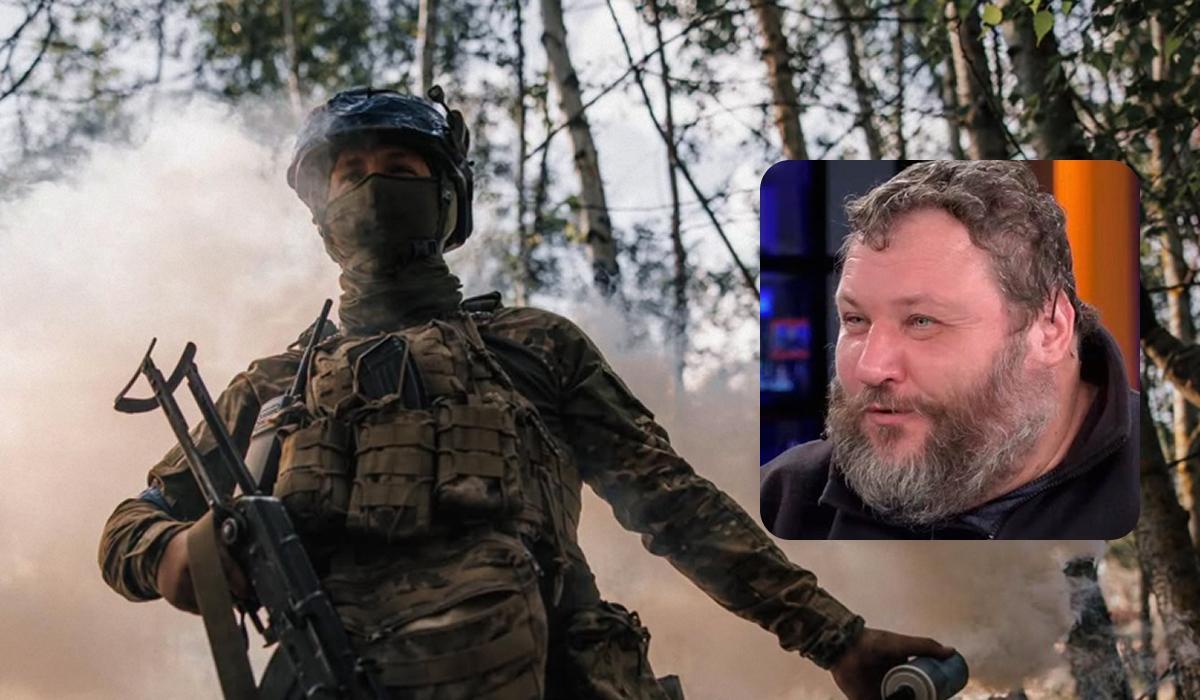
Yevhen Dikiy, a veteran of the Russo-Ukrainian war and former Aidar battalion commander, said Ukraine's military progress has forced Russia to shift its main objective from frontline combat to intense strikes on Ukrainian rear infrastructure.
Speaking on Radio NV, Dikiy explained that the current situation represents a systemic shift in the war rather than a temporary improvement, driven by major reforms in Ukrainian troop management and battlefield command. He noted that Ukrainian forces are now in their strongest position since at least the Kursk cross-border operation and potentially since the 2023 counteroffensive.
Dikiy previously commanded a company in the Aidar battalion, a volunteer assault unit formed during the initial 2014 conflict in eastern Ukraine, and currently serves as director of the National Antarctic Scientific Center. Radio NV is a nationwide news radio station based in Kyiv.
New tactics on the Lyman front
The change in momentum on the battlefield has been driven by Operation Vivaldi, an offensive conducted by the Third Army Corps of the Armed Forces of Ukraine along the Lyman direction in northern Donetsk Oblast. Dikiy described Vivaldi as an operational-level maneuver that established a new precedent for combining different military branches.
Under the new combat model, Ukrainian forces deploy robotics and drones to clear enemy positions before sending in assault infantry, reversing traditional doctrine where infantry advanced alongside or ahead of aerial support. Dikiy added that the operation also tested new army structures, communications systems, and command methods tailored for twenty-first-century warfare.
The Lyman sector is a key railway and road network in northern Donetsk Oblast, guarding the approaches to the cities of Sloviansk and Kramatorsk. The Third Army Corps is one of Ukraine's primary operational corps designed to integrate armored, artillery, and drone units across multi-brigade operations.
Dikiy emphasized that time has begun working in Ukraine's favor as Kyiv seizes the initiative on the eastern front. He characterized Russia's heavy bombardment of rear cities as an act of desperation, comparing it to Nazi Germany firing rockets at London while its land armies were retreating across Europe.
Russian retreats and false claims
Reports from news agency UNIAN confirmed that Operation Vivaldi has forced Russian troops to retreat in eastern Ukraine, compelling Moscow to abandon key battlefield objectives for an indefinite period. Viktor Tregubov, spokesperson for Ukraine's Joint Forces Task Force, stated that Russian forces were being pushed back just as Moscow issued false claims regarding the front.
Tregubov said Russian claims of progress amounted to cartographic schizophrenia, pointing to statements by Kremlin leader Vladimir Putin alleging the capture of Svyatohirsk in northern Donetsk Oblast. Tregubov clarified that Russian forces had never captured Svyatohirsk and that Russian commanders had drawn false positions on maps for areas their drones had not even observed.
Svyatohirsk is a historic town on the Siverskyi Donets River, famous for its centuries-old Orthodox cave monastery complex. Ukrainian troops liberated the town during the autumn 2022 Kharkiv counteroffensive, and Ukrainian units have maintained control over the settlement despite repeated Russian shelling.
Troops pinned against the Oskil River
Tregubov also reported that Ukrainian forces are steadily eroding Russian military potential further north in Kharkiv Oblast, specifically in the corridor between Kupiansk and the settlement of Dvorichna. He explained that Ukrainian pressure is currently pinning Russian units back against the banks of the Oskil River.
Kupiansk serves as a major logistics hub and rail intersection in northeastern Ukraine, while Dvorichna lies further north along the eastern bank of the Oskil River. The river forms a major natural obstacle in Kharkiv Oblast, creating tactical bottlenecks for military forces operating along its eastern bank.