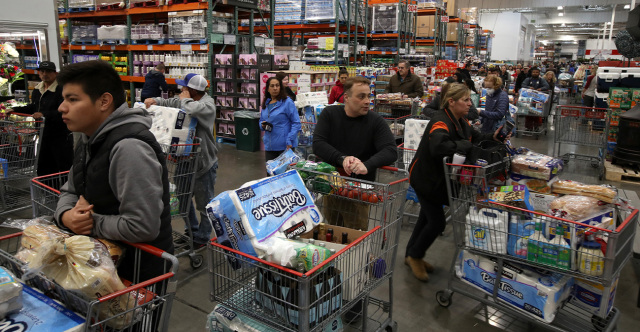
Prices for generators, toilet paper and freeze-dried food are rising sharply across the United States as a wave of technology failures pushes anxious consumers to stockpile emergency supplies, according to an analysis by Bloomberg Economics.
The analysis, based on prices gathered online, found notable increases in goods often used to stock underground shelters, at a time of year when such prices usually fall as retailers roll out discounts ahead of Black Friday and Cyber Monday.
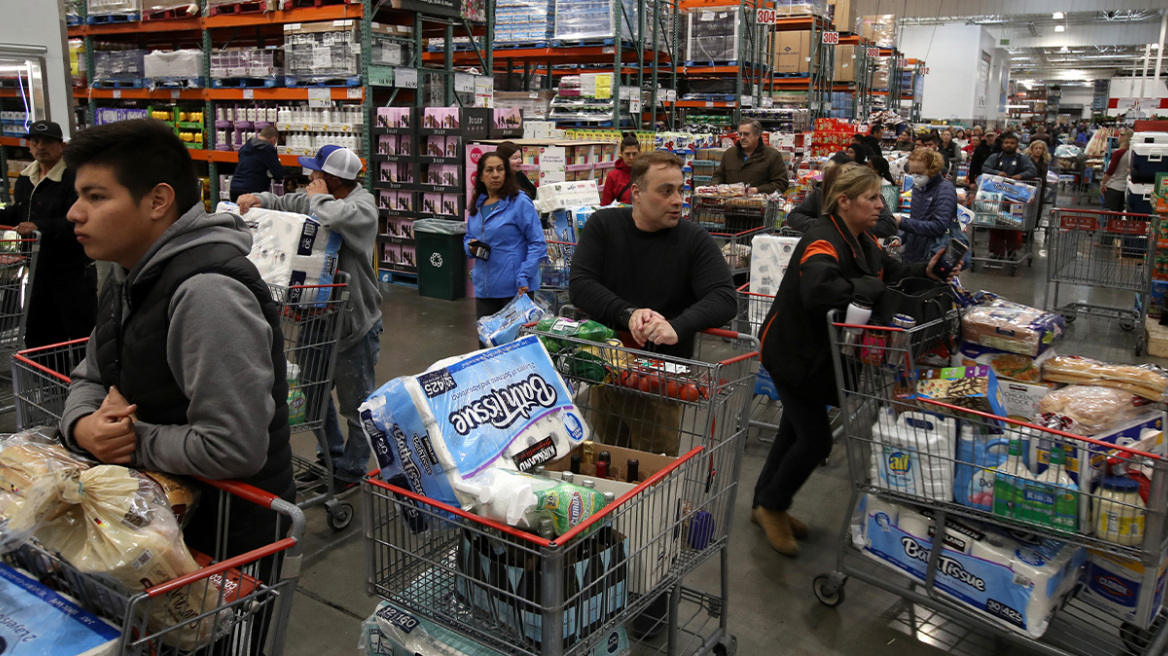
The figures, drawn from the Bloomberg Price Project, which tracks prices over time, confirm a trend that major retail chains including Walmart and Costco have already flagged: more shoppers are buying emergency supplies.
Prices for these products rose especially sharply in November, following a series of technical failures that hit airlines, banks and even the US National Security Agency.
Those incidents deepened concerns about the resilience of the economy and critical infrastructure, while the spread of artificial intelligence, and its potential use to breach information systems, has heightened fears among some consumers.
12% jump in shelter food prices
The biggest shift is in freeze-dried food, preserved through a process that allows it to last for long periods and makes it a staple of shelter supplies.
According to Bloomberg Economics, online prices for freeze-dried food have risen 12% since September, compared with a 9% drop over the same period last year.
More than one in three product listings tracked by Bloomberg in this category are now out of stock, up from just one in 16 a year ago.
Generators show a similar pattern, with more than one in five no longer available, a stock-depletion rate four times higher than last year.
Toilet paper, one of the products at the centre of panic buying during the Covid-19 pandemic, has also risen 4% in price since September, after falling over the same period last year. About one in ten listings for the product now shows no stock available.
Prices for paper towels and batteries are also climbing. In these categories, as well as for garbage bags, stock-depletion rates are higher than last year, and most of these products are selling faster than before.
Demand surge and other price drivers
The speed at which stock is running out suggests that rising demand is at least partly responsible for the price increases.
However, Bloomberg's analysis notes that other factors may also be contributing, including tariffs on raw materials, higher fuel costs and factors affecting food production.
The divergence becomes clear when these emergency items are compared with roughly 1,400 other products tracked online, including clothing, toys and electronics.
Prices for that broader group have fallen by about 1% over the same period, following the usual pattern seen before the holiday season.
Growing interest in emergency preparedness
The unease among Americans is also reflected in rising interest in content about preparing for emergencies.
Colby Kunrad, co-host of the podcast "Casual Preppers", based in Vernal, Utah, said downloads of the show's episodes had risen 33% over the previous 30 days.
The podcast, marking ten years on air, carries the tagline "Listen to us if you want to survive."
Kunrad, speaking in an interview on 19 November, said such large increases were unusual and that this said a lot.
He said more people were now engaging with the show's social media accounts, and that more listeners were messaging the hosts directly.
'No need to start digging your shelter'
Kunrad explained that he encourages his listeners to prepare above all for unpredictable everyday situations, such as losing a job or facing unexpected medical costs.
He said those were the things people should prepare for, not the total collapse of society, adding that it was useful for every household to keep basic supplies such as water and long-lasting food.
He admitted he was struck by the fact that so many technological failures occurred around the same time, but made clear he did not want to foster a climate of fear.
He said he and his co-hosts try not to turn into conspiracy theorists or give events more weight than they deserve, adding that people do not need to start digging their shelter this weekend.
Test yourself
According to Bloomberg Economics, how much have prices for freeze-dried shelter food risen since September?
What share of generator listings tracked by Bloomberg are now out of stock?
Which podcast saw its downloads rise 33% over 30 days?
Have your say
Have recent outages made you think about stocking up on emergency supplies?