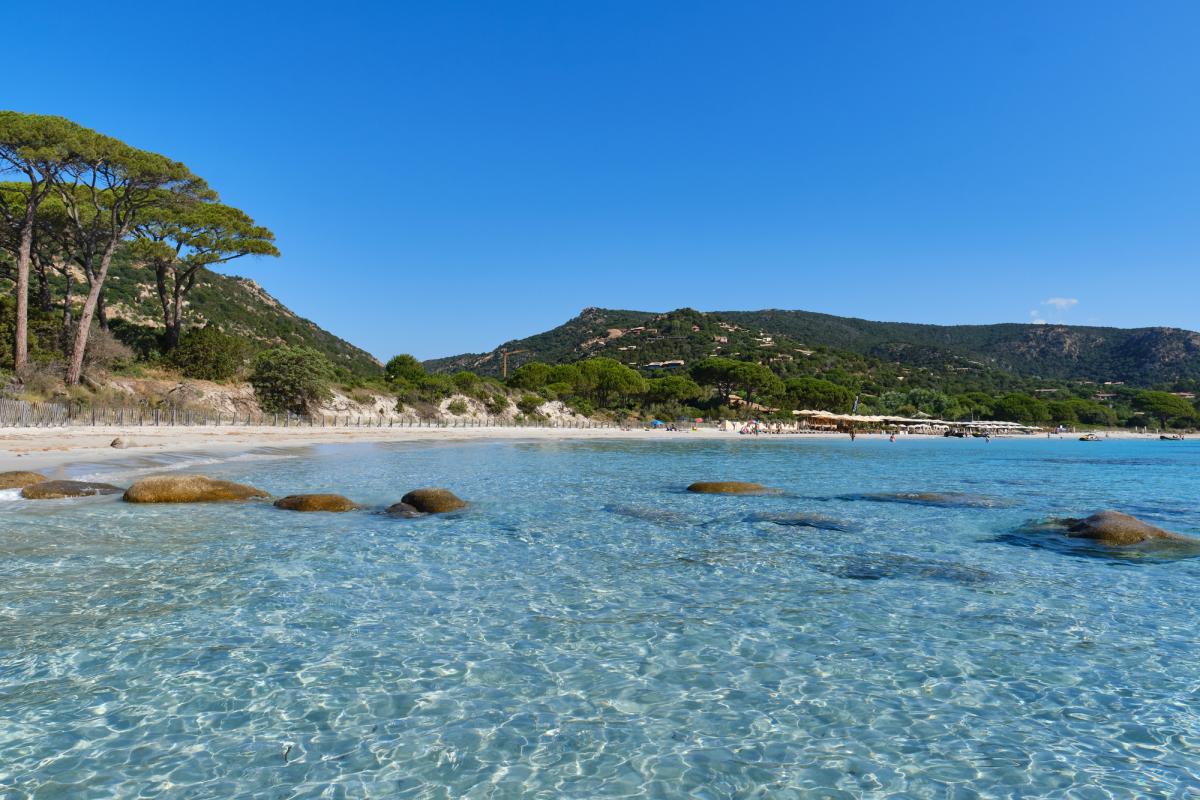
Scientists have identified more than 1,300 almost perfectly circular formations on the floor of the Mediterranean Sea off the coast of Corsica, and researchers are still divided over how they were formed.
The unusual structures were first spotted in 2011 during a seabed survey expedition. Sonar scans produced images showing regular circular shapes with dark patches at their centers, in place of the sandy and rocky terrain typically found on the seafloor.
Researchers initially located only a few dozen of the formations. Further analysis later revealed that their number exceeds 1,300. They cover an area of several square kilometers and sit at depths of between 105 and 125 meters.
Follow-up expeditions allowed scientists to examine the structures more closely. Divers found that each circle has a dome of red calcareous algae at its center, surrounded by a lighter ring of sediment. The outer band is made up partly of small limestone formations known as rhodoliths.
The circles are not simple depressions in the seabed but complex biological structures. They provide a habitat for sponges, corals, invertebrates and various species of fish.
What scientists say about their origin
One leading theory links the formations to the last glacial maximum, which occurred around 21,000 years ago. Sea levels in the Mediterranean were then much lower than today, meaning areas now submerged at more than 100 meters were once far closer to the surface.
Those shallower conditions would have suited red calcareous algae, which needs sunlight to grow. As the climate later warmed and glaciers melted, sea levels rose and the former algae colonies were gradually submerged.
During a 2020 expedition, scientists collected samples from the central parts of the formations. Radiocarbon dating showed that the oldest material examined dated back roughly 21,000 years.
According to one version of the theory, a new phase of formation began around 8,000 years later, once sea levels had stabilized. Fragments of the ancient algae structures and rhodoliths are thought to have gradually built up around the central remains, forming the distinctive circular rings. Researchers stress this remains a hypothesis rather than a confirmed mechanism.
Could the circles be linked to wartime bombs?
In 2024, researchers Marc Verlaque and Charles-François Boudouresque proposed an alternative explanation for the formations.
They suggested the circles could be connected to American aerial bombs dropped by aircraft returning from combat missions over Europe between 1943 and 1945. American air bases were located near Corsica during that period, and unused munitions could have ended up in coastal waters.
Under this theory, some of the structures may have formed at the sites where bombs fell or exploded, later becoming colonized by marine organisms. If correct, their origin would not be an ancient geological or biological event but the result of human activity in the relatively recent past.
This theory, like the glacial explanation, has not yet been conclusively confirmed.
Why scientists are calling for the area to be protected
Regardless of how the circles formed, research has shown that this stretch of the Mediterranean is a valuable ecosystem, home to numerous marine organisms, including rare corals and invertebrates.
One of the main threats to the formations is shipping. Anchors from large vessels can damage the fragile limestone structures, which may have taken thousands of years to form.
Some of the discovered formations already lie within the Cap Corse and Agriate marine nature park. Scientists believe protection should be extended to cover the remaining areas as well, in order to preserve what they describe as an unusual underwater ecosystem.