Archaeologists in Mexico have identified a human skeleton found during construction of the Felipe Ángeles International Airport near Mexico City as being up to 13,000 years old, making the individual one of the earliest known inhabitants of the Valley of Mexico.
The bones were discovered in 2021 at the airport construction site. According to Heritage Daily, archaeologist Israel Peña first found the remains and, based on their size and the location, initially suspected they belonged to an ancient camel. The area was once a swamp, and muddy sediments there had preserved the remains of creatures such as mammoths and camels from the same period. Further excavation showed the bones were human.
Researchers at Mexico's National Institute of Anthropology and History, known as INAH, analysed two different components of the find, producing two separate age estimates. Collagen analysis dated the individual to between 12,987 and 13,087 years ago, while measurements based on bioapatite, the mineral component of bone, pointed to an age of between 11,700 and 12,050 years ago.
Why the skeleton is called Yotzin
The ancient man was named Yotzin, a Nahuatl word meaning unique, a reference to his unusually powerful build. He stood at roughly 175 centimetres tall, which researchers say was considered very tall for the era.
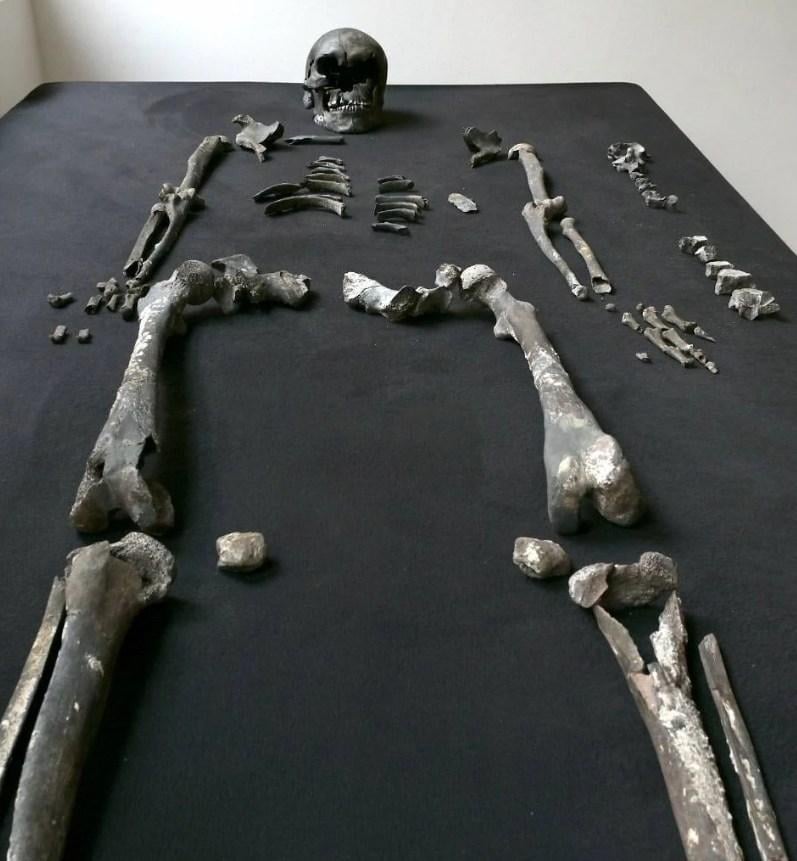
Anthropologist Arturo Talavera González said the man's strong skeletal structure matched the lifestyle of a hunter-gatherer who covered long distances. His teeth showed no signs of cavities, but the surfaces were heavily worn, Talavera González said. He added that this wear could be linked not only to a diet rich in fibrous plant food, but also to using the teeth as tools, for example when working animal hides or plant fibres.
No artifacts found nearby
Yotzin was the only person whose remains were found at the excavated site, which covered an area of roughly 25 by 30 metres. No funerary goods or other artifacts were found alongside the skeleton.
Test yourself
Where was the ancient skeleton discovered?
What age range did collagen analysis suggest for the remains?
What does the name Yotzin mean in Nahuatl?
Have your say
What do you find most interesting about this discovery?
Where it happened
Mexico City, Mexico