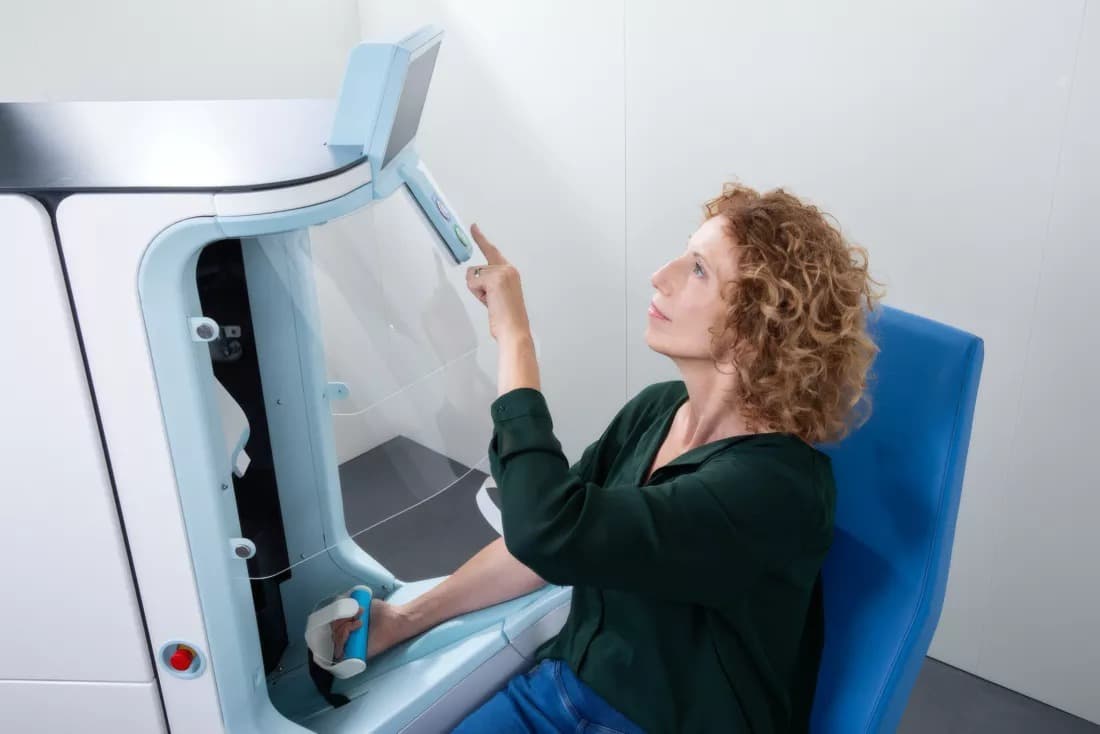
The United States Food and Drug Administration has approved Aletta, a robotic system capable of drawing blood from adult patients without direct human involvement in every stage of the procedure.
Federal regulators said the automated device could help healthcare facilities across the United States manage widespread staffing shortages among phlebotomists, the medical specialists trained to draw blood. Under the approved operational guidelines, a single operator can oversee up to three Aletta machines simultaneously.
Phlebotomy, the clinical practice of puncturing a vein to withdraw blood samples for diagnostic testing, is one of the most common medical procedures in healthcare settings. The FDA requires a trained phlebotomist to initiate and supervise each automated session. Before the procedure begins, the specialist instructs the patient on proper arm placement, starts the device, and monitors its progress throughout the draw.
Aletta locates a suitable vein using near-infrared light and Doppler ultrasound technology, allowing the machine to distinguish veins from nearby arteries. Near-infrared light illuminates superficial vessels beneath the skin, while Doppler ultrasound uses high-frequency sound waves to detect blood flow and vessel depth. If the system fails to detect an appropriate vessel, the procedure automatically stops.
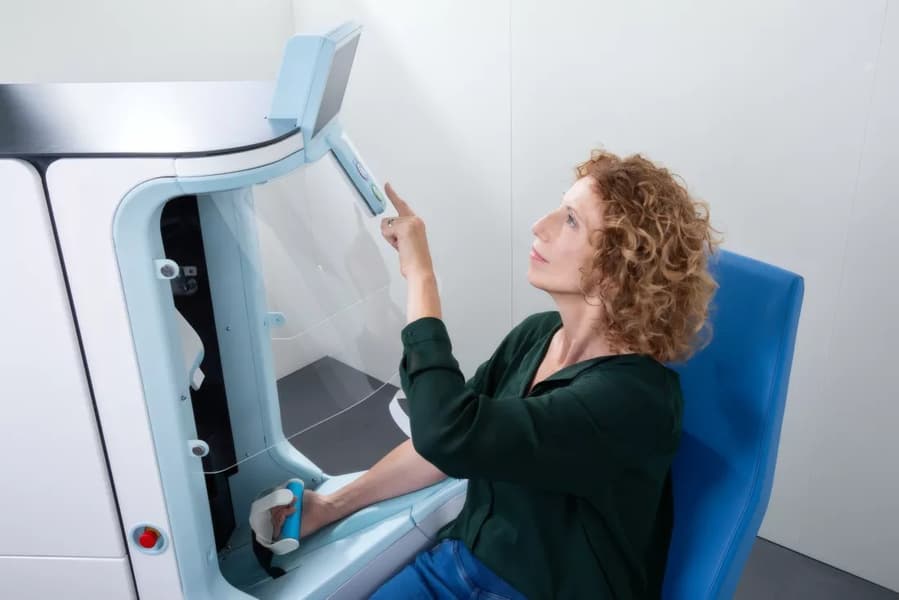
Upon detecting a suitable vein, the robot applies a tourniquet, treats the skin, inserts the needle, and draws the required blood sample. Once collection is complete, the machine detaches the needle and applies a bandage. A medical worker then checks that the collection tubes are filled correctly and used in the proper sequence.
Safety mechanisms and clinical performance
The device includes built-in protective mechanisms to ensure patient safety during operation. If a patient moves too actively while blood is being collected, the needle automatically disconnects and the procedure stops. Additional sensors monitor for other potentially dangerous conditions, pausing operation and alerting the supervising specialist if an issue arises.
According to clinical data presented to the FDA, Aletta demonstrated a blood collection success rate that was comparable to or higher than that of trained human phlebotomists.