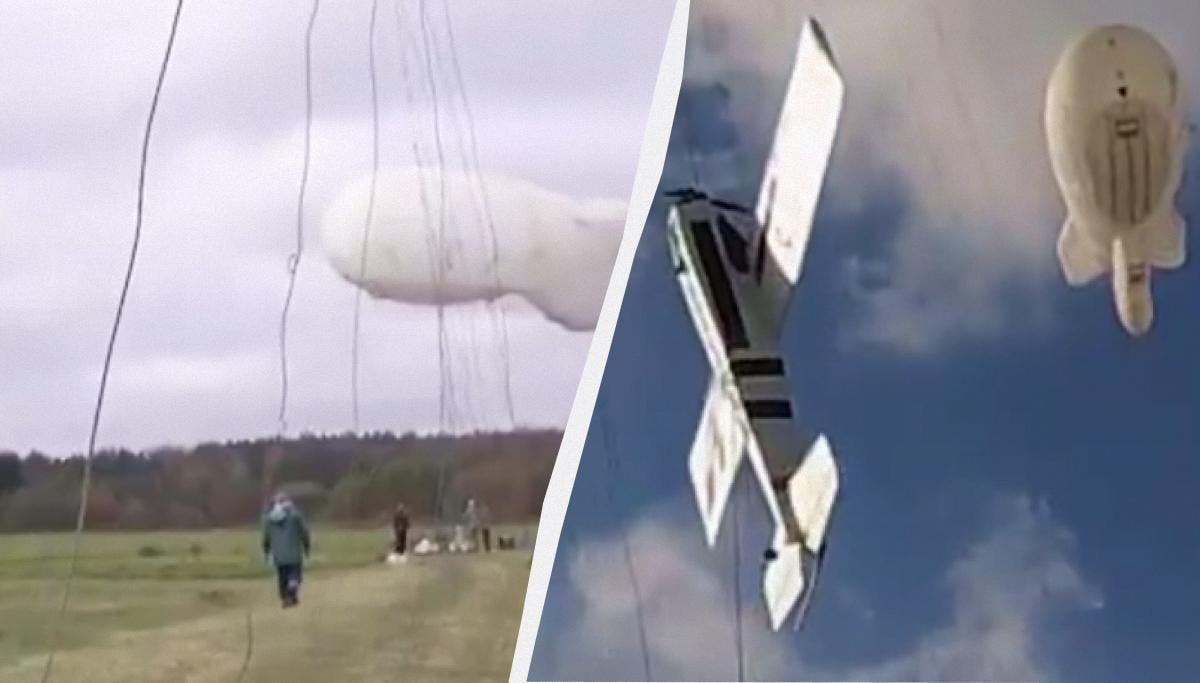
Russia is developing First World War style barrage balloons to protect its oil refineries from Ukrainian drone attacks, but defense analysts doubt the systems will work.
The proposed defenses consist of nets made from thin cables suspended between two small balloons. The barriers are designed to be deployed directly above or alongside key infrastructure to entangle and destroy incoming unmanned aerial vehicles.
Oil refineries are vast industrial complexes that process raw crude oil into usable fuels, including the diesel and aviation fuel required to operate tanks and fighter jets. The Russian Federation relies heavily on its energy sector to sustain its domestic economy and fund its military operations. In response, the Ukrainian armed forces have increasingly targeted these critical facilities, seeking to disrupt both the Russian financial system and the supply lines supporting Russian troops.
Automated height adjustments
A major vulnerability of the balloon system is that drones can fly over the nets to reach their targets. To counter this, Russian engineers created an automated system that uses radar to track an incoming drone and autonomously adjusts the height of the net using cables.
Analysts at the military publication Defense Express reviewed the project and questioned whether the automated cables could move fast enough to intercept a maneuvering drone. They added that the system would fail if multiple drones approached the same target simultaneously from different heights.
Ukraine has heavily invested in its domestic unmanned aerial vehicle industry, developing a variety of long range explosive drones capable of flying hundreds of kilometers past the Russian border. These aircraft operate autonomously and use advanced navigation systems to strike infrastructure targets deep within the Russian interior.
Drone size and weather limits
The defense publication also raised concerns about the strength of the Russian nets. During testing, Russian developers used a drone described as little more than a toy, which was significantly smaller than the long range aircraft deployed by the Ukrainian military.
Analysts from Defense Express said the developers were apparently hesitant to test the net against a larger aircraft. They questioned whether the cables could withstand or stop a drone that weighs several hundred kilograms and approaches at speeds of several hundred kilometers per hour.
High winds and poor weather conditions also prevent the balloons from operating, as storms can tear the barriers from their moorings. Defense Express reported that several similar aerostat projects are currently in development across Russia, but none have achieved notable success.
Historical use in London
Barrage balloons are large tethered objects originally developed during the First World War. They gained widespread prominence during the Second World War as a defense against low flying aircraft. The British military deployed the balloons around London to protect against German V-1 cruise missiles, which were early unmanned flying bombs.
However, Defense Express noted that the British balloon defenses over London ultimately intercepted just five percent of the V-1 missiles fired at them.
Impact on Russian refineries
The drive to protect Russian infrastructure follows sustained strikes on the country's oil and gas sector. Ukrainian Defense Minister Yevhen Khmara recently stated that Ukrainian forces have successfully struck 51 percent of Russia's oil refining capacity.
Khmara said the attacks represent a significant blow to the Russian economy, hindering the military's ability to supply its troops and continue its aggression. Moving the war onto Russian territory remains a central priority for the Ukrainian Ministry of Defense, Khmara added.