

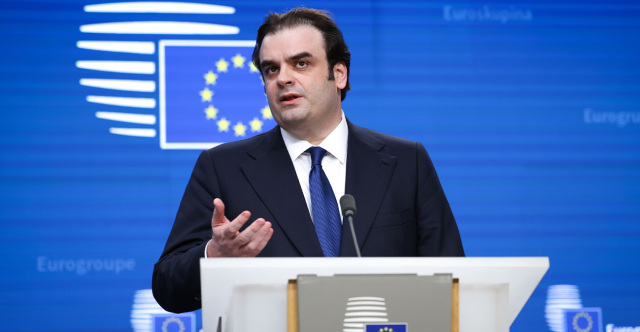
French magazine Le Point has published an extensive feature profile on Greek Finance Minister Kyriakos Pierrakakis, detailing his election as President of the Eurogroup.
The feature, authored by journalists Emmanuel Berretta and Alexia Kefala, is titled Kyriakos Pierrakakis, the Greek who wants to wake up Europe. It traces his political path from implementing digital governance reforms in Greece to assuming leadership of eurozone finance ministers.
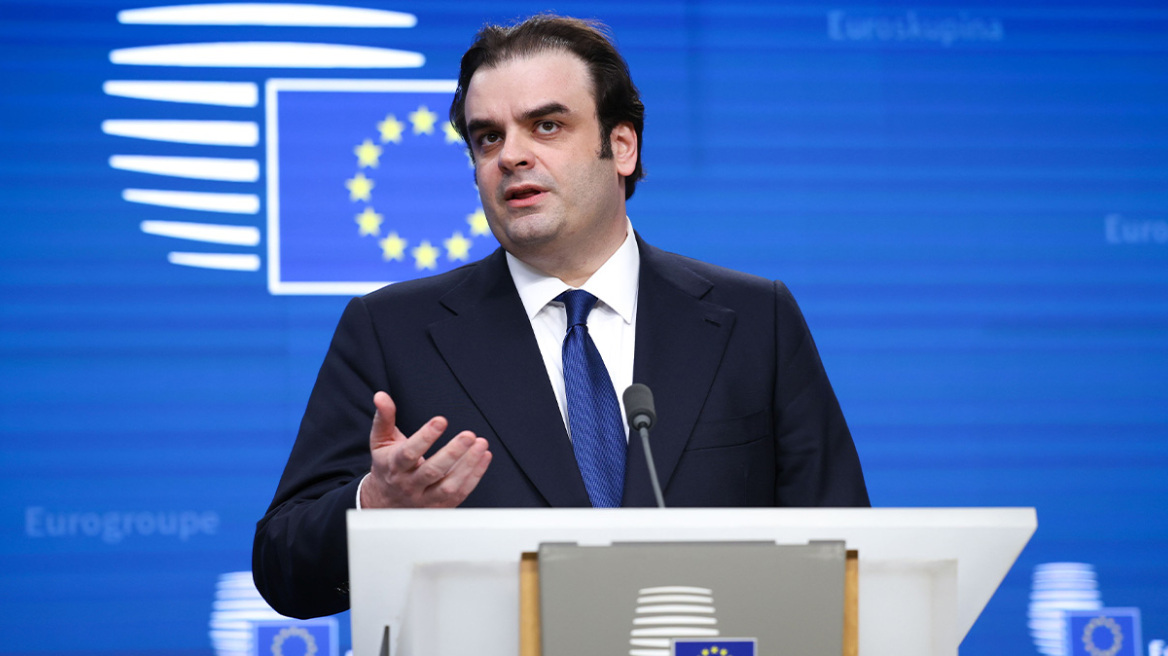
Pierrakakis grew up in Greece during a period when the nation faced severe financial turmoil. On December 11, 2025, eurozone finance ministers elected him to lead their coordinating body, selecting a minister from a country that a decade earlier had approached an exit from the single currency.
French Economy Minister Roland Lescure noted during the election that bailout programs for Athens were previously decided in the same room. Pierrakakis assumed office for a two and a half year term, succeeding Ireland's Paschal Donohoe, who departed to lead the World Bank. Pierrakakis is the fifth permanent president of the Eurogroup and the first Greek official to hold the position.
Eurozone leadership and policy role
The Eurogroup functions as an informal body bringing together the 21 finance ministers of countries using the euro, following Bulgaria's accession on January 1. Although the group does not vote or pass legislation, consensus is formed within its meetings.
The president sets the meeting agenda, determines when issues are ready for discussion, influences key personnel decisions in the eurozone, and represents the body at the International Monetary Fund, the World Bank, and G7 finance minister meetings.
Pierrakakis also chairs the Board of Governors of the European Stability Mechanism, the bailout fund created during the debt crisis that funded Greece's financial rescues. A Greek finance minister now presides over the institution holding a substantial portion of his country's national debt, contrasting with 2015 when former Prime Minister Alexis Tsipras and former Finance Minister Yanis Varoufakis led Greece through contentious bailout negotiations.
In Brussels, Pierrakakis advocates for a European market without internal barriers, drawing comparisons to views held by Mario Draghi and Enrico Letta. He urges member states to move beyond national champions to build joint European enterprises capable of channeling European savings into innovation and higher paying jobs.
His priority for completion before the end of the year is the Capital Markets Union, an initiative under discussion since 2015 to improve business financing. He has also added Banking Union to the agenda, tackling an issue where individual capitals traditionally protect domestic banking institutions.
Telecom proposal and domestic digital reform
Addressing industrial policy, Pierrakakis cites telecommunications as a sector where European firms Nokia and Ericsson compete globally against Huawei, each holding about a quarter of the market. He proposes holding a single pan-European auction for 5G and 6G spectrum instead of 27 separate national auctions, alongside a unified regulatory body, with auction revenues supporting the European Union budget.
He points to practical integration milestones already completed, noting that the Athens Stock Exchange has joined Euronext and Italian bank UniCredit acquired nearly 30 percent of Greece's Alpha Bank. Pierrakakis often references author William Faulkner, noting his approach is to show rather than describe.
Before becoming finance minister in March 2025, Pierrakakis served as Minister of Digital Governance from 2019 to 2023 under Prime Minister Kyriakos Mitsotakis. Having designed state administration reforms prior to taking office, he launched the Gov.gr public service portal in March 2020 shortly before pandemic lockdowns. The portal expanded from 500 initial services to more than 2,250 today.
During pandemic movement restrictions, Greek citizens obtained permission via simple text messages while paper forms were required in France. The platform established legal standards for cross-agency data transfer without giving administrative reading rights, while legislation granted Pierrakakis absolute veto power over ministerial signature chains.
Pierrakakis remarked lightheartedly that Greek citizens can now complete a consensual divorce via smartphone, noting it is convenient when two people can no longer tolerate each other. Former Harvard expert David Eaves, who now teaches in London and advised Pierrakakis, described him as resourceful and determined. Eaves highlighted that the reform created a unified data infrastructure following the Estonian principle of asking citizens for information only once, eliminating daily micro-corruption and saving time at low cost.
Fiscal recovery and demographic policy
Taking over the Ministry of Finance in March 2025, Pierrakakis established a policy centered on avoiding future bailouts and troika interventions. Greek public debt, which reached nearly 210 percent of gross domestic product in 2020, declined to roughly 130 percent following an early repayment of 6.9 billion euros to European creditors.
By late 2026, Greece may no longer be the most indebted nation in the eurozone, with Italy expected to take that position. Unemployment fell from a peak near 28 percent during the economic crisis to 8.2 percent at the end of 2025, reaching its lowest point since 2008, while primary budget surpluses have been recorded annually since 2016, excluding the pandemic period.
Bank of Greece Governor Yannis Stournaras, whose term renewal for a third tenure was recommended by Pierrakakis in June, described the minister as meticulous, knowledgeable, and humorous. Stournaras contrasted Pierrakakis with Varoufakis, who pursued direct confrontation with European partners. Addressing tax revenue surpluses, Pierrakakis stated he seeks growth rather than stagnation, overseeing significant tax reductions.
Demographic policy remains a permanent focus for Pierrakakis, who warned in 2016 as director of the think tank diaNEOsis that Greece risked becoming the oldest country in Europe. His tax measures include variations based on family size, age, and place of residence, inspired by the French family taxation model.
Diplomatic alliances and voting procedures
During selection procedures for the European Central Bank vice presidency to succeed Luis de Guindos, a senior Council official recalled that Pierrakakis accurately predicted candidate withdrawals and vote shifts during a closed secret ballot process involving six candidates.
His election as Eurogroup president was supported by France and Germany, with French Economy Minister Roland Lescure backing him over Belgian candidate Vincent Van Peteghem, who later withdrew. Pierrakakis noted that France and Greece share views on technological sovereignty, European defense, and the Capital Markets Union.
Aurore Lalucq, the left wing chair of the European Parliament Committee on Economic and Monetary Affairs, expressed esteem for Pierrakakis, stating he thinks quickly, speaks only when necessary, and focuses on what should be done rather than what can be done.
Personal background and education
Standing 1.98 meters tall, Pierrakakis was described by his close friend, 2021 European Prize for Literature winner Christos Chomenidis, as a towering figure who stays calm when frustrated, often falling silent for four or five hours.
Pierrakakis attended the Marist Brothers Leonteio Lyceum in Patisia, a working class neighborhood in northern Athens, studying French for two hours daily. His father, a surgeon, and the eldest of his three children also attended the school. School principal Amalia Skoura remembered him as a tech savvy student who disassembled a computer at age nine and possessed an early internet connected mobile phone, recalling that she called him at home for connection assistance.
At age 22, he moved to Cambridge, Massachusetts, earning a master's degree in public policy from Harvard University and a master's degree in technology from the Massachusetts Institute of Technology.
Literary influences and coming political tests
Pierrakakis cites science fiction novels Dune by Frank Herbert and Foundation by Isaac Asimov as philosophical guides, reflecting on the tension between individual agency and structural forces described by Thomas Carlyle and Karl Marx. Citing J.R.R. Tolkien, he noted that even the smallest person can change the future, adding that the outcome of World War II could have differed without Winston Churchill.
At age 29, Pierrakakis published an essay reviewing Robert Caro's biography of Lyndon B. Johnson, whom he termed a modern Thucydides, calling for leadership to reform the Greek state machine. Fourteen years later, backed by Prime Minister Kyriakos Mitsotakis, he faces domestic economic challenges ahead of parliamentary elections scheduled for next spring.
Inflation reached nearly 5.4 percent in spring, while the gross monthly minimum wage remains below 900 euros. The government also dealt with an agricultural subsidy scandal that led to four ministerial resignations on April 3, with investigations ongoing by the European Public Prosecutor's Office.
The 43 year old minister, who lists directors Stanley Kubrick, Christopher Nolan, and Denis Villeneuve among his favorites, noted that literature, cinema, and politics all share the task of telling stories, observing that Kubrick achieved a masterpiece in every genre he attempted.


