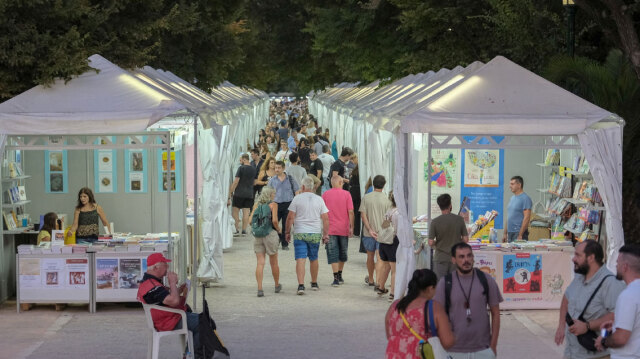
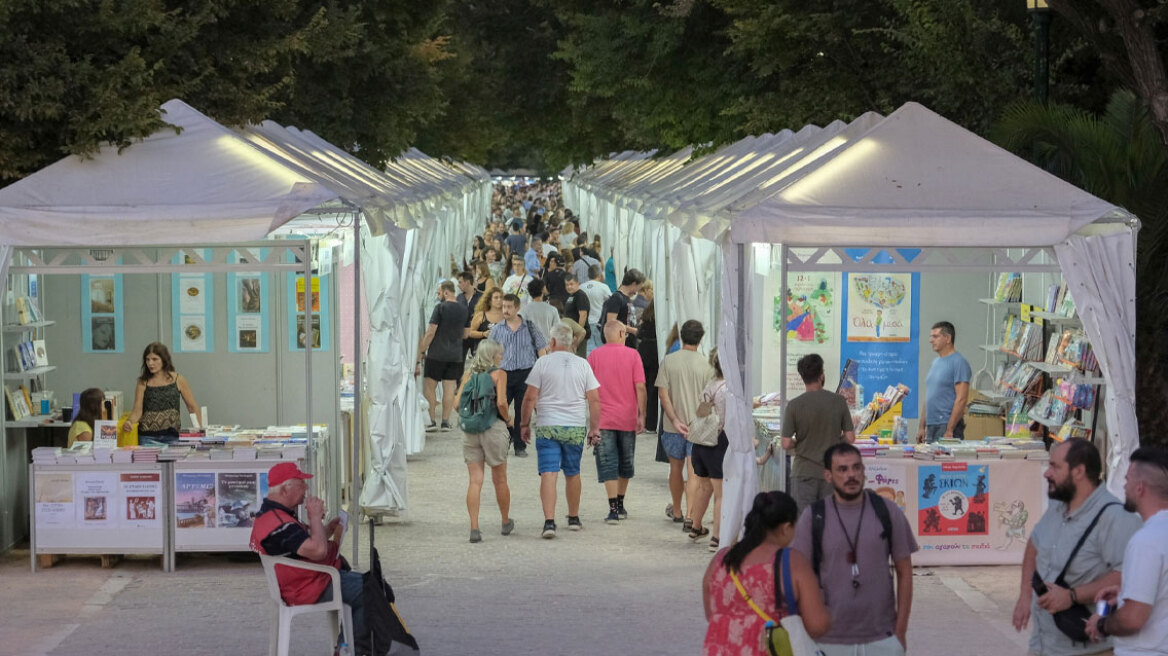
The 54th annual Athens Book Fair opened on September 4, 2026, welcoming visitors to the shaded walkways of Pedio tou Areos. Athens author and historical chronicler Thomas Sitaras marked the inauguration by reflecting on how books serve as magical objects capable of abolishing time.
Pedio tou Areos, a major public park in central Athens, serves as the traditional setting for the annual cultural gathering. Stalls set up throughout the park feature works by prominent publishing houses, established bestsellers, scientists, and emerging authors.
Reflections on the Power of Books
In commentary written for the opening, Sitaras cited the late American astrophysicist Carl Sagan to illustrate how books connect human minds across generations. Sagan described a book as a flat object crafted from trees with flexible parts and printed with strange black markings.
Sagan noted that a single glance allows a reader to enter the mind of another person who may have died thousands of years ago. Through the centuries, an author speaks clearly and silently inside the reader's head, making writing perhaps the greatest human invention by binding together individuals who never met.
Sitaras also shared an observation from an educator who described a book as a teacher that instructs without reprimands or anger. The educator noted that a book is never asleep when approached, hides nothing when questioned, does not complain if a reader fails to understand, and never mocks the ignorant.
Summoning Voices Across the Centuries
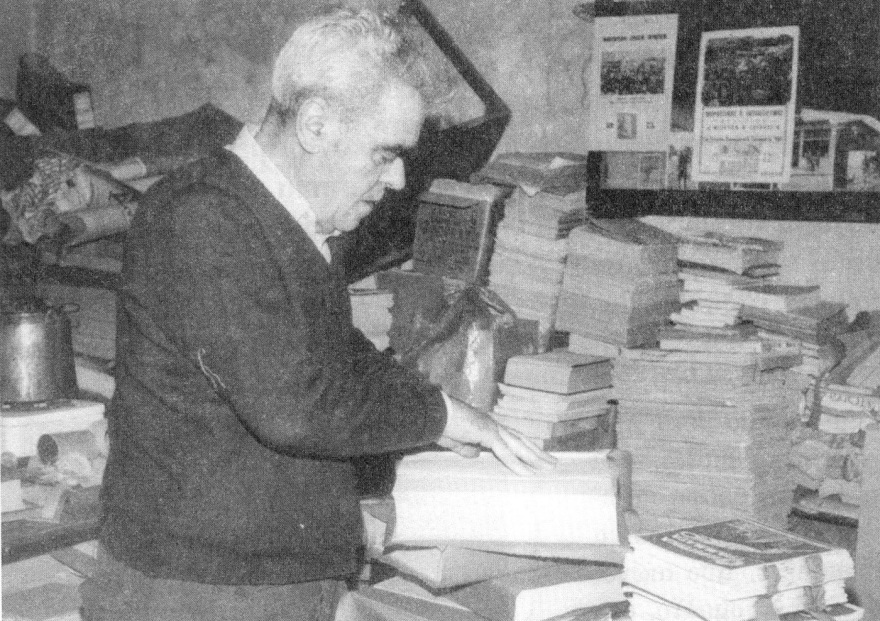
Drawing a comparison to spiritualism, Sitaras noted that while people view calling upon the spirit of a deceased person as a wonder, books perform that exact miracle every day. Readers can consult ancient military commanders Xenophon and Julius Caesar about their campaigns at any moment.
Historical orators Demosthenes and Cicero remain available to deliver speeches on demand, while philosophers Socrates and Plato analyze complex problems. Readers can likewise review mathematical theorems and proofs formulated by Euclid and Sir Isaac Newton.
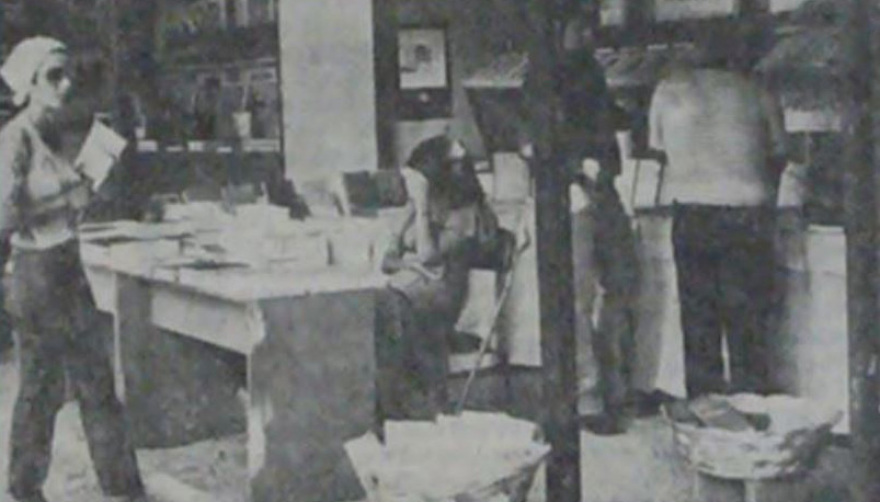
The annual book fair has been a staple of capital life for decades. A historical photograph from 1978 records an earlier edition of the event held in Syntagma Square, the central plaza in front of the Greek parliament.
Publisher Kiosks and Visitor Habits
Despite warm weather, large crowds filled the shaded paths of Pedio tou Areos to explore publisher kiosks. Sitaras observed that selecting a single title among the vast selection of available works presents a challenge for visitors.
The fair also featured traditional bargaining between buyers and sellers. In one exchange recorded by Sitaras, a visitor asked a vendor for the price of a book and was told it cost 20 euros, prompting the customer to argue that 15 euros was more than enough.
Visitor habits varied across operating hours, with many attendees browsing or searching with written lists while others leafed through pages. Impulsive buyers moved between disparate subjects, looking at titles such as 52 Fairy Tales before scanning works on commercial law or Latin grammar.
Some shoppers made secretive purchases, such as selecting the volume Lilitsa's Garconniere, negotiating the price, and quickly placing it in a pocket so as not to be seen by acquaintances.
Selection Criteria and Book Releases
Sitaras quoted a fellow bibliophile who observed that book choices often depend on external factors rather than content. The bibliophile noted that titles, cover art, bindings, illustrations, and colors frequently determine which volumes buyers select.
While acknowledging the truth of the observation, Sitaras urged readers to select books with care, describing a chosen volume as a lifelong companion.
Sitaras also shared his own book recommendation for 2026, titled Kai Mi Cheirotera, or And Things Could Be Worse. Published by Bell Publishing, the 324-page work costs 18.99 euros and will be available at booths 235 and 236 starting September 16.
Sitaras, who shares historical research on social media under the handle @SitarasThomas, concluded his reflections as capital residents continued visiting the park stalls.