

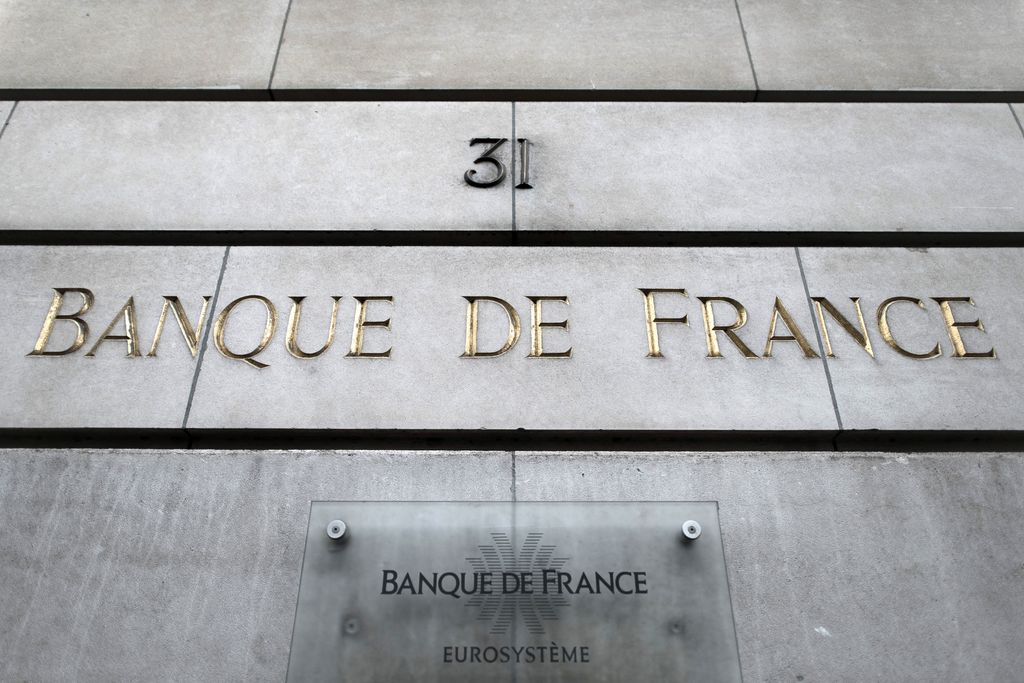
The Banque de France forecast economic growth of 0.4% for France in 2026, matching a projection issued a week earlier by the national statistics agency INSEE, but the central bank rejected INSEE's more downbeat reading of the figures, according to a report published Tuesday, September 15, 2026.
Both institutions agree on the headline number, a slowdown to 0.4% growth this year. But where INSEE described the French economy as undergoing a "decrochage," or a sharp break from its previous course, the Banque de France instead emphasized the economy's resilience.
Xavier Debrun, chief economist at the Banque de France, said growth in 2026 would be relatively modest but that this was certainly not a year of decoupling for the French economy. He said that when people speak of a decrochage, he thinks of an economy suddenly drifting off course because of a structural problem, and he does not believe the structure of the French economy has fundamentally changed since June.
Why the Banque de France Is the Bank to Watch
The Banque de France is France's central bank and a member of the Eurosystem, the group of central banks that implements monetary policy for countries using the euro. INSEE, the Institut national de la statistique et des etudes economiques, is the government body responsible for producing France's official economic statistics, including growth and inflation data.
The slight downward revision to the 2026 growth forecast stems mainly from weaker first-quarter growth than initially reported, the Banque de France said in its report. Weak growth in household consumption, less dynamic private investment and a limited contribution from foreign trade also weighed on activity.
Impact of Summer Droughts and Heatwaves
The Banque de France said the droughts and heatwaves of the summer had, for now, reduced growth by 0.05 percentage points. Debrun said Tuesday that figure could rise to 0.1 percentage points over the full year. He stressed, however, that the French economy was mainly facing cyclical, or short-term, "bad surprises" rather than a deeper structural problem.
A Rebound Expected From 2027
Looking further ahead, the Banque de France still expects a rebound in 2027, with growth projected at 0.9%, a forecast unchanged from the projections it published in June, followed by growth of 1.2% in 2028. The bank said this rebound should be driven by two engines, consumption and foreign trade, both expected to pick up again as inflation eases.
Inflation is expected to reach 2.3% in 2026 before falling back below the 2% mark to 1.9% next year, and then to 1.6% in 2028. The Banque de France noted that inflation is running relatively lower in France than in the rest of the eurozone, which it described as a pure bonus for competitiveness. That gap, the bank said, leaves the French economy very well positioned to meet global demand, which is expected to rise next year.
Uncertainty Over the Middle East
The Banque de France cautioned that its forecasts remain dependent on how the situation in the Middle East develops, which it identified as the main source of uncertainty around the scenario. The projections are based on data collected up to mid-August.


