

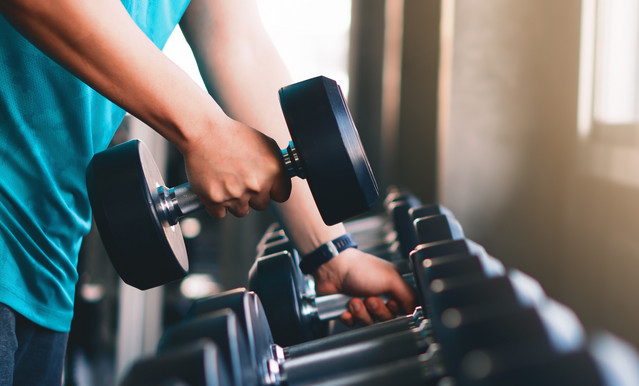
Fitness trainers at Boxrox have outlined a targeted three-exercise workout routine designed to help beginners build stronger, fuller upper arms without relying on expensive gym machinery. Building arm strength serves practical daily functions alongside aesthetic goals, enhancing an individual's physical capability to lift, carry, push, and pull during everyday tasks and broader upper-body exercise sessions.
Many individuals entering resistance training assume that stimulating muscle growth requires performing dozens of complex exercises. However, fitness experts emphasize that a small, properly selected group of compound and isolation movements, when executed with consistency, delivers outstanding results using basic equipment such as a pair of dumbbells, a barbell, or body weight alone.
The recommended routine specifically targets all major muscles of the upper arm, including the biceps brachii, the brachialis, the brachioradialis, and the triceps. Together, these three exercises establish a solid structural foundation for beginners seeking larger arms and improved physical performance.
Benefits of Free Weights Over Gym Machinery
While stationary exercise machines hold value in physical rehabilitation settings and for isolating specific muscles, fitness specialists noted that beginners often gain broader benefits from free weights and bodyweight exercises. Machines constrain movements to fixed mechanical paths, whereas free weights demand continuous physical stabilization from the shoulders, elbows, wrists, and core torso muscles.
This requirement for active balance improves overall neuromuscular coordination while strengthening supporting muscles that machines do not engage to the same degree. Exercise science research comparing free weights with machine training shows that free-weight movements elicit greater activation of stabilizer muscles while yielding comparable gains in muscle mass and overall strength.
Free weights also present significant practical advantages regarding convenience and affordability. Investing in a pair of adjustable dumbbells or a basic pull-up bar can provide an effective home training solution for years without requiring an expensive gym membership.
Dumbbell Bicep Curls for Front-Arm Growth
Dumbbell bicep curls are widely recognized as one of the most effective exercises for developing the front region of the upper arm, known anatomically as the biceps brachii. Unlike a traditional barbell lift, utilizing individual dumbbells forces each arm to work independently, preventing a dominant side from compensating for a weaker arm and fostering balanced muscular growth.
To maximize effectiveness, exercisers must avoid several common technical errors. Selecting excessively heavy weights frequently causes lifters to swing their torso to create momentum, which reduces mechanical tension on the biceps and increases injury risk.
Cutting the lowering portion of the movement short is another frequent mistake. Performing curls through a full range of motion increases muscle activation and promotes greater muscle hypertrophy. Furthermore, executing repetitions rapidly limits sustained muscle tension, whereas performing slow and controlled movements yields far superior results.
Close-Grip Push-Ups to Target Triceps
Although push-ups are traditionally viewed as a chest exercise, modifying hand positioning significantly shifts muscle participation. In close-grip push-ups, placing the hands closer together transfers the primary workload onto the triceps while continuing to engage the chest and shoulder muscles.
Developing the triceps is essential for increasing total arm size, as the triceps muscle group accounts for approximately two-thirds of the upper arm's total muscle mass. Consequently, building strong triceps contributes more to overall arm volume than focusing exclusively on the biceps.
Beginners can easily adapt close-grip push-ups to match their fitness level. Beginners may start by executing repetitions from their knees or placing their hands on an elevated surface before advancing to standard floor push-ups.
Common technical flaws during close-grip push-ups include allowing the hips to sag downward, which places unnecessary strain on the lower back. Executing partial repetitions limits the muscular stimulus, while moving too quickly takes work away from the triceps. Maintaining controlled repetitions ensures maximum muscle tension.
Hammer Curls for Fuller Brachialis Development
Dumbbell hammer curls are frequently overlooked by beginners, despite being among the finest exercises for creating thicker and fuller arms. Unlike standard bicep curls where palms face upward, hammer curls maintain a neutral grip with palms facing each other throughout the entire range of motion.
This neutral hand position increases activation of the brachialis, a muscle located beneath the biceps, as well as the forearm's brachioradialis muscle, while continuing to heavily engage the biceps brachii. Growth in the underlying brachialis pushes the biceps upward, giving the arm a wider appearance.
Frequent errors during hammer curls mirror those seen in classical curls. Swinging dumbbells reduces tension on target muscles, while allowing elbows to drift forward during the lift shifts emphasis away from arm muscles. Using excessive weight almost inevitably leads to compromised technique.
Recommended Sets, Repetitions, and Recovery
Research on resistance training reveals that beginners achieve optimal muscular adaptations from moderate training volumes when paired with consistent effort. For muscle growth, experts recommend performing two to four sets per exercise, completing roughly eight to fifteen repetitions per set.
The final repetitions of each set should feel challenging to complete, but lifters should never sacrifice proper form. For isolation exercises such as dumbbell bicep curls, rest periods of 60 to 90 seconds between sets are recommended. Close-grip push-ups may require slightly longer rest periods, particularly when approaching muscle failure.
Mastering proper technique before attempting to increase training weights remains the single most important rule for novices. Trainers recommend practicing the routine consistently two or three times per week, gradually increasing exercise difficulty, consuming sufficient protein, and prioritizing adequate recovery. Following these foundational principles provides a reliable path to stronger arms without chasing short-lived fitness trends.


