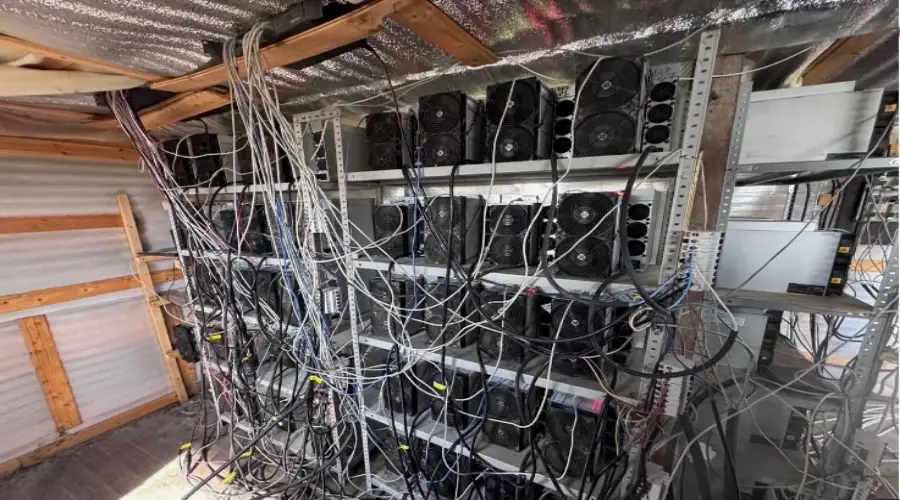
Major bitcoin mining companies including IREN, HUT 8, and TerraWulf are shifting their operations away from cryptocurrency mining and toward artificial intelligence infrastructure. Public mining firms are repurposing data center capacity for high-performance computing to secure stable revenues.
The strategic shift involves major industry operators, including Riot Platforms, Bitdeer, and Cipher Digital, which are redirecting computational power toward AI development.
Rising Costs and Unprofitable Bitcoin Mining
Profitability in bitcoin mining fell sharply following the 2024 halving event and a drop in bitcoin prices at the end of 2025. A report from investment company CoinShares showed that mining the leading cryptocurrency was unprofitable for public American miners in the fourth quarter of last year.
During that quarter, the average cost to mine a single bitcoin reached $79,995, while the market price hovered around $70,000. At TerraWulf, production costs reached $385,000 per coin at one point, leaving revenues far below operational expenses.
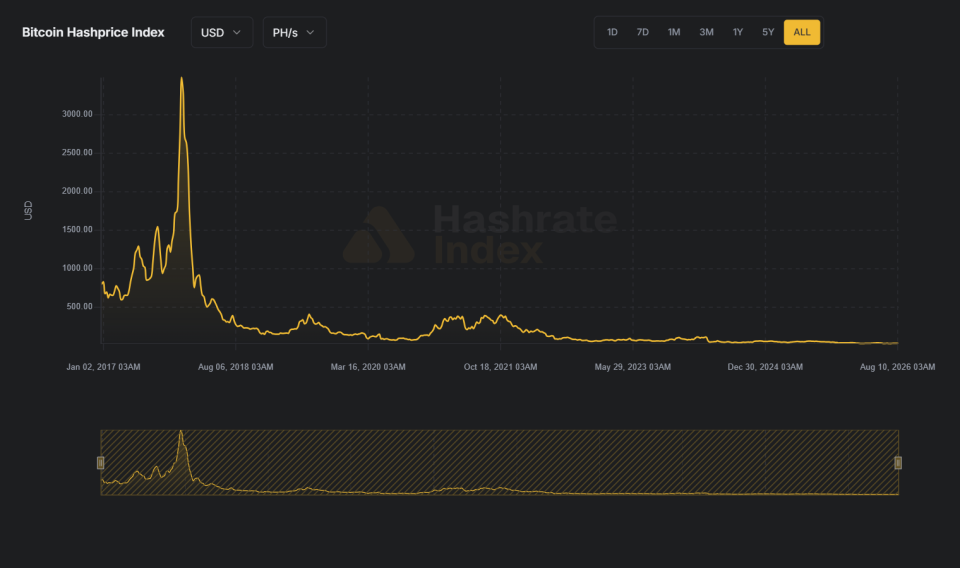
The bitcoin hash price index, which measures expected daily miner revenue per petahash per second of computing power, dropped to historical lows near $32 in August 2026. This figure is nearly half its level from a year earlier, more than ten times below its 2021 peak, and more than one hundred times below its 2017 high.
CoinShares notes that costs vary across regions based on electricity rates, ASIC equipment prices, taxes, rent, and maintenance wages. However, players unable to manage necessary hardware upgrades and expenses face diminishing returns.
Multi-Billion Dollar AI Infrastructure Deals
Rather than running AI models themselves, former cryptocurrency miners are leasing existing data center capacity to tech companies. These agreements provide stable revenue streams that were previously unobtainable through mining alone.
HUT 8 secured a $7 billion contract to lease its facilities, including the River Bend farm in Louisiana. Anthropic, creator of the Claude neural network, and cloud platform Fluidstack serve as technical partners, with financing backed by Google, J.P. Morgan, and Goldman Sacks.
IREN agreed to a $9.7 billion deal with Microsoft to supply AI systems powered by Nvidia GB-300 chips in Texas. To support the project, IREN is purchasing $5.8 billion in graphics processing units from Dell Technologies, which is projected to generate $1.9 billion in additional annual revenue.
Facility Conversion and Hardware Requirements
Crypto miners hold an advantage over traditional tech giants because they already possess specialized buildings, power grid access, and cooling systems. Adapting existing data centers for AI is faster than building facilities from scratch for companies like Microsoft or Google.
While some companies are building new data campuses, such as Bitdeer at its site in the Tydal municipality in Norway, miners retain operational and management expertise in running large facilities.
Converting a facility requires replacing internal hardware rather than simply changing labels. Industrial bitcoin mining relies on Application Specific Integrated Circuits, or ASICs, which are custom microchips built for specific hashing algorithms.
Bitmain produces distinct ASIC models for different algorithms, such as the Antminer S21 for the SHA-256 algorithm used by Bitcoin, the Antminer L9 for Scrypt used by Litecoin, and the Antminer D9 for the X11 algorithm. Because ASIC chips stripped away extra components to maximize mining efficiency, they cannot perform AI tasks and must be swapped for specialized graphics processing units.
Impact on Bitcoin Network Hashrate
The shift toward AI temporarily reduced the overall computing power securing the bitcoin network. Between October 2025 and January 2026, the seven-day moving average of the bitcoin hashrate fell by 28 percent, dropping from 1.15 ZH/s to 0.83 ZH/s.
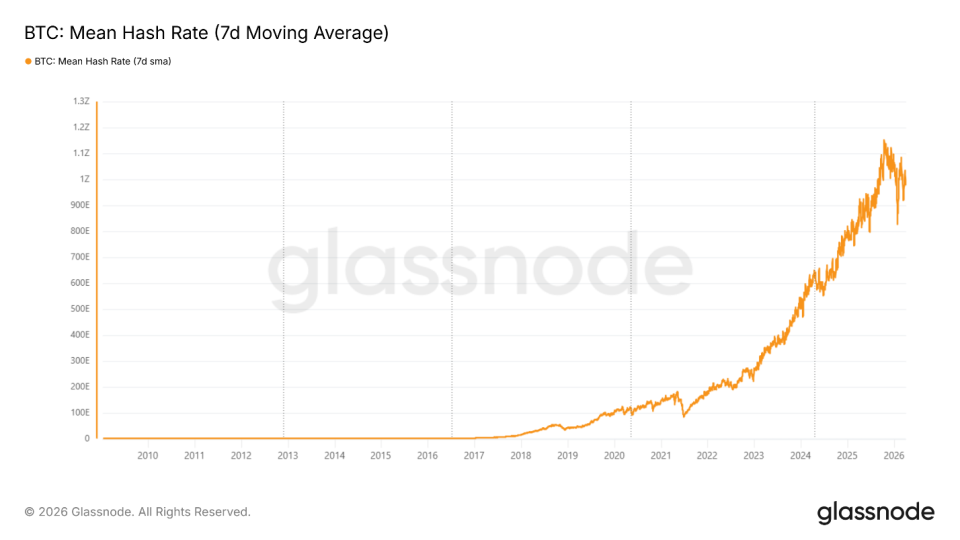
The decline reflected the significant weight of American mining firms, which account for up to 40 percent of total network hashrate. By August 2026, the hashrate partially recovered to approximately 0.9 ZH/s.
CoinShares projects that network hashrate will surpass 1.8 ZH/s by the end of 2026 and reach 2 ZH/s by the end of 2027. The firm emphasized that miners are scaling back expansion capital rather than abandoning bitcoin completely.
Bitcoin Production and Shift in Corporate Revenue
Tracking potential bitcoin production lost to AI operations remains complex. Without AI contracts, miners would not have secured capital to expand mining operations, meaning overall corporate earnings were higher than they would have been under pure mining.
Production data from Riot Platforms shows minimal operational impact. The company mined 1,473 BTC in the first quarter, representing a drop of 57 coins, or 3.7 percent, compared to the same period in 2025.
When large miners reduce capacity, network difficulty auto-adjusts, allowing other global participants to mine the remaining block rewards. Consequently, total bitcoin production across the network remains unaffected.
CoinShares estimates that AI-derived revenue for major mining firms will reach 70 percent of total income by the end of the year, up from 30 percent at the start of the year. This marks a shift where cryptocurrency mining becomes a secondary revenue source.
Stock Market Performance and Debt Risks
Financial markets have responded favorably to the AI pivot. Stock prices for five major miners have risen since the beginning of the year, with IREN up 5.69 percent, TerraWulf up 45.92 percent, MARA Holdings up 9.49 percent, Riot Platforms up 57.72 percent, and Cipher Digital up 14.76 percent.
Bitdeer was the sole exception among major listed miners, recording a stock price decline of 4.73 percent over the same period.
Despite rising share prices, investors maintain concerns over long-term profitability and expanding corporate debt. TerraWulf has accumulated $5.7 billion in debt to fund infrastructure modifications, while IREN carries $3.7 billion in debt obligations.