

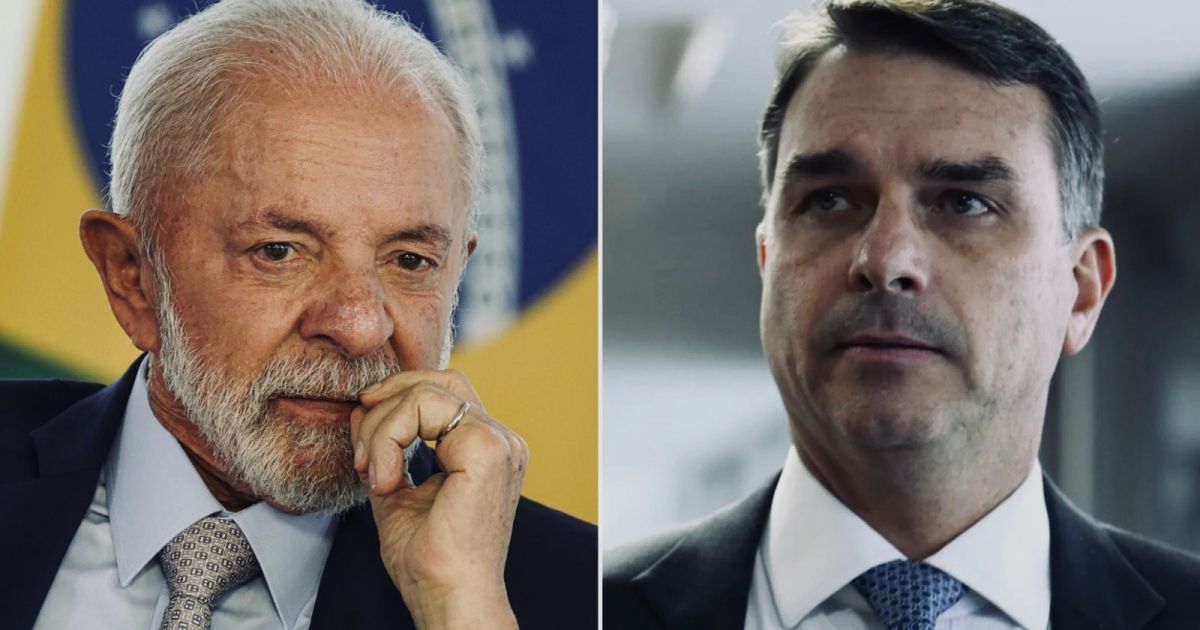
Brazilian voters are looking for an alternative to the increasingly polarized race between President Luiz Inácio Lula da Silva and Senator Flávio Bolsonaro ahead of the 2026 election, but no candidate has managed to fill that gap, according to Eduardo Sincofsky, author of a new book on political polarization in Brazil.
As in the 2022 election, polarization has become one of the most frequent topics of the 2026 presidential race. Candidates including Augusto Cury of the Avante party and Ronaldo Caiado of the Social Democratic Party, or PSD, have raised the issue in their campaigns, criticizing the divide and presenting themselves as a so-called third way outside the two dominant camps leading the polls.
Lula, who leads the leftist Workers' Party, and Flávio Bolsonaro, a senator and the son of former president Jair Bolsonaro, are currently the two front-runners in surveys for the presidential race.
Sincofsky is the author of "A Polarização no Divã" ("Polarization on the Couch"), published by Editora Mórula. He said voters today are living through what he called an emotional hangover, exhausted by the polarized political climate but still unable to see a way out of it.
He said he was not optimistic, adding that Brazil appeared to be only at the beginning of the end of the most toxic and radicalized period of polarization. He said the harsher, more extreme rhetoric that marked the 2022 campaign no longer resonates with voters, which he considers a sign of social progress.
Sincofsky, an Argentine psychologist and journalist, carried out more than 300 quantitative and qualitative surveys throughout 2025 to research the book, which examines the emotions and behavior of voters behind Brazil's polarization. He said that between the fatigue and the hangover people are experiencing, shifting political positions takes time.
Third-way candidates miss the mark
In Sincofsky's view, candidates such as Caiado, Romeu Zema of the Novo party and Renan Santos of the Missão party talk about ending polarization without offering proposals that actually address voters who do not identify with either pole. He said Caiado and Zema alienate that undecided segment by saying they would grant amnesty to people convicted over the January 8, 2023, riots in Brasília if elected.
That episode saw supporters of former president Jair Bolsonaro storm Brazil's Congress, presidential palace and Supreme Court building in the capital, contesting Lula's election victory.
Renan Santos, meanwhile, alienates voters when he talks about a bloodbath in the fight against organized crime, according to Sincofsky. He said this approach does not end polarization because it simply enters one of its existing camps, describing it as a real case of market demand with no candidate to meet it.
Cury's rise and lingering doubts
Sincofsky said Cury could be the candidate to occupy that space, which he believes explains his growth in recent voter intention polls. Still, he said a large question mark remains over the Avante candidate's identity. According to Sincofsky, polls show Cury's image continues to reflect confusion and doubt because voters do not know his proposals.
He said people recognize Cury as a well-known, intellectual and calm figure who speaks slowly, but do not know the candidate behind the image or what he proposes. He described that gap as a level of failure in Cury's campaign.
Polarization as an easy choice
In the book, Sincofsky explores the emotions behind polarization, voter indecision and what he calls a sense that no candidate truly represents them. He describes polarization as a kind of utopia, arguing that it puts voters in an easier position of simply picking a side rather than working through a more complex, structured decision.
He said the result is that voters are increasingly avoiding political conversations and keeping their opinions private. He described people as putting on a character and often taking on fights that are not their own.
Sincofsky said the phenomenon is not unique to Brazil. He said he has observed it in Argentina through his own family, as well as in Colombia and Venezuela.
Sincofsky said that despite the extensive research behind the book, he has continued gathering data since finishing the manuscript. He said he plans to use it for a possible second volume comparing how voters' feelings about polarization change before and after the election.


