

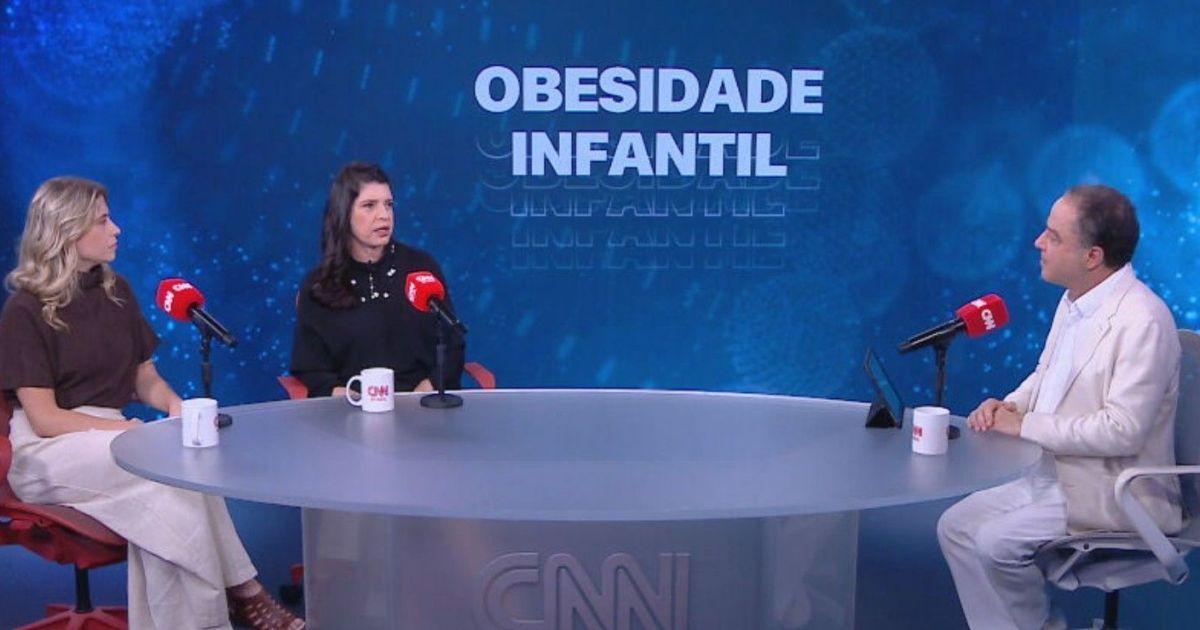
Childhood obesity affects roughly one in ten children worldwide, and the rate reaches about 32 percent among children in Brazil, according to specialists who appeared on the CNN Brasil program "CNN Sinais Vitais - Dr. Kalil Entrevista" on Saturday, August 8.
Dr. Roberto Kalil, a cardiologist who hosts the program, spoke with endocrinologist Claudia Cozer Kali, of Hospital Sirio-Libanes, and nutritionist Thais Cardeal Ramos about how to identify and address the problem in children.
How to spot the difference
Cozer offered a simple way for parents to judge whether a child's weight is a concern, saying she usually tells parents that a child's weight in kilograms should be lower than their height in centimeters. She cautioned that the rule is only a general guide, since some families naturally have a larger physical build, making the measure highly individual.
The role of food
Cozer said the situation tends to worsen from around age 12, when children develop stronger food preferences and become more selective. She pointed to the rise of food delivery apps, noting that when children order their own meals digitally, they are not the ones choosing rice, beans, meat and vegetables.
Ramos, the nutritionist, warned that ultra-processed foods deserve particular attention because they contain many ingredients that make them hyperpalatable. She explained that these products have enhanced flavor from higher sugar and fat content, which puts them in what she called an unfair competition with fresh, natural foods.
Ramos stressed that no single food should be treated as a villain, since almost any food can have a place in a child's diet depending on the wider context. Even so, she said certain items call for real caution and moderation, including boxed and powdered juices, soft drinks, especially sugary ones, sugar-heavy foods and packaged snacks. She said the goal is less about banning specific foods and more about balance, allowing a child to eat something like chocolate while considering how their diet has looked over the course of the week.
Sleep and physical activity
Both specialists said physical activity is essential but does not need to feel like an obligation. Cozer said the recommendation is one hour of physical activity a day, but that encouraging a child to play in their building, jump on a trampoline, skip rope, dance or simply move away from screens all count as help, and reiterated that parents need to set the example themselves.
Sleep also plays a key role in child development, the specialists said. Many children go to bed late because of extended screen time and then have to wake early for school. Cozer said that beyond leaving a child tired and unmotivated for physical activity, poor sleep also increases appetite the following day.
Parents as role models
The specialists closed by underlining the importance of parental example. Cozer said that however much children resist, they still look to their parents as an example, both in what to avoid, such as soft drinks, and in the foods they themselves come to adopt as part of daily life.
The program also covered other topics related to childhood obesity, including drug treatments and bariatric surgery. The next episode of "CNN Sinais Vitais - Dr. Kalil Entrevista" was set to air on Saturday, August 22, at 7:30 p.m. on CNN Brasil.


