


Global climate change is causing more frequent lightning strikes and longer droughts, Professor Lori Daniels of the University of British Columbia has warned.
Speaking to news agency RIA Novosti, the climate researcher explained that global warming is driving atmospheric shifts that will force communities to adapt to harsher environmental conditions.
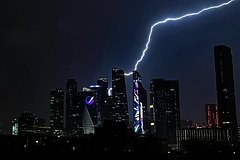
Daniels stated that until the United Nations achieves its target of limiting global temperature increases to below 1.5 degrees Celsius, humanity must get used to these persistent weather patterns.
She emphasized that until international climate goals are successfully met, societies will have to adapt to more extreme droughts and an increasing number of lightning strikes.
Daniels is a professor in the Department of Forest and Conservation Sciences at the University of British Columbia, a major public research institution based in Vancouver, Canada. The United Nations climate goal aims to cap average global warming at 1.5 degrees Celsius above preindustrial levels to prevent catastrophic ecological damage.
Risks of severe weather and heatwaves
The warnings from Daniels mirror recent assessments by meteorologist Roman Vilfand, who previously warned residents in Russia about a rising number of dangerous weather events linked to climate change.
Vilfand reported that the intensity of downpours and squalls is growing stronger, while the total number of tornadoes and waterspouts is also on the rise.
According to Vilfand, the most reliable indicator of global climate change is the growing frequency of heatwaves.
He noted that in recent years, Central Europe has experienced an average of five to seven separate heatwaves during every warm season.
Vilfand serves as the scientific director of the Hydrometeorological Centre of Russia, the national meteorological service responsible for monitoring severe weather systems and climate trends across Eurasia.
Adapting to escalating environmental impacts
Prolonged dry periods combined with frequent lightning strikes present severe challenges for environmental management, particularly regarding wildfire ignition in vulnerable forest biomes.
Dry vegetation coupled with electrical discharges significantly accelerates the risk of forest fires during summer months.
As global temperatures continue to rise, experts stress that adapting infrastructure, forestry practices and emergency responses will remain vital until global emissions fall enough to meet international climate targets.


