

Agricultural mechanization is advancing across Dominican Republic farms following a labor shortage that reduced agricultural employment by 8.98 percent in early 2026. Although food production continues to grow, agricultural leaders report that farm labor shortages have worsened due to stricter migration policies that reduced Haitian workers, combined with a lack of interest among native Dominicans in working the land.
Data from the Banco Central de la República Dominicana confirms a steady decline in farm labor in recent years. In the first semester of 2026, the employed population in agriculture and livestock stood at 322,868 people, down 8.98 percent from 354,728 workers recorded between January and March 2025. Over that period, informal farm employment fell 10.79 percent, while formal agricultural employment grew 7.54 percent.
In response, farm mechanization has expanded rapidly, particularly in crops like sugar cane and rice. Sandra Lara, Vice Minister of Sectoral Planning at the Ministerio de Agricultura, said public policy prioritizes new technologies, including automated land preparation and drones. Lara stated that the ministry plans to relaunch its extension services, acquiring new equipment and soft technologies to teach producers and boost productivity. In 2025, the ministry's Agricultural Mechanization Service Centers deployed 97 tractors for land cutting, crossing, and harrowing, benefiting 11,322 producers across 616,861 tareas of land.
Sugar Cane and Rice Production
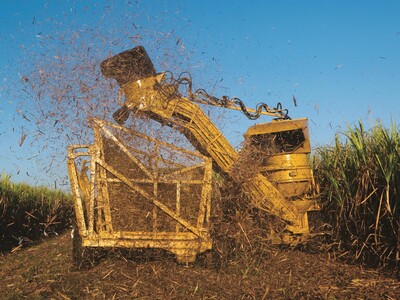
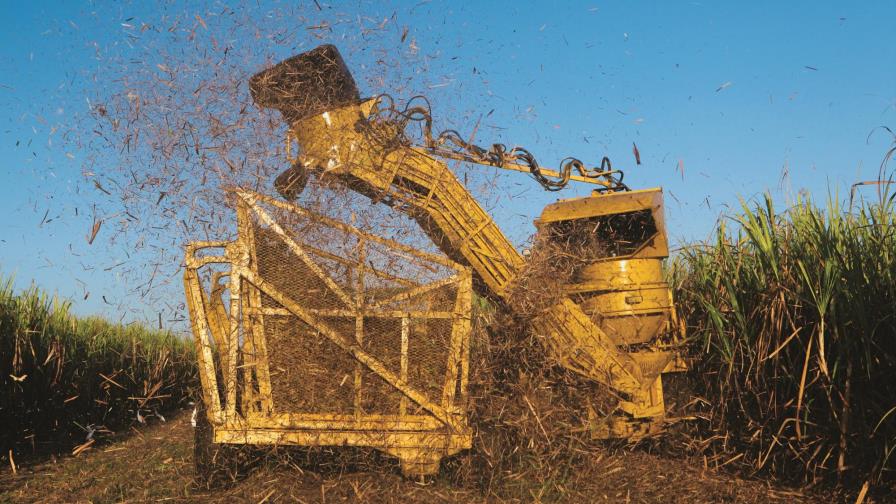
Lara noted that sugar cane is among the most mechanized crops, specifically in cutting and hauling operations. She said that while small independent growers remain, four or five large producers account for the main share of sugar production and have demonstrated steady mechanization progress to the ministry. During a meeting between the government and sugar mills in July, officials reported that sugar industry mechanization rose from 1 percent to 70 percent over five years, reducing reliance on foreign labor for cutting cane.
Mechanization is also transforming rice farming, according to Marcos Rodríguez, president of the Federación Nacional de Productores Arroceros. Large farms are increasingly adopting power tillers, tractors, harvesting machines, and bulk loading hoppers to reduce reliance on scarce and costly labor. Rodríguez explained that bulk harvesting is eliminating traditional sacks, horse transportation, and carrying heavy rice loads on workers' heads.
Cocoa Harvest Challenges
In the cocoa sector, producers are beginning to explore machine automation locally and internationally. Isidoro de la Rosa, president of the Confederación Nacional de Cacaocultores Dominicanos, noted that equipment is being developed in several countries for manual tasks such as pruning, harvesting, and fertilizing. De la Rosa explained that cocoa remains heavily dependent on manual field labor, where local labor shortages and restrictions on undocumented Haitian workers have created significant harvest difficulties.
Livestock Milking Modernization
The Dominican livestock sector has also made progress in modernizing dairy operations. Under the government's Livestock Improvement Program, known as Promegan, officials recently distributed roughly 160 milking machines to assist small-scale dairy producers.
However, Franklin Espinal, president of the Federación Nacional de Ganaderos de la Línea Noroeste, emphasized that livestock farming remains vulnerable to foreign labor shortages. Espinal noted that feeding and caring for cattle on small landholdings requires manual labor, as technology investments on small plots are not cost-effective.


