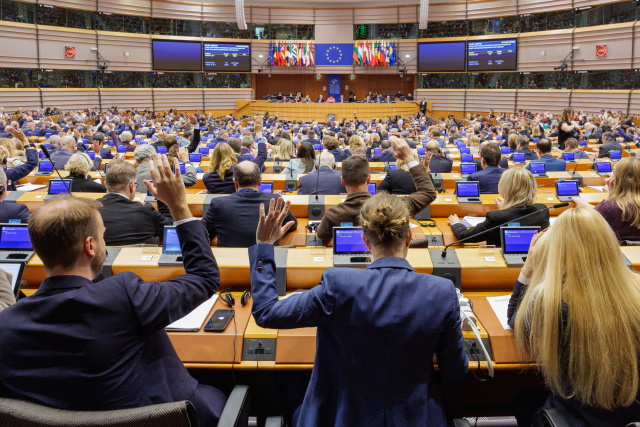
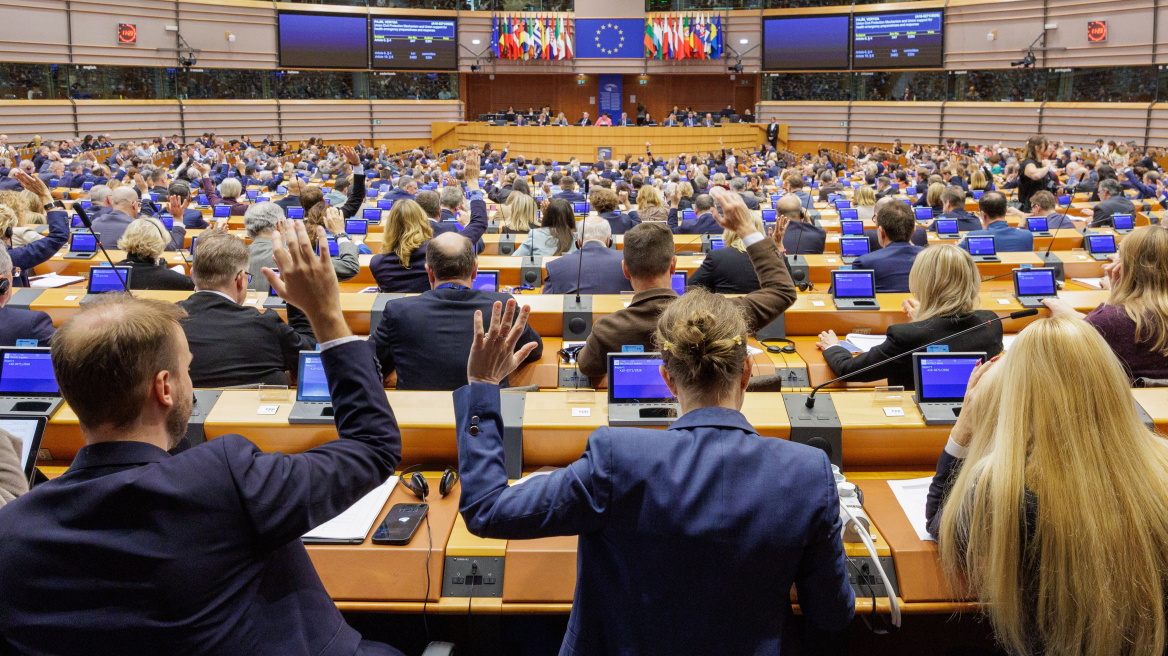
European Commissioner for the Mediterranean Dubravka Šuica told the European Parliament's plenary session in Strasbourg on Tuesday that the 2019 maritime boundary memorandum between Turkey and Libya is null and void and without legal effect, reaffirming the European Union's full solidarity with Greece and Cyprus.
Šuica said the memorandum, signed between the two countries in 2019, does not conform to the Law of the Sea, violates the sovereign rights of third states, and cannot produce legal effects for other countries.
She said the issue sits within a wider effort to defend international law, preserve stability in the Eastern Mediterranean, and uphold the sovereign rights of EU member states. Turning to Turkey's EU accession process, she said relations with candidate countries are judged not only on their internal reforms but also on their conduct on the international stage.
We are closely monitoring every action or statement that could create new tensions in the region or undermine efforts at de-escalation, she said.
She added that the EU wants a constructive relationship with Turkey, but one built on mutual respect, commitment to international law and good neighbourly relations.
On Libya, Šuica said the country's political transition must not be undermined by agreements, such as the one with Turkey, that deepen divisions, create legal uncertainty or harm the rights of third states. She repeated the EU's commitment to Libya's unity, sovereignty, territorial integrity and stability, noting that Libya's stability is closely tied to that of the Eastern Mediterranean. She said unilateral actions that disregard the rights of others are not acceptable, and that the EU will keep firmly supporting Greece and Cyprus and keep raising the issue in its dealings with Turkey.
Irish presidency backs Greece and Cyprus
Charlie McConalogue, an Irish minister of state speaking on behalf of Ireland's rotating presidency of the Council of the EU, said the memorandum is not a technical disagreement but a matter of principle. He repeated the Council's full solidarity with Greece and Cyprus and said the sovereign rights of all member states must be respected, with maritime boundaries set through dialogue and good-faith negotiation in full respect of international law rather than through unilateral action.
McConalogue said that despite the EU's strategic interest in a stable, cooperative relationship with Turkey, de-escalation cannot be selective, but must be lasting, credible and include respect for the rights of EU member states.
The EU will continue to act with unity. The Council will continue to monitor developments in the Eastern Mediterranean closely and is ready to respond to actions that undermine the sovereignty, sovereign rights or jurisdiction of member states, or that violate international law, he said, adding that defending these principles defends not only the rights of Greece and Cyprus but the credibility of the international legal order itself.
MEPs point to Thursday vote
Manolis Kefalogiannis, a Greek MEP for New Democracy sitting with the European People's Party, called the memorandum illegal, contrary to the Law of the Sea and an attempt to impose a fait accompli in the Eastern Mediterranean. He cited Article 3 of the United Nations Convention on the Law of the Sea, which gives every state the right to set the breadth of its territorial waters up to 12 nautical miles, and said Turkey's continuing casus belli threat against Greece and its "Blue Homeland" doctrine remained in place. He said challenging the sovereign rights of one EU member state is a challenge to the EU as a whole, and predicted the resolution due for a vote on Thursday would be a resounding response to Turkey's aggressiveness.
Yannis Maniatis, a Greek MEP for PASOK sitting with the Socialists and Democrats, called for a decisive European response following what he described as the recent ratification of the memorandum by Libya's House of Representatives. He said the condemnation of the pact by the presidents of the European Council and the European Commission was useful but only a first step, and that the EU must now move from words to action, calling the protection of member states' sovereignty a shared European responsibility.
Maniatis said the Socialists and Democrats' resolution proposal calls for renewing and extending the EU's existing sanctions framework for the Eastern Mediterranean to cover illegal activity based on the Turkey-Libya memorandum, for respect of international law to be a condition of any future EU cooperation with Libya and Turkey, and for EU protection of the Greece-Cyprus Great Sea Interconnector power cable project. He said the EU is a unique experiment in peace but must have the power to defend its principles and protect all its member states equally.
What happens next
A resolution on the Turkey-Libya memorandum is due to be put to a vote in the European Parliament on Thursday.
Test yourself
Who told the European Parliament that the Turkey-Libya memorandum is null and void?
In what year was the Turkey-Libya maritime memorandum signed?
What does the S&D resolution proposal mentioned by Yannis Maniatis call for?
Have your say
Should the EU extend its Eastern Mediterranean sanctions framework over the Turkey-Libya memorandum?
Where it happened
Strasbourg, France