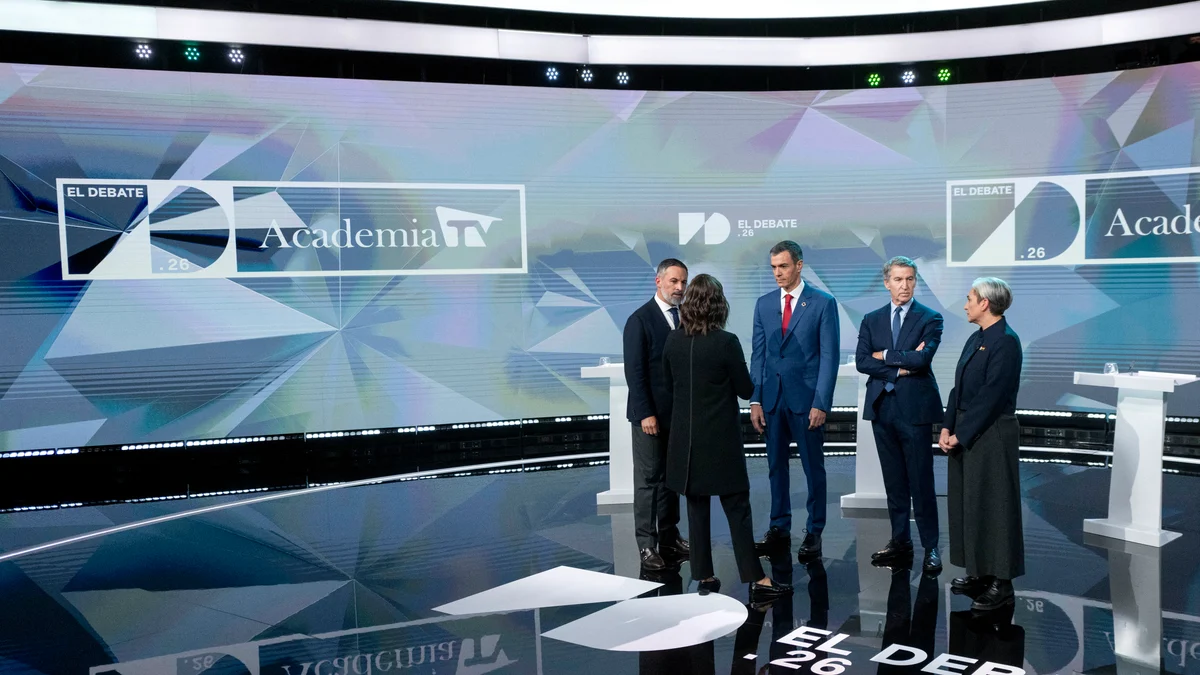
Pedro Sánchez, Alberto Núñez Feijóo, Santiago Abascal and Ada Colau faced off in the final major televised debate before Spain's general election on November 29, with the Socialist prime minister struggling to defend his record even in front of the ally he needs to renew a left-wing government.
The four-way clash pitted two ideological blocs against each other and showed little willingness among the candidates to listen to one another. The debate largely followed each party's prepared script, but it also exposed contradictions that have shaped Spanish politics in recent years.
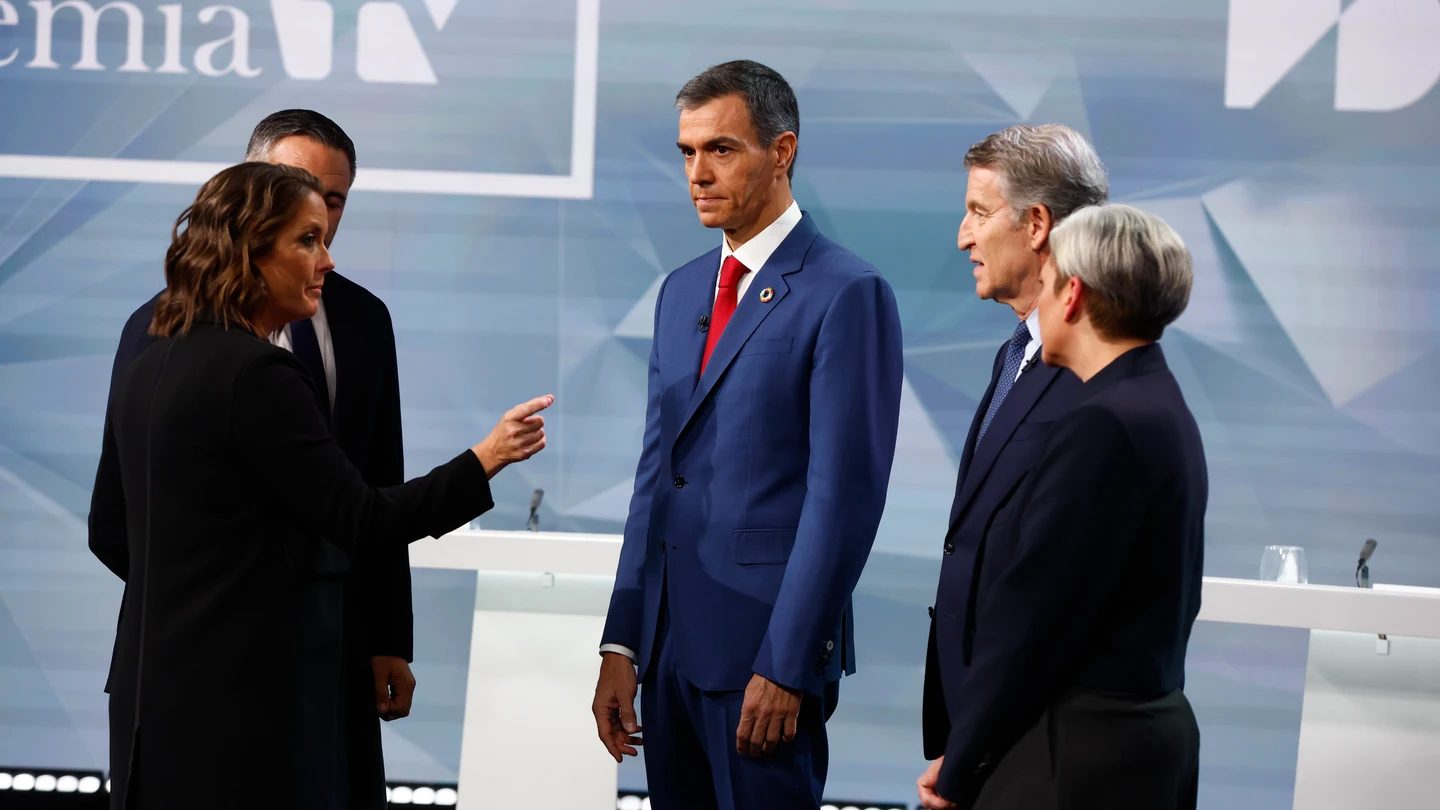
Feijóo leads the conservative Partido Popular (PP), Abascal heads the far-right Vox, and Colau stood as the candidate of Frente Amplio, seeking to extend the left-wing coalition government led by Sánchez's Socialist party, PSOE. Feijóo resumed the approach he had used in an earlier one-on-one clash with Sánchez, combining his own proposals with pointed criticism of the government's record, repeating questions he said had gone unanswered and contrasting unfulfilled government promises with his own program. He tried to keep a presidential tone and largely stayed out of the sharper exchanges between Abascal and Colau, without softening his criticism of the Socialist government.
Sánchez focuses on blocking a PP government
Sánchez cast much of the debate as a kind of preventive vote of censure against a potential Feijóo government, focusing more on attacking the policies a PP administration might pursue than on defending his own government's record. He repeatedly invoked confrontation with "the right and the far right" and questioned the management of regional governments run by the PP.
Sánchez said there had been a lot of hoaxes, a lot of lies and a lot of insults, but very little in the way of solutions.
The approach produced what was described as a paradox: after more than eight years in office at La Moncloa, the seat of the Spanish government, Sánchez built much of his argument from a position closer to that of an opposition leader than a prime minister asking voters to renew his mandate.
Sánchez at times read from written notes and was overshadowed by Colau's initiative, in a debate where campaign scripts took precedence over spontaneous exchanges. Abascal's presence gave him another opening to shift the focus to ideological confrontation whenever Feijóo pressed him on the shortcomings of his record.
Feijóo presses Sánchez on corruption
Feijóo kept using the tactics from his earlier televised face-off with Sánchez: pointed questions, demands for concrete answers and comparisons between the president's promises and the results of his policies. He told Sánchez that he did not answer anything.
Corruption was central to Feijóo's political case against what he called "sanchismo." He went as far as suggesting that the decision to call the election had been driven by pressure from judicial proceedings affecting people close to the prime minister.
Colau pushes for a more ambitious left
Colau argued for renewing a progressive government, but with more ambitious policies than those pursued so far. Her intervention amounted to a critique of the results of the left's shared time in office and highlighted disagreements over the priorities of any future coalition.
Sharp exchanges over violence against women
Violence against women produced some of the sharpest exchanges, between Abascal and Colau. Abascal avoided the explicit condemnation Colau demanded of him and instead counterattacked by citing the consequences of Spain's "only yes is yes" sexual consent law, the scandal involving prostitutes linked to Ábalos, and what he called economic and moral corruption surrounding Sánchez's circle.
What the debate signals for the next term
The debate hinted at tensions that could carry into the next legislature. Feijóo sought to project the image of a government-in-waiting, while Abascal tried to sharpen the ideological content of that potential change of power. On the left, calls for continuity of a progressive government did not resolve differences over policy or over the conditions for rebuilding a parliamentary majority.
Overall, the debate did not introduce major new elements into a campaign reaching its final stretch with all four candidates settled into their starting positions. There was more effort to reassure each side's existing supporters than to win over undecided voters, and little attempt to appeal to the rival bloc's electorate.
The debate also highlighted a contrast between the two blocs' internal dynamics. While Colau openly challenged aspects of Sánchez's record, Feijóo and Abascal avoided direct confrontation with each other. Abascal reserved his harshest language for the left and played down his differences with the PP, projecting an image of political compatibility between the two right-wing parties despite their policy disagreements.
A survey cited alongside coverage of the debate found that 28.3% of respondents believed Feijóo had prevailed over Sánchez in the four-way encounter.
What happens next
Spain holds its general election on November 29.
Test yourself
According to a poll cited in the debate coverage, what share of respondents said Feijóo beat Sánchez?
Which party did Ada Colau represent in the debate?
How did Abascal respond when pressed by Colau on violence against women?
Have your say
Who do you think came out ahead in the four-way debate?
Where it happened
Madrid, Spain