


Italy's flagship Frecciarossa 1000 high-speed train has begun official test runs across rail networks in Austria and Germany as operators prepare to introduce new cross-border routes starting in summer 2027. The testing project is led by Italian passenger rail operator Trenitalia, a subsidiary of state railway group Ferrovie dello Stato Italiane, in direct partnership with German national operator Deutsche Bahn and Austrian federal rail provider ÖBB.
The ongoing trials form a necessary part of the rigorous certification process required by European rail authorities before trains can operate commercially on foreign tracks. If the regulatory approval process proceeds as scheduled, the first commercial passenger services will start during the summer of 2027, connecting major Italian cities directly to Munich in southern Germany by travelling through Austrian territory.
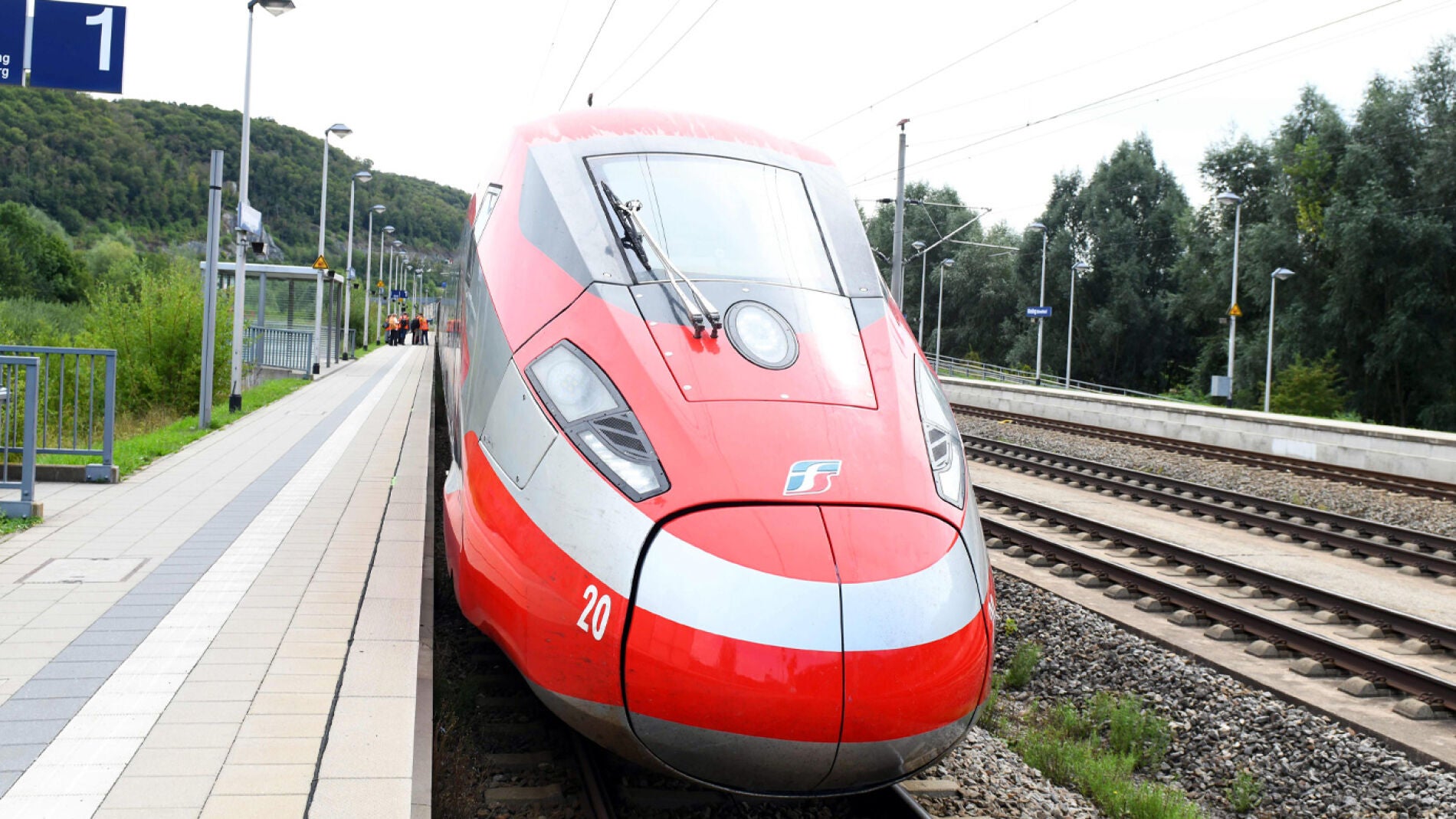
Before carrying passengers across international borders, the high-speed trains must prove their capability to navigate infrastructure separate from Italy's domestic railway grid. In Austria, testing is actively taking place along the key line between Kufstein and the Brenner Pass on the Italian border, as well as along the high-density rail corridor linking Salzburg and Vienna. In Germany, trial runs are being conducted along the vital rail axis connecting Berlin, Munich, and Kufstein.
Technical Integration and Driver Training
Crossing national borders presents significant technical challenges for high-speed trains due to differing railway standards established across European nations. The Frecciarossa 1000 convoy must adapt to distinct overhead electrification voltages, track gauges, and safety signalling systems deployed across Italy, Austria, and Germany.
To address these technical requirements, engineering teams from Trenitalia, Deutsche Bahn, and ÖBB have established joint technical exchanges to share operational data and fleet performance metrics. In addition, specialized training programs have been initiated to instruct German and Austrian train drivers on the operation and safety protocols of the Italian-manufactured trains.
First Passenger Routes and Timetables
Passenger operations set to launch in 2027 will initially offer four daily connections spread across two primary international corridors: Milan to Munich and Rome to Munich. Both trans-Alpine routes will cross through Austria before terminating at Munich Hauptbahnhof in Bavaria.
The journey between Milan and Munich is estimated to take approximately six hours and thirty minutes. Trains operating on this line will make scheduled passenger stops at intermediate stations in Brescia, Verona, Rovereto, Trento, Bolzano, and Innsbruck.
The extended service connecting Rome with Munich will have an estimated travel time of roughly eight hours and thirty minutes. This route will call at major transit hubs including Florence, Bologna, Verona, Rovereto, Trento, Bolzano, and Innsbruck before reaching Munich.
Rail operators anticipate that travel times for both international connections will be cut by approximately one hour following the opening of the Brenner Base Tunnel. The subterranean tunnel project under the Eastern Alps is designed to eliminate steep gradient bottlenecks and speed up rail transport between Innsbruck and South Tyrol.
Expanded Network Plans for 2028
The initial 2027 route rollout marks only the first phase of Trenitalia's broader international strategy. Railway planners intend to expand cross-border services substantially starting in December 2028, increasing service frequencies to up to ten daily connections between Italy and Germany.
Under the expanded 2028 timetable, Milan, Rome, and Munich will remain central hubs of the high-speed network, while new line extensions will stretch further south to Naples and further north to Berlin. Project partners have also identified Frankfurt in western Germany and Krakow in southern Poland as potential destinations for future route expansion.
Fleet Specifications and Cross-Border Vision
The international expansion relies on the Frecciarossa 1000, a multi-voltage high-speed train built to operate seamlessly across different European rail systems. The fleet complies fully with Technical Specifications for Interoperability standards mandated by the European Union, making the trains compatible with rail infrastructure in France, Germany, Spain, Austria, Switzerland, the Netherlands, and Belgium.
Prior to initiating trials in Austria and Germany, the Italian rail group introduced Frecciarossa services in Spain as part of its initial European expansion effort. The overall strategy aims to create an integrated European high-speed rail network where passengers can travel between major metropolitan centres without needing to transfer at international borders.
The trial runs currently underway across Austria and Germany represent the final operational phase required prior to revenue service. Provided authorization schedules are met, direct high-speed rail travel between Italy, Austria, and Germany will become operational within a year, laying the foundation for further network expansion in 2028.


