

Political party Fuerza del Pueblo has warned that the Dominican Republic 2026-2027 school year will begin with structural problems despite a 332 billion peso budget.
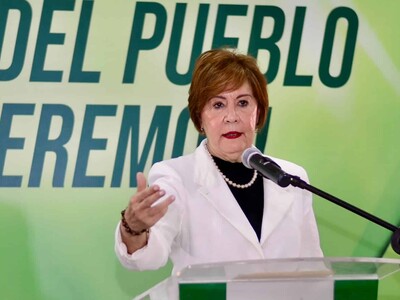
Josefina Pimentel, head of the education secretariat for Fuerza del Pueblo and a former Dominican education minister, questioned the distribution, execution, and quality of national education spending on Thursday.
Pimentel stated that 93.25 percent of the 2026 education budget allocated to the Ministry of Education is concentrated in current operating expenses, leaving just 6.75 percent for capital expenditure.

Within that capital budget, investment in physical infrastructure accounts for only 4.21 percent of total funds, while teacher training and academic research jointly receive 2.09 percent.
Pimentel argued that this spending allocation severely limits the capacity of the Dominican school system to address urgent requirements for infrastructure, staff training, classroom technology, and basic learning materials.
According to a press statement, Pimentel said Dominican education did not need new promises and transformation rhetoric. She said pledged commitments needed to become completed classrooms, safe schools, respected teachers, working technology, and students who actually learn.
Infrastructure and maintenance funding
Pimentel highlighted a steep decline in spending on school maintenance and repair works over the past decade. During 2025, the Ministry of Education allocated 267.5 million pesos to minor preventive and corrective maintenance.
She compared that figure to the 1,839 million pesos spent on the same maintenance category in 2013, a period when the overall national education budget was approximately three times smaller than it is today.
The former minister stated that the reduction in maintenance funds has contributed directly to deteriorating school facilities, stalled construction projects, and a deficit of classrooms across the Caribbean nation.
She said the shortage has resulted in overcrowded classrooms, congestion, lost instructional time, and students being forced to travel to distant communities. In addition, several schools have had to return to operating under a two-shift daily system to accommodate pupils.
Pimentel also questioned the reduction of the Extended School Day program in numerous education centers, calling on authorities to thoroughly review and strengthen the full-day schooling model.
Nationwide teacher survey results
To back its claims, Fuerza del Pueblo presented the findings of a comprehensive study conducted in June 2026 by the party's education secretariat across the country.
The study gathered data from 2,016 educators, including classroom teachers, school directors, academic coordinators, and guidance counselors. The survey covered 18 educational regions, 87 school districts, and 119 municipalities.
The survey revealed widespread physical and logistical deficiencies in public schools. A total of 83 percent of respondents reported a lack of basic security measures and recreational spaces in their school facilities.
Furthermore, 77 percent of surveyed educators cited an insufficiency of technological equipment, while 76 percent reported difficulties with the availability of functional restrooms.
The survey also found that 72 percent of school staff faced problems accessing drinking water, and 53 percent reported ongoing deficiencies in electricity supply.
Pimentel emphasized that these substandard physical conditions directly affect school management, hinder student learning, and undermine the overall well-being of the educational community.
Local conditions and stalled construction
Pimentel identified specific areas across the country facing severe operational difficulties, including Villa Altagracia, Barahona, San Juan, Hato Mayor, La Romana, Jarabacoa, Hermanas Mirabal, Santiago Rodríguez, Santo Domingo Este, María Trinidad Sánchez, and Bahoruco.
She cited extreme cases where school construction projects have remained incomplete for between 11 and 13 years, forcing students to attend classes in temporary tents or provisional structures.
In several locations, classrooms have been divided with wood and zinc sheets. Numerous active schools continue to operate without drinking water, electricity, dining halls, or proper sports spaces.
Learning obstacles and teacher stress
The opposition party emphasized that the difficulties facing Dominican public education extend beyond physical infrastructure into learning standards and classroom discipline.
According to the study presented by Pimentel, public schools face persistent problems related to student reading comprehension and mathematics learning.
The report also documented an increase in student indiscipline, widespread lack of motivation, excessive mobile phone usage during class hours, and minimal involvement from families in supporting student learning.
To address these challenges, Pimentel called for a comprehensive strategy to strengthen fundamental competencies, improve school coexistence, and promote responsible use of technology.
She also drew attention to administrative overload and work stress among teachers, alongside persistent difficulties in teacher evaluation processes and continuous professional development.
Demands for government accountability
With the new academic year approaching, Fuerza del Pueblo demanded that the Dominican government release detailed public information regarding school readiness.
The party demanded that officials clarify which school facilities are fully prepared, where shortages of student places and staff persist, which construction projects remain active, and what timetable exists to recover accumulated delays.
Pimentel expressed that simply opening school doors on the first day is not enough to declare the start of classes a success. She stated that a school year truly begins well when every student finds a place to learn, equipped with timely materials and a safe, suitable space to teach.
Fuerza del Pueblo proposed reorienting national education spending toward policies aimed at strengthening learning outcomes, innovation, educational equity, transparency, and management efficiency across the school system.


