

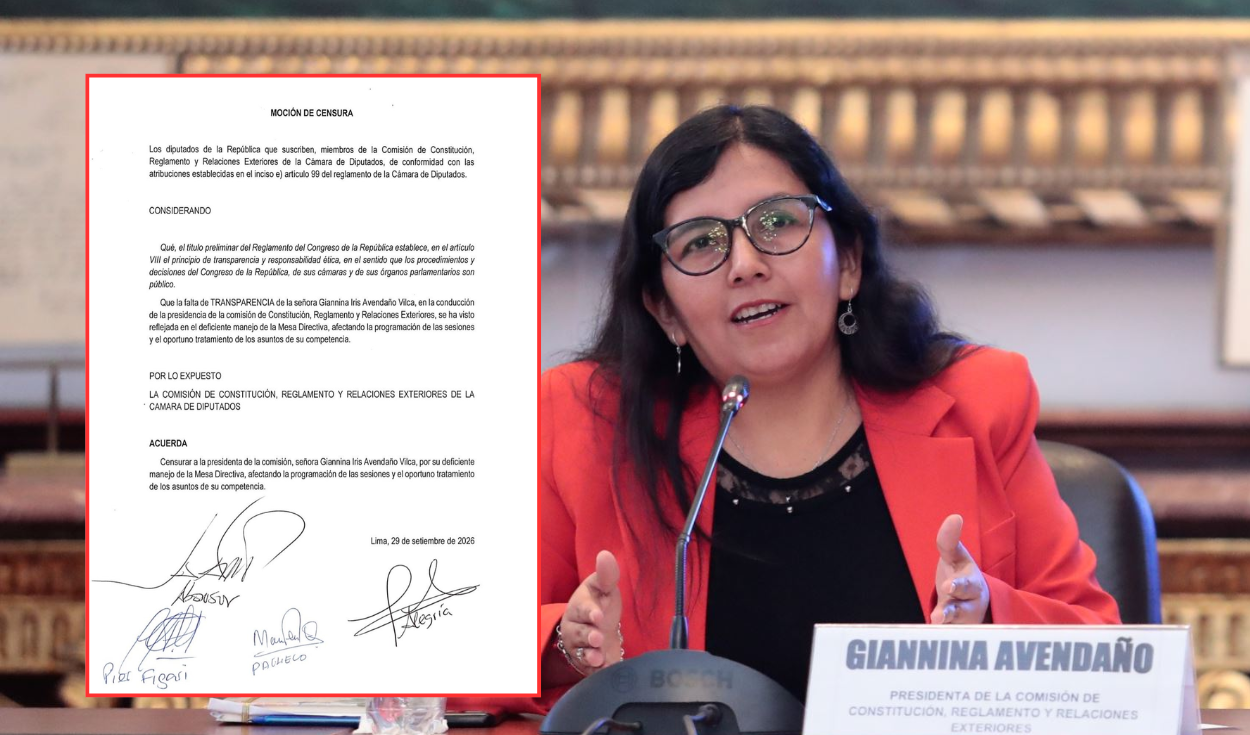
Lawmakers from Peru's Fuerza Popular political party have launched a formal motion of censure against Gianinna Avendaño, the chairwoman of the congressional Constitution Commission, following disputes over session scheduling.
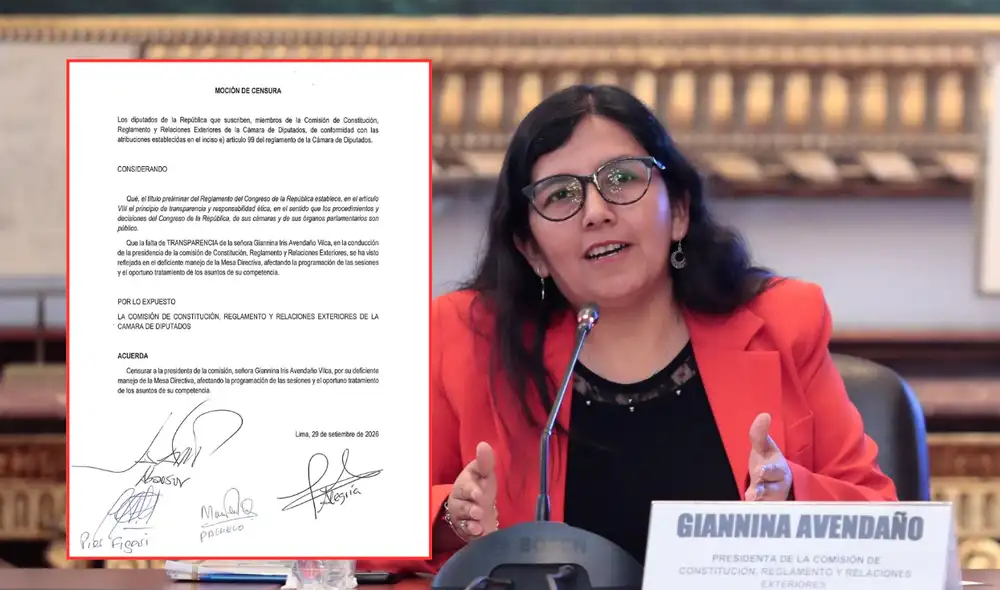
The initiative was introduced during a commission meeting on Tuesday by deputies Jaime Abensur, Pier Figari, Marco Pacheco, and Arturo Alegría. The legislators pointed to significant delays in processing a key report regarding delegated legislative powers.
In their filing, the four parliamentarians accused Avendaño of a lack of transparency and deficient management of the committee board. They contended that her leadership has impaired the overall work of the panel and prevented the timely review of urgent items on the legislative agenda.
The Constitution Commission, formally known as the Commission on Constitution and Standing Rules, is one of the most powerful working groups within the Congress of the Republic of Peru. It evaluates constitutional amendments, electoral reforms, and legislative delegation requests submitted by the national government. Fuerza Popular, a major conservative party founded by Keiko Fujimori, maintains substantial influence within the Peruvian parliament.
Procedural clash in committee session
Tensions escalated during the session when Avendaño declined to give course to the censure motion upon its presentation, citing guidance from an internal technical report.
Avendaño declared that after reviewing article 99 of the congressional standing rules, the motion was not legally applicable to the current proceedings. She insisted that the committee was required to continue with its formally convened agenda without interruption.

Her ruling drew immediate objections from Abensur, who vocally challenged the chair and called on her to hand over leadership of the meeting. Abensur asserted that once a censure motion is formally introduced against a sitting president, congressional regulations dictate that the challenged official must leave the bench.
Abensur requested that Avendaño immediately process the motion and step down so that Vice President García could assume the presidency. He maintained that the parliamentary rules explicitly protect the right of lawmakers to question the leadership and mandate a temporary change in committee management.
Legislative powers and committee oversight
Requests for delegated powers allow the executive branch to issue decree-laws on designated matters, such as economy or public safety, subject to strict legislative oversight. The Constitution Commission serves as the primary gateway for scrutinizing such requests before they reach the plenary floor of Congress.
The dispute leaves the committee facing ongoing procedural friction as lawmakers await resolution on whether the censure motion will be formally taken up in subsequent sessions.


