

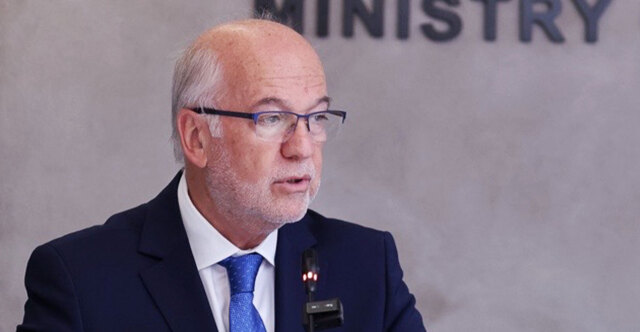
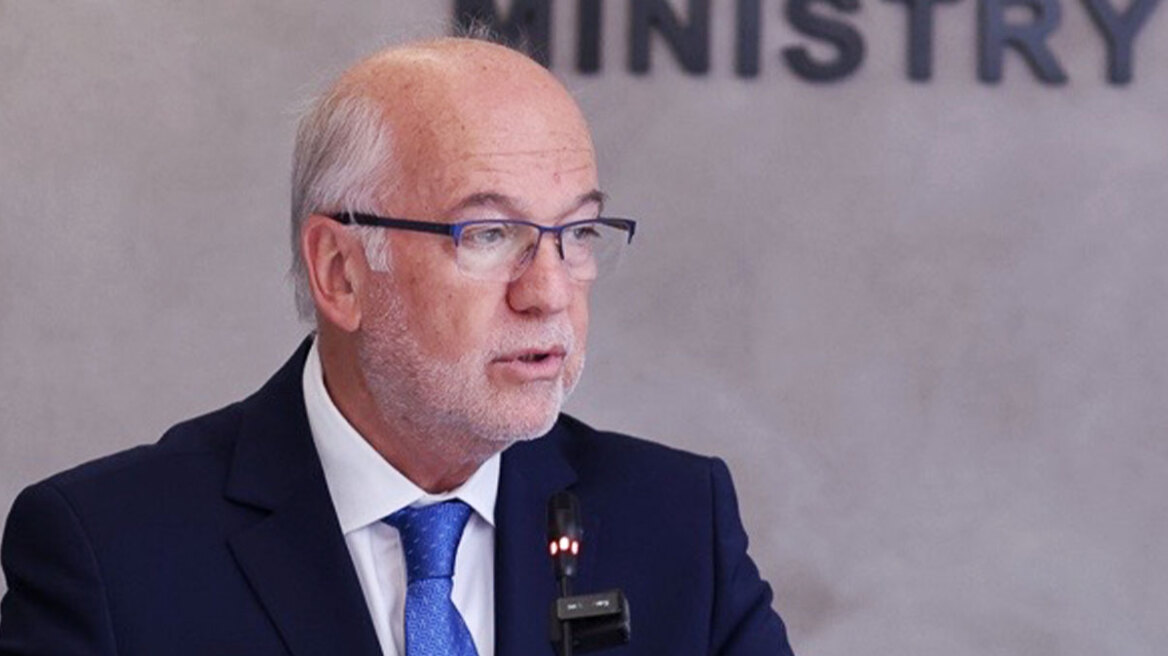
Greek Justice Minister George Floridis has rejected claims that recent police crackdowns on organized crime and corruption were timed to influence the country's upcoming elections.
Speaking in an interview on Greek television channel SKAI, Floridis described the achievements of the police's newly created Department for Combating Organized Crime, commonly known as the Greek FBI, as spectacular. He dismissed suggestions from political opponents that high-profile investigations were launched to serve partisan interests ahead of parliamentary voting.
Floridis asked whether critics believed the police should simply stop intervening and leave criminal enterprises free to act without interference. He pointed out that general elections are still approximately nine months away, insisting that complex corruption inquiries cannot be paused or dictated by an electoral timetable.
The minister stated that ongoing operations by the Hellenic Police are the fruit of a long-term, systematic strategy rather than political calculation. He stressed that law enforcement agencies must pursue illegal networks wherever the evidence leads, regardless of political sensitivities.
Organized crime reforms
Floridis attributed recent police breakthroughs to sweeping organizational reforms spearheaded by Citizen Protection Minister Michalis Chrysochoidis. Under the restructuring, Greek authorities created specialized units capable of investigating complex syndicates that had operated undisturbed across multiple sectors of the economy for decades.
Central to the overhaul is the Directorate for Combating Organized Crime, a centralized agency designed to tackle racketeering, financial crime, smuggling, and contract killings. Modelled loosely on federal investigative bodies in the United States, the agency was formed to overcome departmental fragmentation and coordinate forensic intelligence nationwide under a single command.
The justice minister placed special emphasis on the rapid adoption of modern digital tools and data processing systems across police departments. He explained that cross-referencing records and analyzing intelligence that previously took detectives one or two years can now be accomplished in a fraction of that time.
Floridis argued that upgrading state auditing bodies and oversight mechanisms has fundamentally strengthened police effectiveness. These institutional enhancements, he said, ensure that criminal investigations proceed strictly according to professional standards and remain insulated from political developments.
Judicial independence and corruption
Addressing questions regarding potential misconduct within the legal system itself, Floridis maintained that Greek judges work under exceptionally robust constitutional guarantees safeguarding their independence. He rejected blanket accusations against the judiciary, emphasizing that judicial autonomy remains foundational to the rule of law.
Floridis clarified that whenever credible evidence or specific complaints emerge against court officials, established institutional procedures are activated immediately to investigate them. He stated that allegations must possess concrete substance and specific names before competent judicial bodies can evaluate them.
Under Article 87 of the Greek Constitution, judges enjoy life tenure and institutional autonomy, with promotions, assignments, and disciplinary matters handled by independent judicial councils rather than government ministries. Floridis underlined that every public official, including the minister of justice, is bound to act strictly within the limits defined by constitutional law.
United Nations address and defence alliances
Floridis also reflected on Greek foreign policy, describing Prime Minister Kyriakos Mitsotakis's appearance as presiding officer of the United Nations Security Council as a historic moment for the nation. He said the image of a Greek prime minister chairing the high-level chamber marked a major milestone for the country's international standing.
The minister attached particular significance to Mitsotakis's address directed at European partner nations on the Security Council. He recalled that the European Union has repeatedly condemned the controversial maritime memorandum signed between Turkey and authorities in Libya, stressing the urgent need for a cohesive European position.
Greece must continue building both its national armed forces and its network of international partnerships, Floridis said. He remarked that in the two centuries since modern Greece emerged as an independent state, the country has never possessed the military defensive strength it wields today.
To support his point, Floridis invoked the legacy of Eleftherios Venizelos, the prominent twentieth-century statesman who led Greece through the Balkan Wars and World War I. Venizelos consistently prioritized robust international alliances, a doctrine Floridis said remains essential to Greek security.
The minister pointed to parallel diplomatic discussions conducted in New York by Foreign Minister George Gerapetritis, who met with counterparts from Egypt, the United Arab Emirates, Bahrain, and the European Union. Floridis said broad international refusal to recognize the Turkish-Libyan maritime deal proves the tangible value of Greek diplomatic partnerships.
The 2019 maritime agreement between Ankara and the Tripoli-based administration attempted to carve out a shared economic zone across the Mediterranean, overlapping maritime zones belonging to Greek islands such as Crete and Rhodes. Greece, backed by European partners and regional allies, has rejected the agreement as legally invalid under the United Nations Convention on the Law of the Sea.

Far-right gatherings and Thessaloniki clashes
Floridis addressed violent disturbances that erupted in Thessaloniki following a gathering linked to jailed former Golden Dawn lawmaker Ilias Kasidiaris. He disclosed that police forces had consulted judicial authorities ahead of the event to ask whether the assembly could be legally prohibited.
Judicial authorities advised the police that the gathering could not be banned in advance because it was scheduled to take place within an enclosed private venue. Floridis explained that police units deployed to the area were ordered to maintain public order and social peace, but officers came under attack from a faction of the demonstrators, triggering violent confrontations.
Protecting parliamentary democracy demands respect for constitutional rights alongside strict enforcement of legal boundaries, Floridis said. He pointed out that existing Greek legislation already bars criminal groups from fielding front parties in elections, while noting that any additional legal measures will require careful consideration.
Kasidiaris received a 13-year prison sentence in October 2020 after an Athens court convicted the leadership of Golden Dawn of directing a criminal organization. The Greek parliament subsequently passed successive legislative measures to disqualify parties led or influenced by convicted felons from standing in national elections.
Floridis concluded that the government will deliberate internally and take all necessary steps to safeguard democratic life and ensure the right of citizens to assemble. However, he warned that the constitutional freedom to assemble does not justify violent acts and can never serve as a shield for assaults against police officers.


