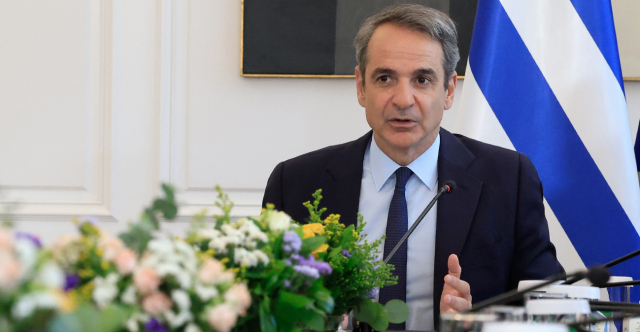
Greek Prime Minister Kyriakos Mitsotakis is chairing a Cabinet meeting on Monday at 11:00 a.m. to lock in government priorities ahead of the 2027 general election. Following the session, Mitsotakis will travel to the headquarters of the governing New Democracy party on Piraeus Street in Athens for the first meeting of the party's new Executive Secretariat.
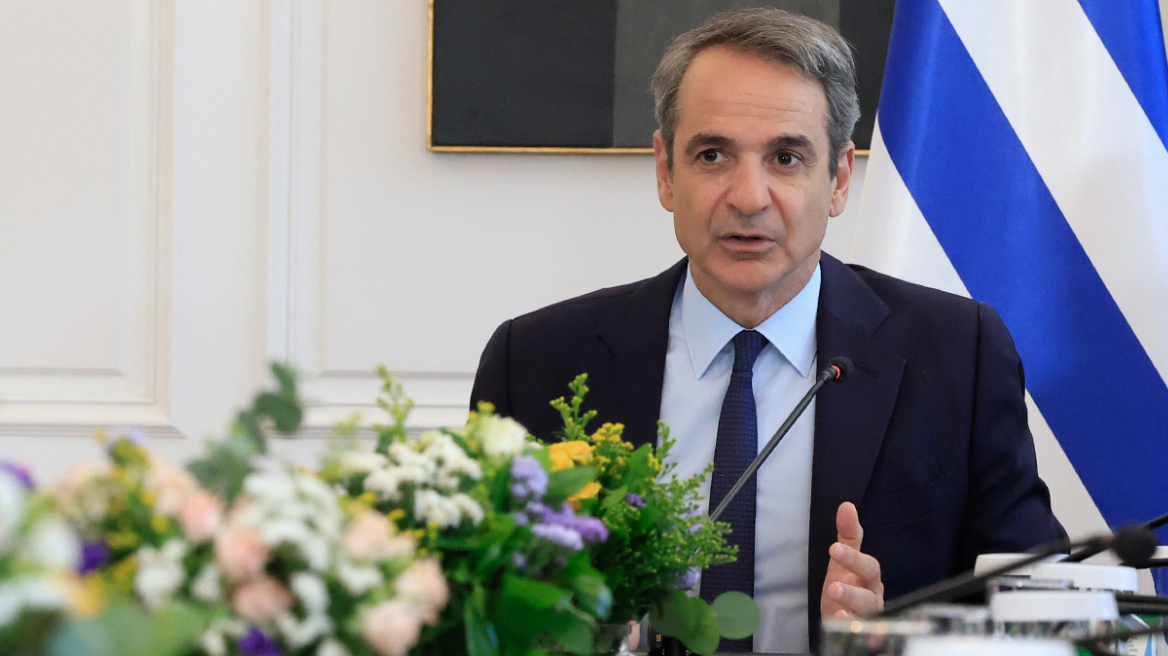
Although national elections are still at least six months away and not a matter of weeks, the political climate in Greece already resembles a prolonged campaign period. Determined to prevent his ministers from slowing down before the polls, Mitsotakis has asked each ministry to identify its four core priorities through the first half of 2027, backed by specific timetables and deliverables.
According to a report by journalist Giorgos Evgenidis on the Greek news site protothema.gr, Deputy Prime Minister Kostis Hatzidakis and Minister of State Akis Skertsos collected and evaluated the ministerial proposals, selecting 16 central government priorities. Hatzidakis and Skertsos are scheduled to introduce Monday's Cabinet discussion, while the main burden will fall on the individual ministers as each presents the four priorities for their portfolio.
Beyond keeping the government machinery running until polling day, the process serves as another evaluation test of the Cabinet by the prime minister. According to protothema.gr, every minister will be judged both on the plans they present and on how effectively they execute them.
New Democracy Executive Secretariat meeting on Piraeus Street
After the Cabinet session concludes, Mitsotakis will head to New Democracy's Piraeus Street offices to convene the party's Executive Secretariat in the new composition formed after the recent party congress. Founded in 1974, New Democracy is Greece's governing centre-right party, and its Executive Secretariat coordinates political strategy between the parliamentary group and the central party apparatus.
Four Members of Parliament serve as elected members of the body: Maria Kefala of Ioannina, Thanasis Papathanasis of Aetolia-Acarnania, Asimina Skondra of Karditsa, and Stavros Papasotiriou of Florina. They are joined by four non-elected members: Panagiotis Palpanas, Christina Patrikakou, Giorgos Tsakoumis, and Kostas Tsiangliotis.
Seven officials participate in the Executive Secretariat ex officio: party vice presidents Kostis Hatzidakis and Adonis Georgiadis, party secretary Konstantinos Kyranakis, general director Giannis Smyrlis, Youth Organisation of New Democracy (ONNED) president Orfeas Georgiou, parliamentary group secretary Maximos Charakopoulos, and parliamentary spokesperson Dimitris Kairidis.
Regional party tours and campaign readiness

At the Piraeus Street meeting, Mitsotakis is expected to issue instructions placing New Democracy on full readiness for the 2027 general election. Organisational work has already begun, with regional tours by both the prime minister and teams of government and party officials intensifying under the coordination of Kyranakis, Smyrlis, Kontadakis, and Nezis.
During the session, Kyranakis will review the party tours carried out since the summer across eight regions: Western Greece, the Peloponnese, Eastern Macedonia and Thrace, Central Macedonia, Western Macedonia, Epirus, the Dodecanese, and the Ionian Islands. The party secretary will also present the schedule for upcoming tours, steps to involve the party's grassroots base in drafting the government programme, and moves to renew the party mechanism and compile the candidate ballots.
May and June scenarios for the 2027 Greek election
With spring 2027 approaching, political circles in Athens are trying to pin down the exact Sunday of the vote. Discussion gained momentum after Health Minister Adonis Georgiadis assessed on state public broadcaster ERT that 16 May is a possible election date.
Because Georgiadis also serves as vice president of New Democracy, his remarks are not viewed as coincidental. According to protothema.gr, Mitsotakis wants to avoid an election fought in winter coats, which almost never favours a governing party, particularly during a period of high inflation and strong international pressure on fuel prices.
Dates in May and June are now the most widely discussed within New Democracy, though some officials suggest a window could also open on Palm Sunday, 25 April, before Orthodox Easter. Any Easter calculation takes into account travel by voters registered in constituencies outside the cities where they reside, known in Greece as eterodimotes, who must travel to their home districts to vote.
Repeat ballot calculations and the European Union presidency
Planners are also weighing the timing of a potential second election if the first ballot ends in deadlock. Under Greece's constitution, if no party wins an outright majority, the president issues three-day exploratory mandates to the leaders of the top three parties to seek a coalition before calling a repeat vote.
Mitsotakis has avoided feeding talk of a second election, describing the contest as a single ballot in order to achieve the maximum possible rallying of New Democracy voters. Even so, protothema.gr notes that at present no party appears able to reach an understanding with any other, although the political balance will change after the election.
While 16 May remains a strong scenario for an immediate post-Easter vote, 23 May has also been discussed. However, 23 May complicates a repeat election after an unsuccessful round of exploratory mandates because Holy Spirit Monday falls on 21 June, when half of Greece takes a three-day summer weekend.
Beyond May, ministers and MPs are seriously discussing 13 June. Mitsotakis has previously remarked half-jokingly that elections will take place in light clothing, and summer elections have not been unusual in Greece in recent years.
A final factor in the decision is Greece's scheduled assumption of the six-month rotating presidency of the Council of the European Union on 1 July 2027. Mitsotakis is set to emphasise the European presidency strongly during the campaign, using the 1 July milestone to press even more forcefully his argument for deciding the election in a single ballot.