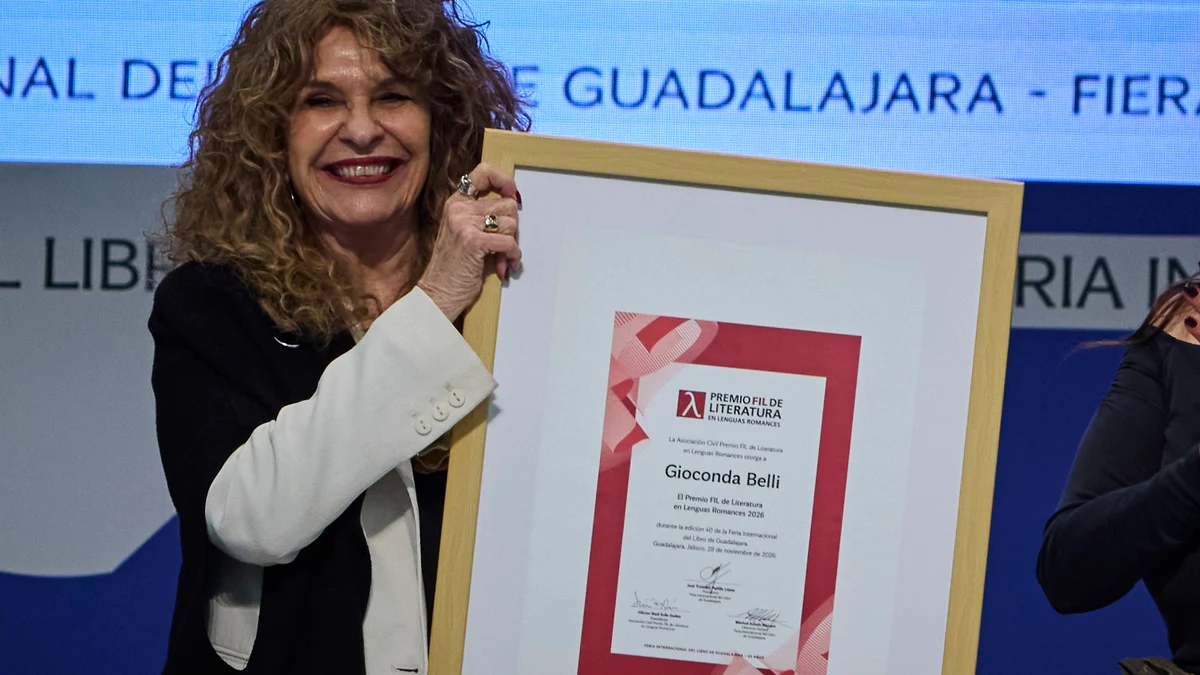
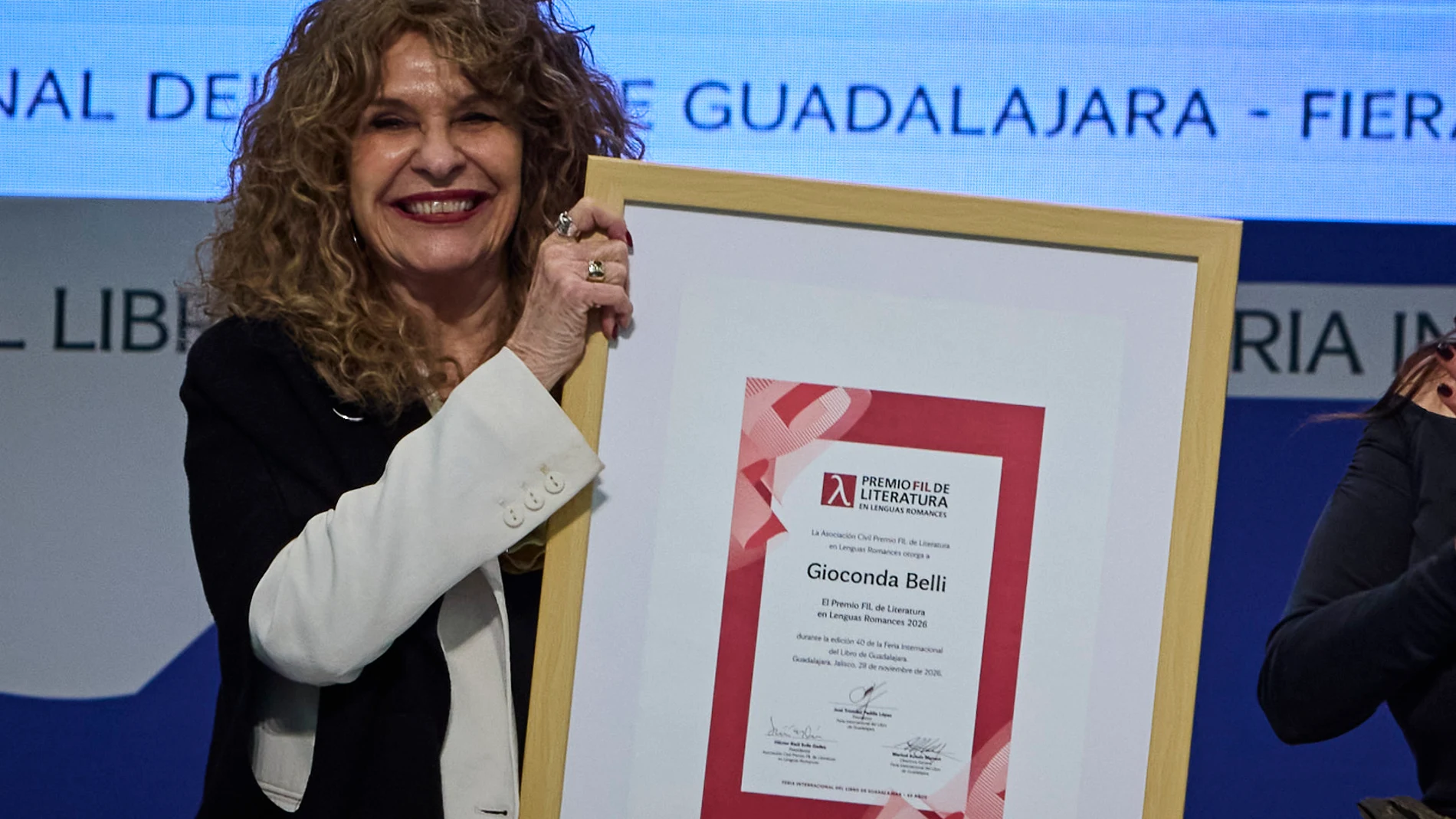
Nicaraguan poet and novelist Gioconda Belli received the Premio FIL de Literatura en Lenguas Romances at the opening of the Guadalajara International Book Fair in Mexico, becoming the first Central American writer to be honored with the award.
This year marks the fair's 40th edition, with a line from Umberto Eco, "the world speaks to us like a great book," chosen as its motto. Italy is the guest country, and the fair is paying tribute to Juan Rulfo on the 40th anniversary of his death with an immersive pavilion dedicated to his novel "Pedro Páramo."
Organizers said the fair drew 953,112 visitors last year, a 5 percent increase on the 907,300 who attended in 2024.
The fair, known as FIL, is one of the largest Spanish-language publishing events in the world, bringing together authors, publishers and readers from across Latin America, Spain and beyond every year. This year's edition runs until December 6 and will host more than 900 authors from 41 countries, including Isabel Allende, who returns with "La hora antes del alba," a sequel to "La casa de los espíritus" that won the latest Premio Planeta, as well as Salman Rushdie, Siri Hustvedt, Alessandro Baricco, Milo Manara, Jorge Volpi, Valeria Luiselli, Andrea Bajani, Santiago Roncagliolo, Paloma Sánchez-Garnica, Juan Villoro and the writing duo Carmen Mola.
Belli's acceptance speech
In her speech, Belli described the fair as a bastion of civilization in a world full of uncertainty, pointing to threats both old, such as war, and new, such as fake news and the unchecked spread of false narratives that she said endanger the foundations of democracy. She said people defend and love spaces like the fair because only reading equips them to understand others and to live more lives than their bodies and limited time allow.
On writing and imagination
Belli said that as a novelist she had to learn to trust the pulse of imagination and navigate the complex labyrinths from which one does not always know how to emerge with the thread of a story intact. She said she became fascinated by the novel as a genre and has now written nine novels and a memoir, describing her mind as a kind of Aladdin's lamp that produces characters and stories she then has to assemble. She said she loves poetry, which arrives like a flash of lightning, but that the daily obligation of novel writing gives her an everyday, joyful purpose. She reflected on what she called the long roads of fiction and the mystery of a human species that has, since its beginnings, known how to receive and shape the gift of imagination.
Reflections on being a woman
Belli, who often addresses her experience as a woman in her work, said that being a woman already brings with it a kind of vaccine against flattery, adding with humor that she doubted a female version of Donald Trump could exist. She said women tend to be more discreet, and that the new generation of women writing in Spanish no longer has to bear the same prejudices as before. She said those prejudices have not disappeared entirely, but there is now at least more fear of expressing them.
Feminism in her literature
Belli said her life owes much to a moment of clarity in her youth when she decided to celebrate being a woman, a moment that coincided with an era of searching and rebellion in which women reinvented feminism. She said that from the territory of her own body she wanted to repeal curses that had rained down on the female body through the centuries, insisting that women did not cause sin or death but are instead givers of life and of the care that life requires, sensitive, sensual, instinctive and intellectual beings. For that reason, she said, her writing sublimated sexuality rather than vulgarizing and denigrating it the way pornography does.
She thanked her mother for instilling in her pride in being a woman, recalling that her mother described sex to her as the most profound act of communication between two human beings. She said this led her to rebel against the prejudiced, stereotyped view of femininity that men had long presented, since it was men who had traditionally told the story of who women were. She invited men to read women authors, saying she found it surprising that women are assumed to write only for other women and that all their novels get labeled "romantic." She said it was a shame that relations between men and women had become so problematic.
A call for fraternity
Belli said men and women have fought hard for freedom and equality but have fallen short on fraternity. She said that amid the unease of this century, even those who have not suffered geographic exile share a feeling of exile, as if waking into a time whose codes they do not recognize. She said humanity has become exiled from the certainties with which it once learned to view history, and that people have lost confidence in progress and in the belief that rationality and humanism will prevail.
Nicaragua and exile
Belli, a poet and novelist who was an early member of Nicaragua's Sandinista National Liberation Front before later becoming a critic of the government, spoke about Nicaragua, a country on which she said she prefers not to make predictions. She said her spirits did not flag when the country's revolution turned into what she called "a Kafkaesque cockroach," nor when the government stripped her of her nationality, confiscated her possessions and turned her future into a painful exile. She said humanity needs fraternity and needs to recover civility in politics, in language and on social media. When egos and individualism act only out of self-interest, she said, the world falls apart, and people fall apart inside as well. She said humanity is missing fraternity and is coming to realize it cannot survive without it, without thinking of the collective.
What happens next
The Guadalajara International Book Fair continues until December 6.
Test yourself
Which prize did Gioconda Belli receive at the Guadalajara fair?
Which country is the guest of honor at this year's edition of the fair?
How many visitors did the fair receive last year, according to organizers?
Where it happened
Guadalajara, Mexico