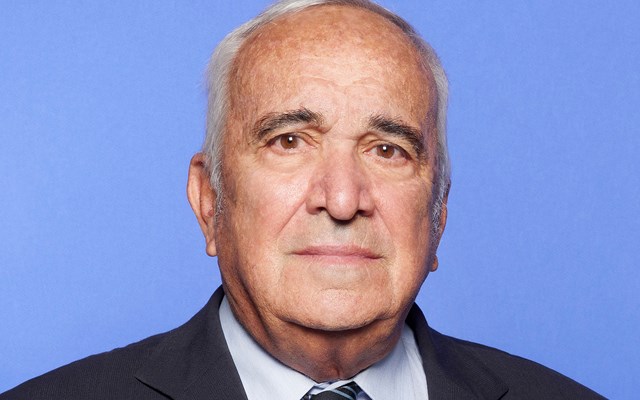
Greek financial commentator Giorgos Kraloglou issued a sharp critique of the Greek government on September 1, 2026, over its upcoming economic announcements at the Thessaloniki International Fair, describing the anticipated measures as recurring state hand-outs, tax bonuses, and small change intended to preserve political ties with voters.
Writing in an opinion piece titled "This is what we will give you..." published by news portal Capital.gr, Kraloglou stated that public speeches and balcony addresses scheduled for the annual trade event in September 2026 are structured to secure voter support ahead of parliamentary elections expected in April or May 2027. He observed that politicians count on each satisfied voter to bring in five additional votes through friends and acquaintances, while dismissing policy promises circulating in the days preceding the fair as temporary talk designed solely to sound pleasant to the public.
Addressing potential government pledges to eliminate bureaucracy, ensure all wages retain real purchasing value, and set traps for price gouging on retail shelves to benefit consumers, Kraloglou argued that even if officially announced, such policies would remain unfulfilled declarations. He explained that implementing reform proposals requires establishing state working groups, a bureaucratic process that takes 10 months to form committees, another 5 months for them to begin operating, and 2 to 3 years to draft analytical proposals. Any resulting recommendations must then await approval from a future administration that agrees with the government that established the working groups a decade earlier.
Kraloglou highlighted that promises to eradicate bureaucracy and streamline business licensing, particularly for manufacturing enterprises and mergers between small and large firms, have been repeated across more than five to ten previous international fair events without producing final legislative texts. He urged policymakers to make fair announcements meaningful by providing the business sector with tax relief and regulatory ease rather than cash subsidies. Such measures, he wrote, would expand domestic production volume and scope, curb excessive reliance on daily imports previously manufactured in Greece, and address the historical shift of Greek manufacturing and private investments to neighboring Balkan countries.
Greek Economic Measures and Defense Contracts
In immediate market developments taking effect on September 1, 2026, a government-backed retail price agreement initiated price reductions across 1,700 consumer products, yielding an average discount of more than 6 percent. Simultaneously, Greek energy supplier HELLENiQ ENERGY extended its extraordinary price discount on gasoline and diesel fuel through September 30.
In consumer finance policy, minister Kyriakos Pierrakakis announced an end to exorbitant insurance coverage charges on consumer loans for cancer survivors with a history of the disease. The measure accompanies ongoing debates surrounding Greece's broader economic outlook, where state arrears and unpaid IOUs reached 3.55 billion euros despite reductions in private debt, and an OECD study highlighted affordable housing access as a major barrier to financial independence for Greek youth.
Broader economic commentary published alongside the report addressed long-term domestic challenges, including projected energy costs for 2027, the ongoing brain drain of skilled emigrants, and statements by the Prime Minister framing manufacturing as a strategic priority for national competitiveness. Additional industry data showed that tourist spending on food is frequently restricted to basic orders such as French fries, even as visitors from Germany, the United Kingdom, and the United States generate 40 percent of total Greek tourism revenue, with American travelers spending significantly more per day than British or German visitors.
In defense affairs, Greek officials signed the "Shield of Achilles" agreement in Tel Aviv to acquire advanced Israeli air defense systems to strengthen national airspace security. The defense acquisition coincided with reports from news agency Bloomberg indicating that European partners are pressuring Greece and Spain to transfer Patriot air defense missile systems to Ukraine.
In domestic judicial news, Greek law enforcement authorities arrested a court employee who was subsequently sent to a fast-track judicial proceeding after being charged with illegally taking official case files to his home.
Ukraine Conflict and Global Security Affairs
Military operations in eastern Ukraine intensified as residents in the city of Druzhkivka reported that their town was lost as Russian armed forces advanced closer to the area. The frontline report followed analysis published by The Economist stating that Russian President Vladimir Putin is planning to escalate military operations in Ukraine.
In Central Europe, Polish authorities launched an official investigation into a major fire that broke out at a manufacturing facility producing fighter drones. In Middle Eastern diplomatic affairs, officials in Pakistan reported interest from six to seven Muslim nations in joining the Mecca Pact alongside Saudi Arabia and Turkey, while Denmark reopened its embassy in Syria after a ten-year diplomatic closure.
Human rights monitors reported that judicial authorities in Iran sentenced two women to death over their participation in anti-government street protests that occurred in January.
Global Markets, Corporate Legal Battles, and Economic Trends
In United States regulatory actions, the Federal Trade Commission joined over 20 state attorneys general in filing a major antitrust lawsuit against Amazon, alleging that the company manipulated advertising prices. The legal action came as political polling indicated that US President Donald Trump's approval rating remained stagnant at 33 percent.
Energy commodity markets recorded notable price swings, with crude oil jumping by more than 2.5 percent. Market analysts linked the price surge to potential demand shocks originating from maritime shipping disruptions in the Strait of Hormuz.
In European corporate developments, the Prime Minister of Lower Saxony called for a comprehensive restructuring agreement for automaker Volkswagen prior to an upcoming board of directors meeting. Commenting on European integration, the Prime Minister noted that the outcome of a recent referendum in Iceland demonstrated that the European Union must increase its overall regional appeal.
Financial market indicators showed Wall Street closing with monthly gains despite experiencing modest daily losses. Investment bank UniCredit issued advice urging investors who sold equities in May to return in September, forecasting that the bull market in European stocks will persist. In venture capital, 25 new investors made their debut on the 2026 Midas List, which ranks the top 100 venture capital investors globally.
In European criminal investigations, German police prosecuted a woman for defrauding victims of over 350,000 euros by falsely claiming her child suffered from cancer.