

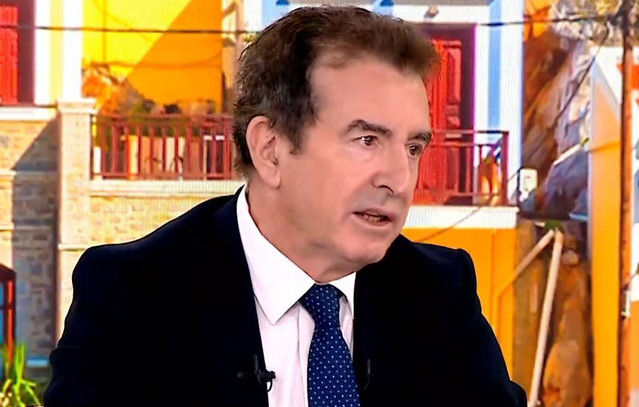
Minister of Citizen Protection Michalis Chrysochoidis launched a new police unit on Tuesday to tackle severe traffic gridlock on the Kifisos motorway in Athens.
The new Hellenic Police team, named KOMVOS, makes its debut today using motorcycles, surveillance cameras, drones, and artificial intelligence to manage traffic problems in real time.
Speaking on the morning news show Koinonia Ora Mega, Chrysochoidis said that someone would need to be a wizard or a miracle worker to solve the traffic situation on Kifisos with existing means alone. He estimated that a substantial solution will only come when a new road is constructed, suggesting a transverse axis leading toward the city of Thiva.
Kifisos Avenue is the primary north-south motorway serving the Greek capital, carrying heavy commercial transport and thousands of commuters daily through the metropolitan region of Attica. Chrysochoidis oversees public order and national security as cabinet minister responsible for the Hellenic Police, known locally as EL.AS.
New technology for real time traffic management
The minister explained that the KOMVOS system combines specialized personnel, equipment such as motorcycles, and advanced command-and-control technology. A newly established central monitoring facility receives live visual feeds from across Attica to deploy traffic solutions in real time.
According to Chrysochoidis, the command center gathers real-time information from 24 distinct data sources, upgrading an operational model that previously drew data exclusively from Google. The unit aims to accelerate traffic flow and achieve a 25 to 30 percent time saving for drivers.
He added that authorities will also issue direct instructions to motorists through a newly developed mobile application, channeling vehicles onto secondary side roads during heavy congestion.
Surge in transnational telephone fraud
Turning to public security issues, Chrysochoidis described a recent surge in telephone scams as an epidemic that primarily targets vulnerable elderly citizens. He stated that the perpetrators behind the fraudulent operations are predominantly Roma.
Chrysochoidis emphasized that his assessment was not made out of racial prejudice, describing the trend as a tragic turn toward criminality by individuals who easily strip people of their property. He explained that criminal groups have organized operational call centers to trick victims systematically.
The Roma are a recognized ethnic minority population living across Greece and wider Europe. Chrysochoidis noted that phone fraud has expanded beyond national borders into a pan-European challenge, with criminal networks continuing to multiply despite major police investigations and arrests.
He highlighted that fraudulent call centers targeting Greek residents have been located in neighboring Balkan countries, including Albania and North Macedonia. Police officials are holding a meeting today to establish stronger institutional structures to combat the fraud network.
Political debate over potential party splits
Chrysochoidis also addressed wider political developments, commenting on speculation surrounding former Prime Minister Antonis Samaras and the potential formation of a new political party. The minister stated that government officials would comment further on policy differences and criticism if a new party actually emerges.
Samaras previously served as Prime Minister of Greece and led New Democracy, the governing center-right party, before breaking with the current leadership over key policy disputes. Chrysochoidis noted that he does not understand the objective of Samaras's disagreement with New Democracy.
The minister added that while creating new political parties to offer alternative solutions remains part of the democratic process, repeating policies that previously led to destructive results does not help reform the political system.


