
Ancient Pre-Socratic philosopher Heraclitus of Ephesus has emerged as a key framework for understanding the modern era of artificial intelligence and rapid technological transformation.
Writing in Madrid, author Alejandro Navarro Serrano highlighted how the thinker's ancient doctrine that nothing is permanent except change resonates directly with today's fast-moving digital economy.

Heraclitus, who lived in the ancient Greek city of Ephesus in modern-day Turkey, was known as the obscure philosopher due to his enigmatic teachings on cosmology and the nature of reality. He argued that the universe operates like a river in constant motion, asserting that a person cannot step into the same river twice because neither the individual nor the water remains unchanged.
Application to the Digital Transformation
This ancient philosophy provides a structure for interpreting current shifts across global industries, employment markets, and emerging technologies. The year 2022 marked a critical turning point when artificial intelligence moved out of research laboratories and into widespread consumer use.
Since that technological transition, numerous economic sectors have adapted their business models to integrate automated systems. While these adaptations have delivered substantial increases in productivity, they have also resulted in workforce layoffs across affected industries.

The vast energy requirements of modern digital infrastructure have also driven strategic shifts among leading technology firms. Companies including Meta, Microsoft, Google, and Amazon have begun entering long-term power purchase agreements with nuclear energy providers to power their data centers and artificial intelligence operations.
Philosophical Perspectives on Educational and Social Change
Heraclitus maintained that change is the only eternal principle governing existence. He argued that even during periods that appear stationary, underlying systems are continuously moving toward new states of development.
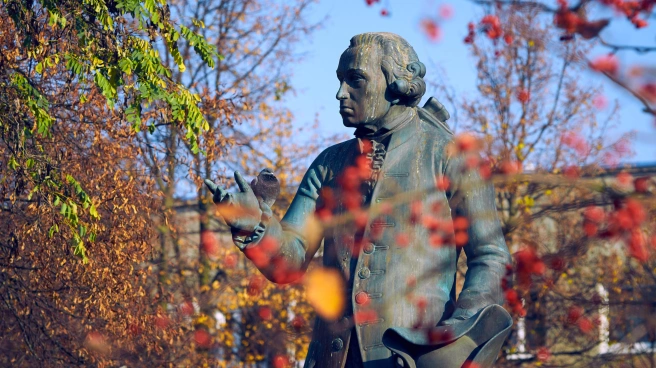
In related commentary on foundational philosophy, reference was made to Enlightenment thinker Immanuel Kant, who argued that human beings can only reach their full potential through education, being shaped entirely by what education makes of them.
According to the analysis published by Navarro Serrano, the inevitability of perpetual change carries an underlying message of hope. Heraclitus observed that no human system remains permanent, noting that as everything flows, even structural chains gradually wear down over time.
The philosophical commentary concluded that the natural law of change guarantees that rigid barriers crack and new beginnings emerge, offering a lens through which society can navigate the ongoing rise of artificial intelligence. The article was prepared by the editorial team with the assistance of artificial intelligence tools.