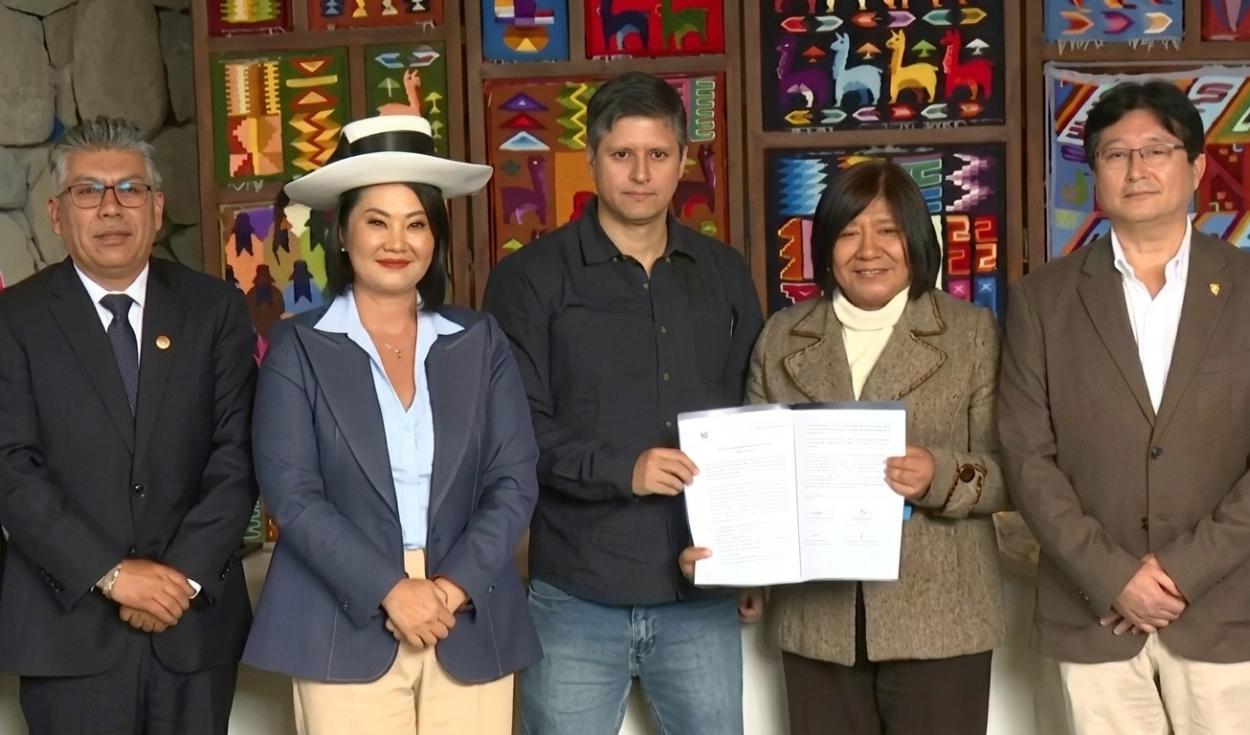
Peruvian President Keiko Fujimori took part on Thursday in the signing of a ninth addendum to the government's concession contract with the natural gas distributor Cálidda, an agreement meant to expand gas service to 15 localities across seven regions of central and southern Peru, including Cusco.
The ceremony took place during the final day of CADE Ejecutivos 2026, Peru's annual conference of business and political leaders. Ministers Elmer Cuba and Guillermo Shinno also attended the signing.
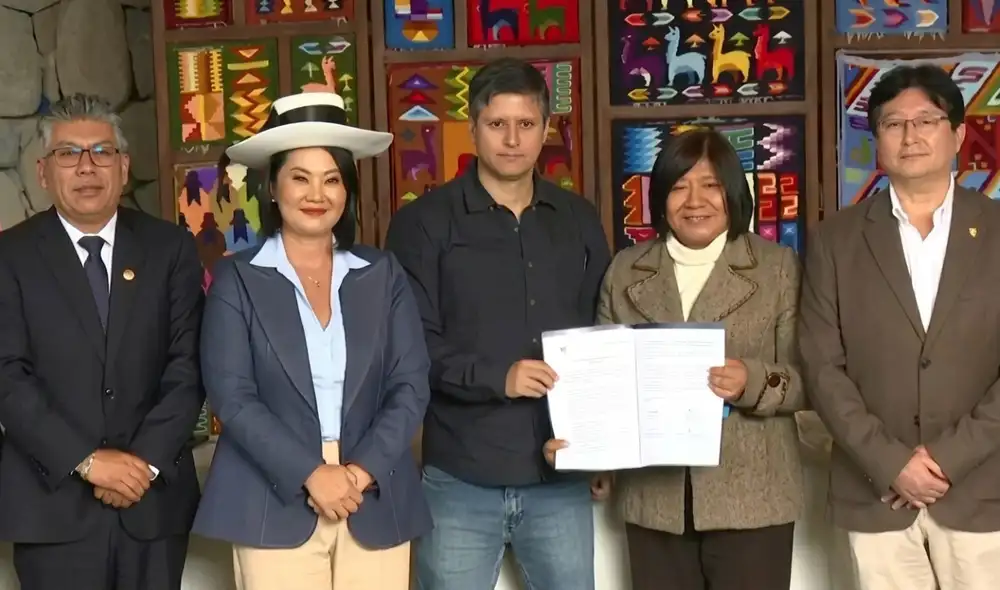
The modified contract includes an investment of US$550 million and extends the concession by ten years, from 2033 to 2043. Among its commitments are the construction of at least 3,738.9 kilometres of distribution networks and the initial connection of 201,411 residential consumers within a period of up to 114 months.
During her speech, Fujimori defended the signing of the agreement and said it would allow families currently using gas cylinders to cut their costs. She explained that once the networks are built, households would pay between S/20 and S/25 a month for the service, which she described as a significant, real and direct saving for every family's finances.
Fujimori also addressed criticism of the initiative. She said the easy path was to criticize, distrust and let everything stay the same, but that her government had come to power to make decisions. She added that access to the energy resource had been limited for decades for families living in the regions where the natural gas deposits are located.
Cusco's governor-elect raises objections
Verónika Mendoza, the governor-elect of Cusco and a former congresswoman, questioned the terms of the agreement. She asked that the addendum not be signed and described as disrespectful the proposal to offer only 800 gas connections to the town of Quillabamba over a ten-year period. Her objections focused on the concrete scope of the service for a region that hosts the Camisea gas fields.
Cusco's energy costs and the Camisea fields
Speaking at CADE Ejecutivos 2026, Mendoza said Cusco pays the most expensive energy in the country despite the fact that, according to her, 40% of the electricity produced in Peru comes from gas extracted from its territory. She also warned that 42.8% of the regional population suffers from anemia and that serious shortcomings persist in health and education services.
Camisea, located in the Cusco region, is Peru's main natural gas field and has been exploited for more than two decades, supplying gas for both domestic use and electricity generation across the country.
Calls for guarantees and dialogue
Mendoza said that expanding access to natural gas on a large scale was a demand that remained unmet after more than two decades of exploitation at Camisea. While she said it was necessary to expand distribution using trucks from the central coast in the meantime, she questioned why Cálidda's proposal included around 30,000 homes for Cusco but just 800 connections for Quillabamba over ten years. She said the region needed large-scale gas access now, but could not accept what she called scraps. She also recalled a 2024 tender linked to the Bonogás programme of the Fund for Social Inclusion in Energy, which had aimed to supply a thousand Quillabamba families within a year.
Mendoza asked that the addendum not be signed under its current conditions and demanded guarantees on timelines, budgets and penalties in case of non-compliance. She proposed opening a dialogue table and a separate technical table involving the incoming regional authorities, without imposing the agreement or generating social conflict. She also argued that gas arriving by pipeline to Cusco and the wider Macrosur area should be used to boost not only household consumption but also transport and industrial activity.
Plans for regional development
Mendoza further warned that Cusco lacks a regional development plan agreed between authorities, peasant communities, business owners and academic representatives. Among her proposals, she suggested creating territorial development councils for the Cusco Amazónico, Metropolitano and Alto Andino areas, along with a network of six or seven innovation centres to add value to products from each zone.
Her remarks stand in contrast to the government's announcements about expanding Cálidda's concession and reactivating SITGAS, two initiatives that, according to Mendoza, must translate into concrete benefits for the people of Cusco.
What happens next
Verónika Mendoza proposed opening a dialogue table and a technical table with incoming regional authorities before the addendum is applied under its current terms.
Test yourself
How much investment does the Cálidda addendum include?
Until what year does the extended concession now run?
What did Verónika Mendoza specifically object to?
Have your say
Should Cusco receive more gas connections under the Cálidda agreement?
Where it happened
Cusco, Peru