

Lima's consumer price index rose 0.29% in July, accelerating from June's 0.23% reading and surpassing rates recorded in both July 2025 and July 2024, Peru's National Statistics Institute (INEI) reported.
The result pushed accumulated inflation for January through July to 4.09%, well above the 1.53% recorded in the same period of 2025, the 1.81% seen in 2024, and the 2.92% posted in 2023. The annual rate for Lima, covering August 2025 through July 2026, stood at 4.07%. Nationwide, the index rose 0.30% in July and 3.71% over the first seven months of the year.
Chicken prices surge on bird flu outbreak
The sharpest price pressures came from food. The food and non-alcoholic beverages division rose 0.67% and was the single largest contributor to the monthly result, accounting for most of the 0.22 percentage points added by the three leading categories combined.
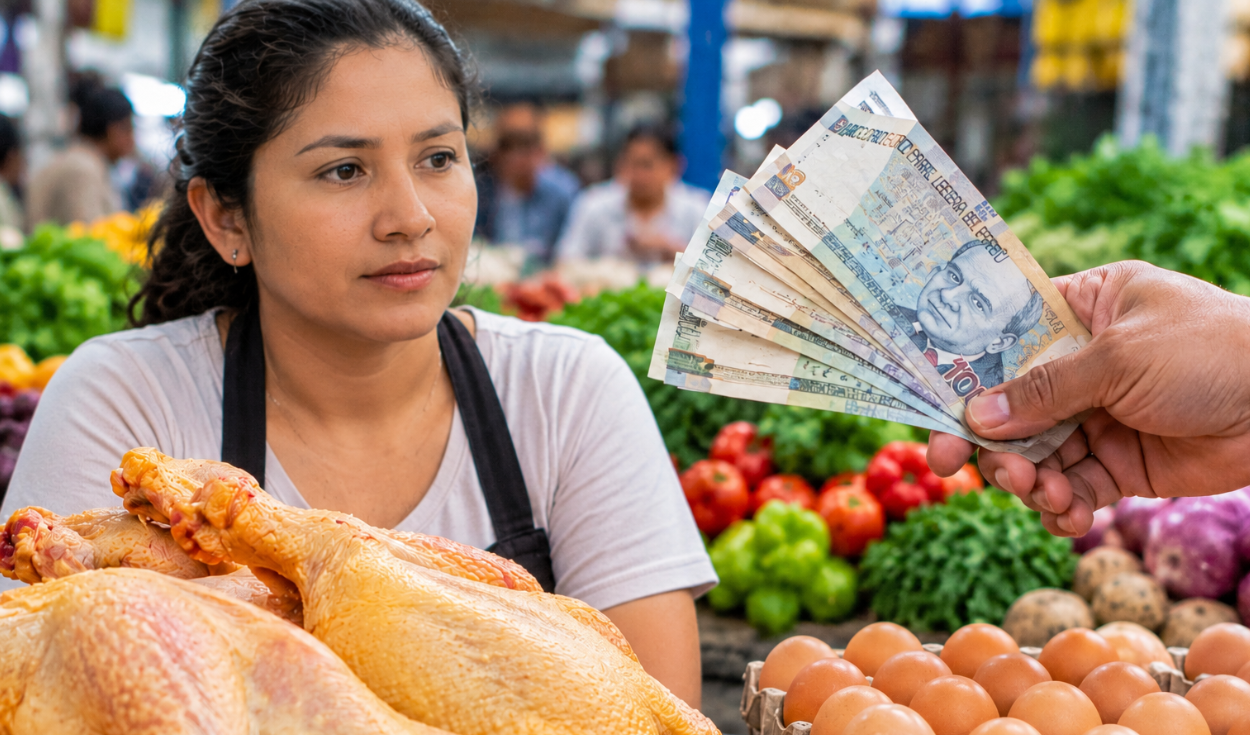
Eviscerated chicken drove much of the increase, with its price jumping 13.3% in Lima. The INEI said the rise was associated with lower supplies of birds reaching distribution centres amid a health emergency linked to an avian influenza outbreak. Chicken wings rose 8.5%, breast 7.9%, and leg 7.1%. The broader meat division climbed 5.75% for the month. Eviscerated hen added 3.3%, chicken offal 4.6%, and hen eggs 1.7%.
Other food categories also pushed higher. Italian tomato prices rose 10.3%, pickled yellow chilli 47.0%, ground rocoto chilli 4.3%, ground yellow chilli 4.0%, and carbonated soft drinks 0.3%.
Holiday demand lifts transport costs
The transport division rose 0.20%, driven by increased travel demand over the extended Fiestas Patrias national holiday period. Intercity bus fares jumped 18.7% and domestic air fares rose 15.5%, while international flights increased 1.5%.
The INEI noted that transport services had accumulated a 13.91% rise between January and July and an 18.15% increase over the preceding twelve months, pointing to sustained pressure on this component of household spending.
The restaurants and hotels division added 0.18%. Among the dishes recording the largest price increases were fried chicken, pizza, arroz chaufa, regional broths and soups, grilled meat, and ceviche. Hot drinks, served soft drinks, and served beer also rose.
Fresh produce and fuel offer partial offset
Not all prices moved upward. The INEI reported significant declines in a range of fresh foods that helped moderate the overall index. Blueberries fell 16.2%, papaya 13.0%, bonito fish 11.3%, cucumber 8.8%, leek 8.4%, spinach 7.0%, onion 6.7%, and several varieties of potato between 2.4% and 5.6%.
The fruit group fell 2.11%, vegetables and tubers dropped 1.04%, and fish and seafood declined 2.64%, led by lower prices for bonito, corvina, perico, and lisa.
The housing, water, electricity, gas and other fuels division fell 0.12%, the only major consumption category to record a decrease. Domestic propane gas dropped 1.1% and residential electricity tariffs fell 0.3%, the INEI said, linking the electricity change to an update of generation, transmission and distribution components effective from 4 July 2026. Vehicle fuels also declined: gasohol fell 4.8%, vehicle LPG 4.1%, diesel 1.5%, and natural gas for vehicles 0.1%.
Lima among higher-inflation cities nationally
Among Peru's main cities, Puerto Maldonado recorded the highest annual inflation rate at 7.96%, followed by Arequipa at 4.13%, Moquegua at 4.10%, and Lima at 4.07%. The national annual rate was 3.70%.


