

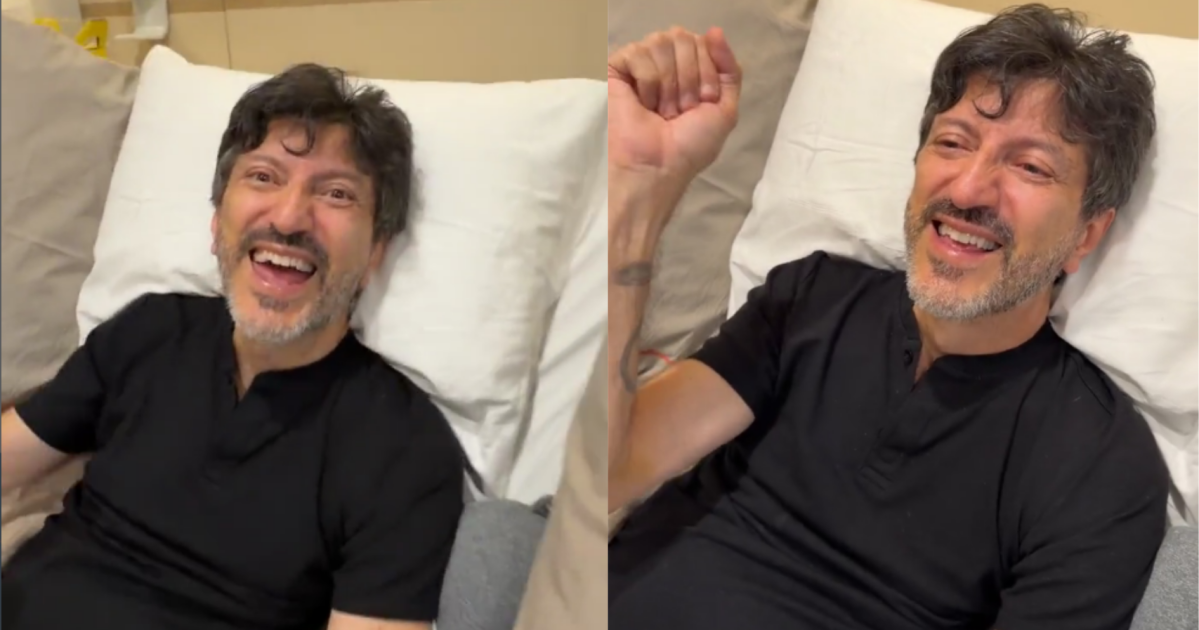
Content creator Lito Sousa has revealed he has been diagnosed with Creutzfeldt-Jakob disease, a rare and rapidly progressing degenerative condition currently lacking available treatment.
Speaking to broadcast outlet CNN Agora, Vitor Valenti, a researcher at São Paulo State University, explained that the diagnosis followed Sousa's announcement on social media this week, which sparked widespread public discussion about the illness.
Valenti stated that the condition is exceptionally rare and severe. Citing data from the Centers for Disease Control and Prevention and the World Health Organization, he noted that only one to two people per million worldwide present symptoms and receive a confirmed diagnosis through specialized testing each year.
Creutzfeldt-Jakob disease is a rare and fatal neurodegenerative disorder caused by abnormal infectious proteins known as prions. These misfolded proteins accumulate within the central nervous system, causing rapid tissue damage and severe neurological deterioration.
Creutzfeldt-Jakob disease research in Marília
Valenti recalled a similar case analyzed by São Paulo State University in 2021 in Marília, a city in the interior of São Paulo state. The patient was a 77-year-old man who developed movement difficulties, trouble walking, and a loss of balance, symptoms recognized as the most common early indicators of the disease.
The initial diagnosis in the Marília case was not made immediately. Researchers ultimately identified the condition through specialized laboratory testing in Greater São Paulo, which revealed the involvement of a prion belonging to the 14-3-3 protein family.
The 14-3-3 protein family consists of essential regulatory proteins required for healthy brain function. Valenti explained that laboratory tests confirmed this specific protein group was directly involved in the progression of the illness.
Research funding and disease causes
Valenti highlighted that the extreme rarity of Creutzfeldt-Jakob disease remains one of the primary obstacles to developing effective medical treatments.
He noted that scientific research funding for the condition is extremely limited. He contrasted the situation with global efforts during the Covid-19 pandemic, when governments and health organizations worldwide devoted vast resources to rapidly develop vaccines.
Because Creutzfeldt-Jakob disease receives little focused financial investment, current research lines remain concentrated on identifying how the illness originates. The condition does not stem from a single cause, and genetic transmission accounts for only 10 to 15 percent of diagnosed cases.
Valenti lamented that the vast majority of cases have no identifiable origin, describing the lack of clear diagnostic answers as an unfortunate reality.
Palliative care and patient prognosis
Medical care for patients diagnosed with Creutzfeldt-Jakob disease is currently restricted to palliative treatment. Valenti pointed out that therapeutic efforts focus on reducing patient pain and providing emotional comfort to families, noting that families suffer alongside the patient.
The researcher emphasized that determining the precise origins of the condition is an essential step toward developing targeted and effective therapies in the future.
Regarding Sousa's health, Valenti confirmed that the accelerated symptom progression observed in his case aligns with scientific literature and mirrors the symptoms seen in the 2021 Marília patient.
Valenti informed that Sousa's cognitive functions remain preserved for the time being. He noted that the content creator retains his memory, reasoning capacity, and ability to process new information.
Despite preserved cognition, the overall prognosis remains grave. Citing health data from the Centers for Disease Control and Prevention, Valenti stated that patients die on average five to six months after their initial symptoms begin.
Valenti concluded that the rapid deterioration is fully expected within existing scientific literature. He added that current medical evidence shows the priority must remain on delivering comprehensive palliative care to Sousa and supporting his family.


