

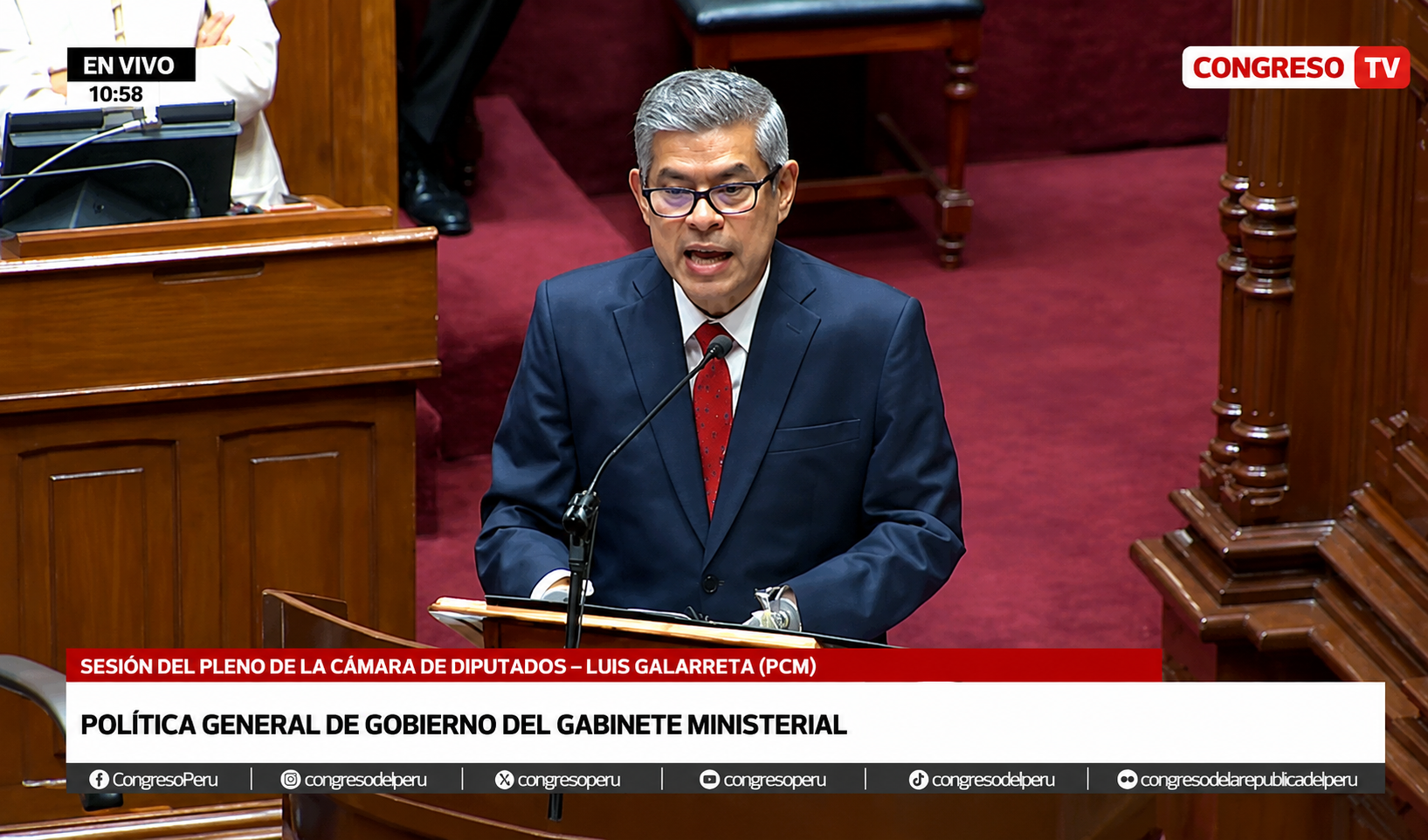
Peruvian Prime Minister Luis Galarreta has proposed transferring inmates convicted of minor offences, including child support defaulters, to disused military barracks to relieve overcrowding in the country's prisons.
Speaking during a government plan presentation in the Chamber of Deputies at the Plenary of Congress on Thursday, August 20, Galarreta outlined an interim scheme to house low-risk convicts in Armed Forces facilities while permanent new prisons are constructed. The measure will apply to individuals serving sentences for non-payment of alimony or other crimes that do not involve high danger.
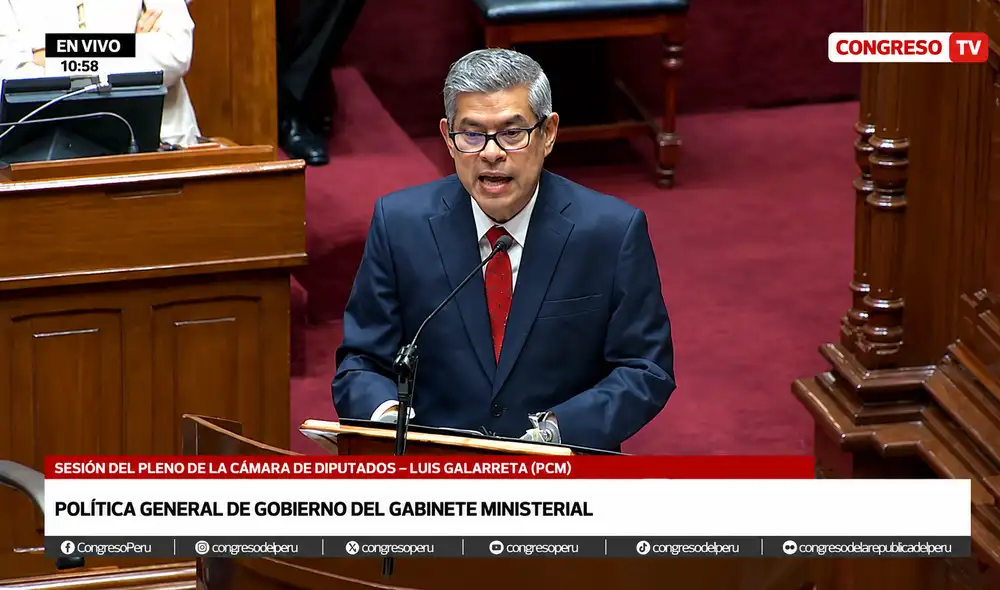
Galarreta stated that transferring these inmates from existing penitentiary establishments would allow the government to reduce overcrowding, improve internal control, and progressively recover the state's principle of authority in prisons. He added that the objective was clear, asserting that the state must rule in prisons rather than criminal organisations.
Prison security and military involvement
The former congressman also assured lawmakers that security detector arches would be installed at penitentiary facilities to strengthen controls and prevent the entry of prohibited objects and electronic devices. However, he did not specify how these security tools would be funded.
The prime minister further reported that the government had requested the exceptional participation of the Armed Forces for external security and operational support in penitentiary establishments. He assured that the military would not replace the National Police of Peru or prison authorities, but would contribute their capabilities when the gravity of the situation required it and the constitution permitted.
Concerns over barracks adaptation and inmate rights
Security experts quickly questioned the feasibility and legal basis of the government's plans. Ricardo Valdés, a former deputy minister of the interior, explained that constructing new penitentiary facilities was possible but would take considerable time to materialize. He argued that Peru needed comprehensive prison reform and proposed that individuals imprisoned for non-payment of child support should be released so they can work to support their families.
Valdés suggested that for all non-violent crimes, such as corruption, inmates who have served three-quarters of their sentence could be released under specific rules of conduct. He added that reoffending or continuing to withhold child support should act as an aggravating factor leading to their return to prison.
Regarding the role of the Armed Forces, Valdés stated that guarding prisons does not fall within military powers, adding that troops are neither trained nor legally authorized for such tasks. He noted that adapting an Army barracks into a suitable facility would take slightly over six months and could not happen overnight. He stressed that authorities cannot move just any inmate to a barracks, pointing out that prisoners on trial who have not received a sentence cannot simply be relocated anywhere because inmates have legal rights and are not objects.
Valdés also observed that while visitation rights cannot be cut off for low-danger inmates, they can be restricted for permanent facility residents. He criticized Galarreta's speech as containing few ideas, describing it as a tedious repetition of statements made by President Keiko Fujimori on July 28. He characterized the government proposals as short-term palliative measures, noting that allocating 19 million soles against extortion was slated for the following year and focused merely on acquiring vehicles.
To detect microchips and other prohibited items, Valdés proposed installing X-ray systems alongside metal detector arches at prison entrances. He recommended outsourcing this work to a private sector third party to handle operations and bypass the National Penitentiary Institute, known as INPE.
Infrastructure delays and perimeter security debate
Former Interior Minister Wilfredo Pedraza noted that the idea of using barracks for low-danger prisoners has circulated for years and constitutes a good initiative in theory. However, he emphasized that locating a suitable barracks and transferring it to INPE to make necessary structural modifications could take up to two years.
Pedraza explained that such facilities must operate alongside penitentiary workers, noting that even if established inside a military barracks, the site ceases to be a military base and becomes a prison facility administered by INPE.
Pedraza described the intention to use soldiers for prison perimeter guard duty as total ignorance of prison operations. He stressed that by constitutional mandate, the military is tasked with guarding borders and essential public services when authorized. He argued that deploying public resources and the Armed Forces for perimeter control makes no sense and is completely unnecessary, noting that Peru has not built new prisons since 2015 and that overcrowding stems from a lack of infrastructure.
Criticism of government security policy and tech outsourcing
Former Interior Minister Carlos Basombrío criticized President Keiko Fujimori's administration for holding a flawed and unrealistic view of the number of military personnel available in Peru. He pointed out that troops already have specialized duties, such as national security.
Addressing government plans for military perimeter guards across Peru's 69 prisons, Basombrío noted that prison escapes are extremely marginal. He stated that while deploying troops around perimeters might not cause harm, officials are deceiving themselves if they believe large numbers of soldiers are available.
Responding to statements from President Fujimori, who said insecurity would not be resolved in 15 days, and Interior Minister César Astudillo, who told Congress that results could not be achieved in a week, Basombrío argued that the administration was failing to acknowledge its own promises. He recalled that the government had announced rapid results when launching Plan Escudo, which he described as a disaster, adding that officials had offered those assurances to transport workers and were continuing to indulge in fantasies. Basombrío also agreed with Valdés that prison detector arches should be contracted out to private companies, comparing the technology to airport security systems capable of detecting items as small as microchips.


