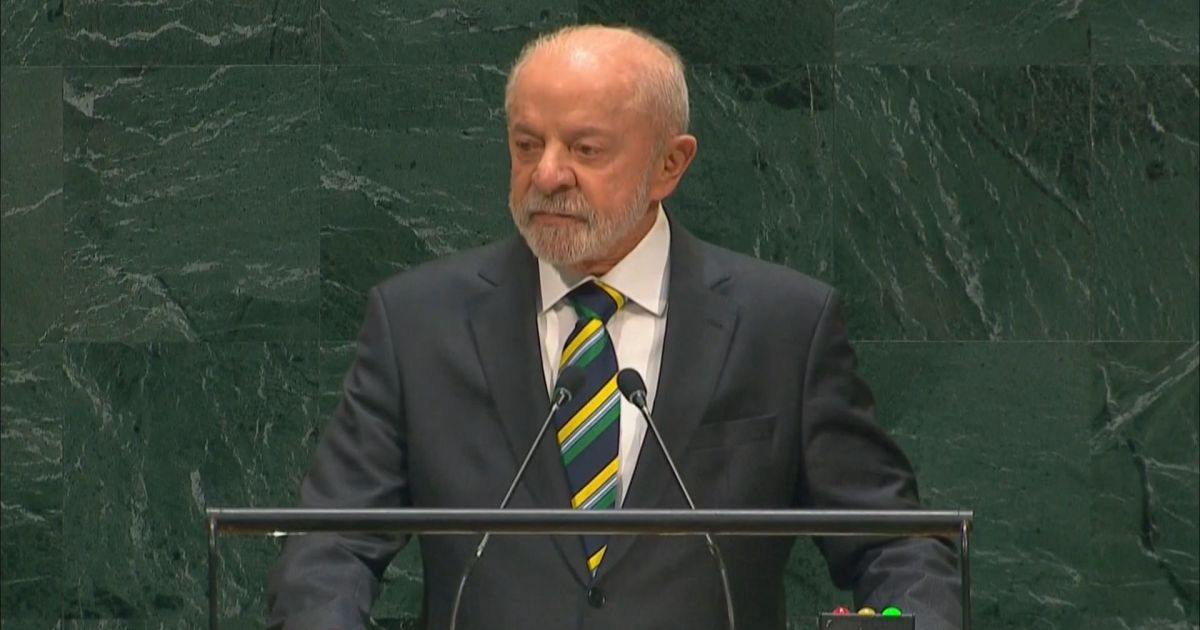
Brazilian President Luiz Inacio Lula da Silva has received a 55 percent disapproval rating among voters, according to a new opinion poll published on Thursday.
The survey by Instituto Palver found that 44 percent of Brazilian electors approve of the leader, while one percent said they did not know.
The research also measured public evaluation of the federal administration. When asked to evaluate the government, 54 percent of respondents rated the administration run by the Workers' Party founder as bad or terrible. In contrast, 42 percent described it as great or good.
Another four percent of voters characterized the government as regular, while zero percent failed to give an answer to the question.
Approval ratings and political background
Lula, a prominent figure in Brazilian politics and the leader of the leftist Workers' Party, known locally as the PT, is currently serving his third presidential term. He previously led South America's largest country for two consecutive terms between 2003 and 2010 before returning to the presidency following the 2022 general election.
Presidential approval numbers are closely watched in the capital city of Brasilia, where the executive branch must work alongside a divided National Congress to pass legislative priorities, economic reforms, and federal budgets.
Survey methodology and registration
The survey by Instituto Palver gathered responses from 5,000 voters across Brazil between September 20 and September 23. Researchers conducted all interviews through an online format.
The poll carries a margin of error of plus or minus three percentage points, alongside a 95 percent confidence level. Under that statistical margin, Lula's disapproval rating could range between 52 and 58 percent, while his approval rating sits between 41 and 47 percent.
Instituto Palver funded and commissioned the research internally without outside clients. The company registered the survey with Brazil's Superior Electoral Court, known as the Tribunal Superior Eleitoral, under protocol number BR-09587/2026.
The electoral court regulates political campaigning and voting systems across the country. Brazilian law requires research institutes to file their funding sources, sample sizes, and interview dates with the registry to maintain public transparency.