

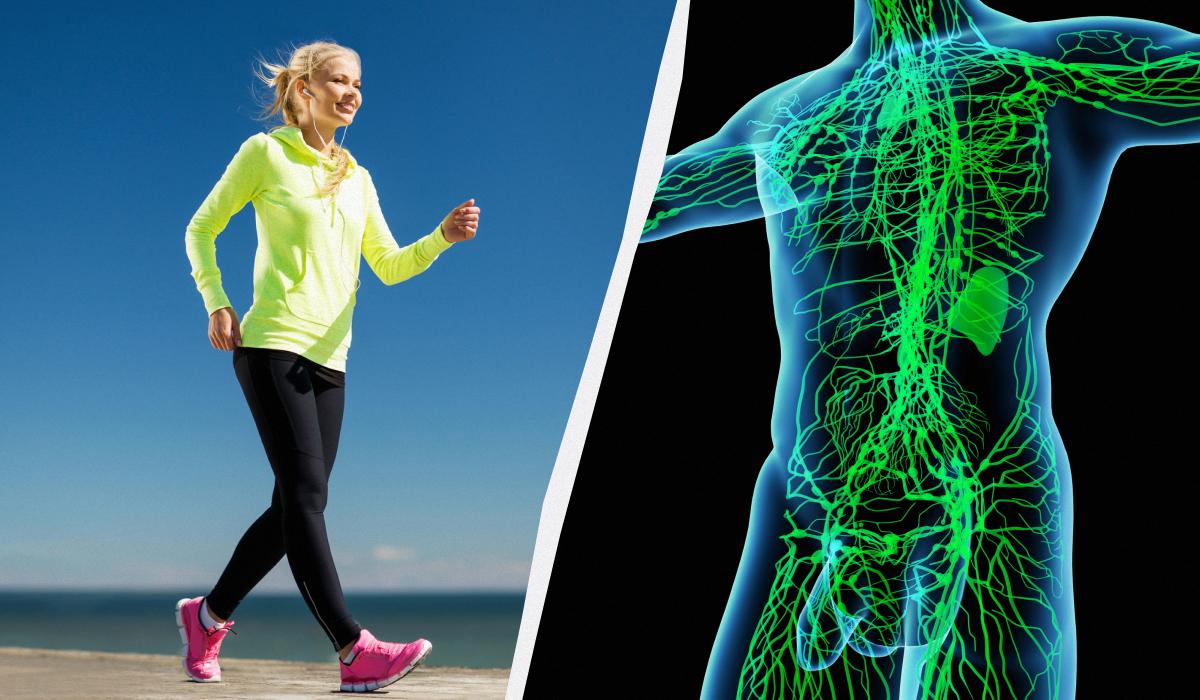
Health specialists at the online publication VeryWell Health have examined the viral social media trend known as lymphatic walking, clarifying how the technique affects body fluid circulation and physical wellness.
The popular trend encourages individuals to turn standard daily walks into a targeted wellness exercise by maintaining upright posture, taking slow deep abdominal breaths, and moving their arms more actively while walking.
Unlike the cardiovascular system, which relies on the heart to continuously pump blood throughout the body, the lymphatic system has no central organ to circulate fluid. Muscle contractions serve as the primary mechanism for pushing lymph through vessels, while deep breathing promotes fluid movement within the chest and abdominal cavities.
The lymphatic system forms a crucial part of the human immune system and plays a vital role in maintaining tissue fluid balance. It consists of a network of vessels, tissues, and lymph nodes that transport lymph, a clear fluid containing white blood cells, to filter out toxins and waste products from tissues.
Mechanisms of Lymphatic Flow
Research published in the journal Physiology indicates that physical exertion can increase lymphatic flow several times compared to a state of rest. Specialists noted that muscle engagement during active movement naturally drives fluid clearance across the limbs.
Medical experts emphasized that the core concepts behind lymphatic walking are not a novel scientific discovery. Individual elements of these exercises have long been incorporated into comprehensive treatment plans for patients with lymphedema and are recommended by the International Society of Lymphology.
Lymphedema is a chronic medical condition characterized by localized tissue swelling caused by an accumulation of lymph fluid when the lymphatic system is damaged or obstructed. The International Society of Lymphology is a global medical organization dedicated to advancing research and clinical care for lymphatic disorders.
Regular Walking versus Specialized Trends
Health experts stated that current scientific data remains insufficient to prove that lymphatic walking is superior to regular walking for everyone. However, consistent physical activity of any kind is well documented to support lymphatic health.
A study published in the journal Acta Oncologica revealed that even basic exercises in people with lymphedema were associated with improved quality of life and physical function. The study also recorded reductions in limb volume and associated pain among participants.
Specialists advised that the total volume of movement is far more critical for heart, muscle, and lymphatic health than following a specific internet trend. While active walking remains a helpful option for boosting lymph outflow, standard daily walks provide sufficient physical activity for general health maintenance.
For individuals diagnosed with lymphedema, experts recommended consulting a medical professional to establish an individualized activity program before relying on viral exercise routines.


