


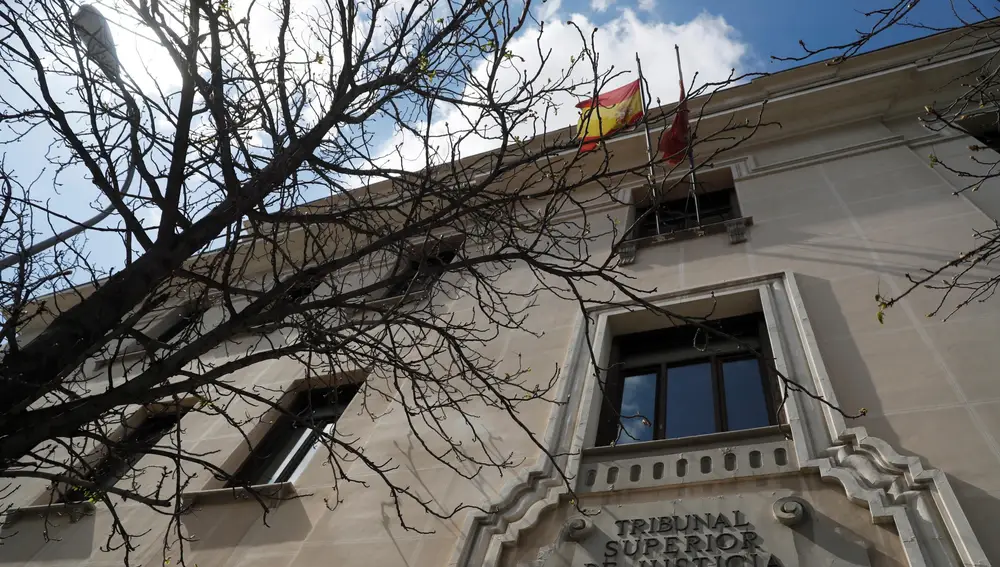
The High Court of Justice of Madrid has ruled that workers can collect an active retirement pension while working salaried and self-employed jobs simultaneously.
The judgment from the court's Social Chamber dismissed an appeal filed by Spain's National Social Security Institute and the General Treasury of Social Security. The administrative bodies had attempted to halt pension payments to a worker and demand the return of 924.48 euros in benefits.
Magistrates concluded that Spanish social security law permits combining a contributory retirement pension with any form of self-employed or salaried work, whether full-time or part-time, without requiring prior administrative notification.
Review triggered by university teaching job
The case centres on a Spanish worker who has received a 50 per cent active retirement pension since 2018. At the time the benefit was granted, the individual was already registered as a self-employed worker, known in Spain as an autónomo.
In September 2022, the pensioner took on additional work teaching university classes for the Universidad Europea de Madrid. This position was registered under Spain's General Social Security Scheme for salaried employees.
The addition of the second job prompted an administrative review by the National Social Security Institute, known as the INSS. The agency suspended the pension and ordered the individual to repay 924.48 euros covering the months of September and October 2022.
The worker challenged the decision in court. Social Court Number 2 of Madrid subsequently ruled in favour of the pensioner, ordering the INSS to resume pension payments starting from September 1, 2022.
Court interpretation of social security rules
The INSS and the General Treasury of Social Security appealed that initial decision, arguing for a stricter interpretation of Article 214 of the General Social Security Law. The dispute ultimately reached the High Court of Justice of Madrid, known as the TSJM.
In sentence 609/2025, issued on June 20, 2025, the TSJM Social Chamber rejected the appeal brought by the state agencies. The court affirmed that Article 214 does not prohibit accumulating work activities across different social security schemes.
Judges stated that the regulations do not require workers to submit prior notification for every change in employment status. The tribunal noted that state systems automatically log changes in worker affiliation, which allowed the INSS to detect the new university role shortly after it began.
The court rejected a restrictive reading of the rules, emphasizing that active retirement policies are specifically designed to encourage people to extend their working lives.
Rights of dual earners and future appeals
Under the ruling, the worker maintains the 50 per cent active pension from September 1, 2022, along with all corresponding pension increases and improvements. The TSJM formally revoked the administrative orders that suspended payments and demanded repayment, without awarding court costs or interest.
Magistrates clarified that active retirement differs from flexible retirement, which scales pension amounts based on hours worked. The court emphasized that its decision resolves a specific dispute under the rules in effect when the pension was approved, which did not limit the number of simultaneous jobs or require advance notice.
The INSS and the General Treasury of Social Security retain the option to prepare an appeal for the unification of doctrine before the Supreme Court. Until any further legal action is taken, the TSJM decision remains in effect, securing the worker's pension and cancelling the 924.48 euro demand.


