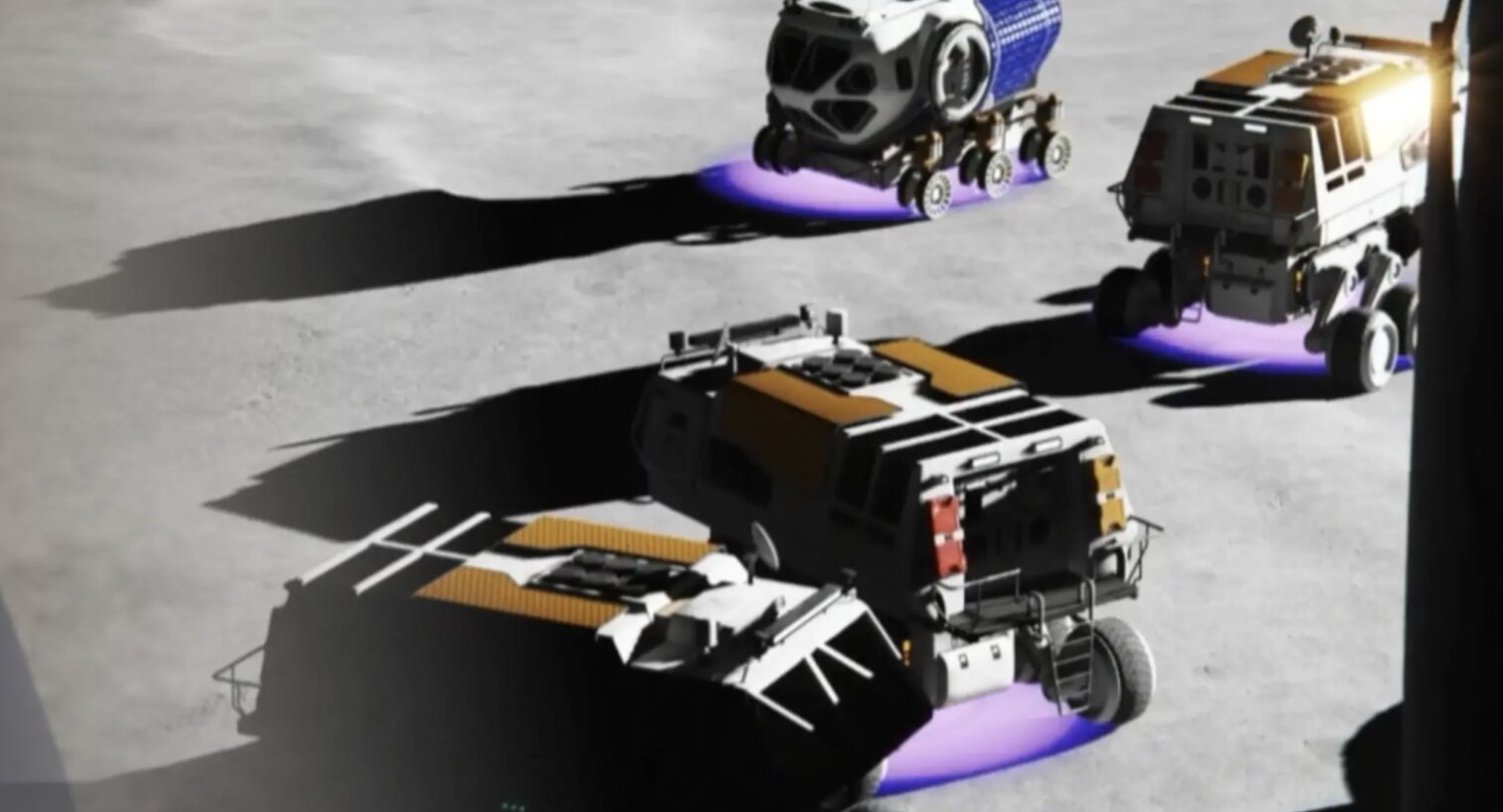
NASA has selected three companies, Redwire, Honeybee Robotics and Yank Technologies, to develop components for a lunar power and communications tower called the Mini-Communications and Solar Tower, or miniCAST.
The system is meant to supply power and connectivity to future infrastructure on the Moon, including scientific instruments, rovers and other surface equipment. Redwire will handle power generation, Honeybee Robotics will manage energy storage, and Yank Technologies will supply wireless power transfer equipment.
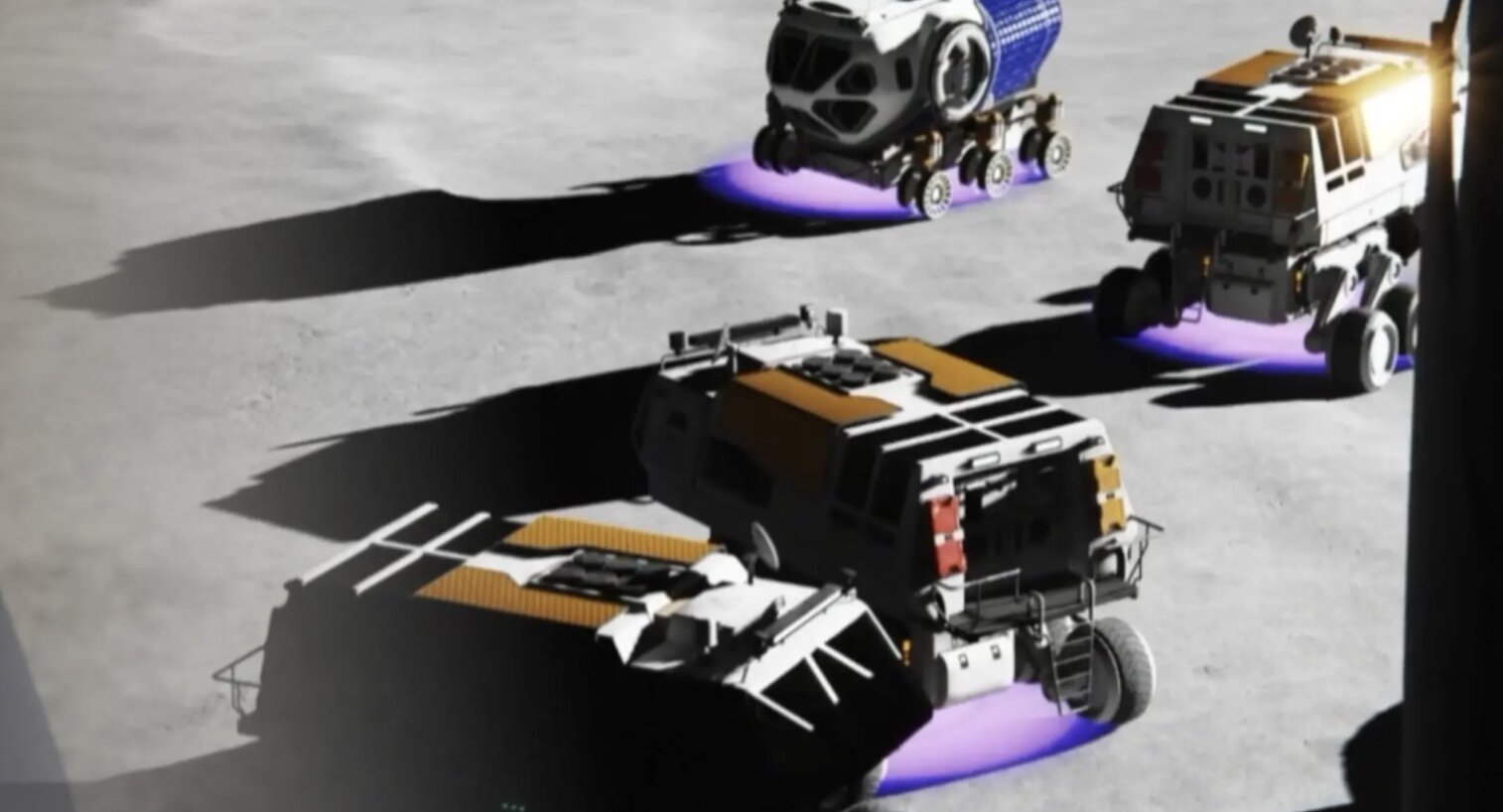
Engineers working on the project are focusing heavily on protecting the equipment from regolith, the layer of dust covering the lunar surface. Lunar dust is abrasive and electrostatically charged, which makes it stick to surfaces and build up on the metal contacts of electrical connectors.
Wireless charging to beat the dust
Josh Yank, chief executive of Yank Technologies, said ordinary connectors can become unusable after just a few connection and disconnection cycles because of dust accumulation. To get around the problem, his company is adapting contactless charging plates, originally developed for other uses, to transfer energy without any physical contact between connector parts. The company says its first ground prototypes transferred up to 1 kilowatt of power with an efficiency of more than 80 percent.
Yank Technologies is also developing dust-protected cable connectors capable of carrying up to 6 kilowatts. Their design uses insulated ends to cut the risk of dust contaminating the conductive contacts. The company already applies similar wireless charging technology in the automotive industry.
Solar panels that retract for launches and landings
Power generation will rely on Redwire's Roll-Out Solar Array, or ROSA, a flexible solar panel system designed to unfurl in space. On the Moon, the panels are planned to retract whenever a spacecraft lands or takes off nearby, shielding them from dust clouds thrown up by engine exhaust, before unfolding again once the area is clear. NASA awarded Redwire a $40 million contract to develop the integrated power generation system.
Testing in Alabama
The miniCAST components will be assembled and tested at NASA's Marshall Space Flight Center in Huntsville, Alabama, a NASA facility long associated with propulsion systems and spaceflight hardware, before the equipment is sent to the Moon.
For now, the project covers only individual infrastructure elements rather than a complete power grid for a full lunar base. NASA plans to announce a separate competition for fully integrated power systems in early 2027.
What happens next
NASA plans to announce a separate competition for fully integrated lunar power systems in early 2027.
Test yourself
Which company is responsible for wireless power transfer equipment in the miniCAST project?
Why will Redwire's solar panels be retracted during landings and takeoffs?
Where will the miniCAST components be assembled and tested?
Have your say
Do you think wireless power transfer is the right solution for lunar dust problems?
Where it happened
Huntsville, United States