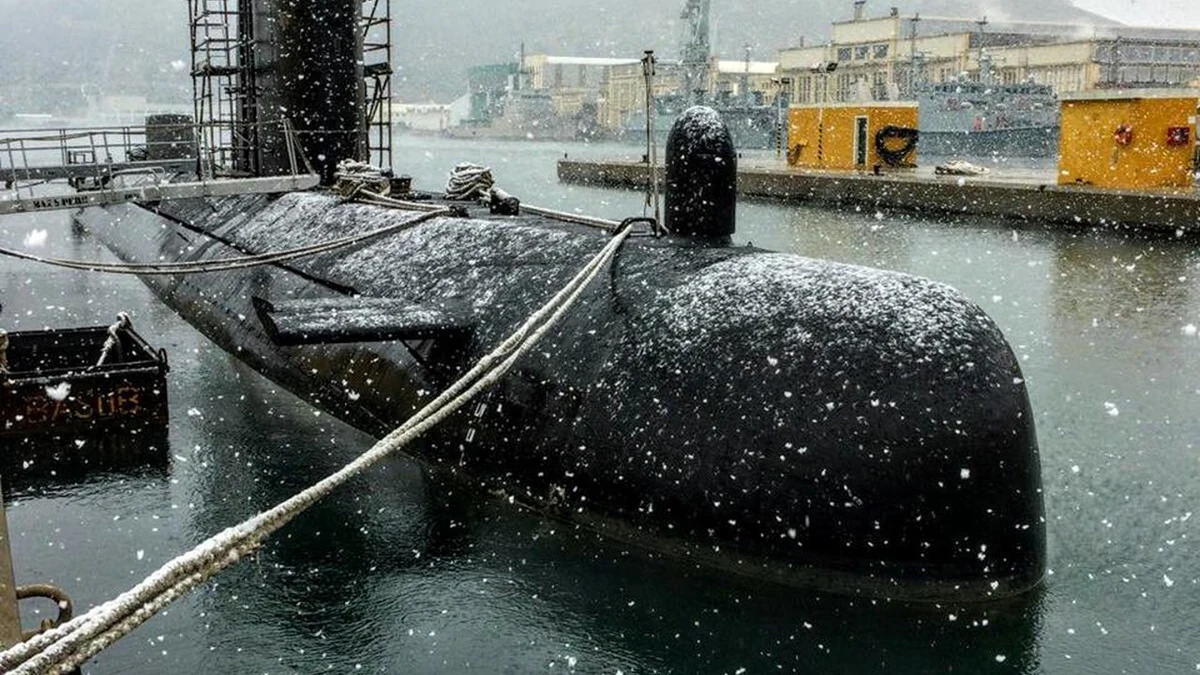
Carmelo Romero Ruiz, a submariner with the Spanish Navy's Submarine Flotilla, returned to the naval base in Cartagena after 12 days at sea only to find that his dog, Diana, failed to recognize him even from a meter away.
His wife was waiting for him on the dock with Diana, a tan-colored dog the couple kept at home. When the dog approached, Romero was taken aback. He later recalled that Diana did not recognize him even at that short distance.
Romero explained that the problem lay in his clothing. After days surrounded by grease, fuel and food on board, he had stopped noticing the smell himself, though it still clung to him once he was back on land.
Life aboard a Galerna-class submarine
Romero recounted the episode in 2015 in the Revista General de Marina, the Spanish Navy's general magazine, in a section on personal hygiene within a wider article on life aboard Galerna-class submarines.
Cartagena has watched families welcome home the crews of these vessels for decades. The Galerna, which gives its name to Spain's S-70 submarine class, made its first voyage in June 1982, according to Navy records. Crew members lived inside a hull around 67 meters long and shared a single corridor in the living quarters.
Day and night underwater
White fluorescent tubes lit the submarine during the day, giving way to dim red lighting at night. This gave crew members a signal about the time outside, although each person's schedule depended on when their watch fell. One crew member could finish a shift just as another was going to bed, and that mismatch was part of what made resting difficult during a submarine patrol.
Curtains on the bunks helped block out light and offered some privacy in quarters with beds stacked at several heights. Crews also benefited from changes made compared with the previous generation of submarines. Having a bunk of one's own marked a real improvement for those sailors. The space given to crews on today's Spanish submarines reflects decades of experience with these everyday problems.
Not an isolated case
The kind of extended time at sea Romero described is far from unusual. In 2023, Spain's Defense General Staff announced that the Galerna was joining Operation Sea Guardian for more than a month. On that deployment, the crew numbered 68 men and women, a figure specific to that mission. Fitting everyone aboard meant also loading enough food and organizing rest hours for the whole crew.
What a sailor brings home
Discussion of a new class of vessel such as the S-80 submarines tends to focus on cost, range or delivery schedules. Romero's recollection raises a different question: what a crew member actually brings home once a tour at sea ends. Documents on the modernization of the S-80 list the equipment due to be renewed. In the baggage of a sailor from the previous generation, there remained a less visible trace of the technology he had lived alongside for days.
Romero's account was published to mark the centenary of Spain's submarine force. Those stories left room for machinery, but also for a family scene that no navigation log would ever have recorded. After nearly two weeks under a schedule of watches, the submariner was once again standing in front of his wife. For Diana, at the other end of that last meter, the smell coming off the dock was still unfamiliar.
Test yourself
What happened when Carmelo Romero Ruiz returned to his dog Diana after his patrol?
What did Romero say caused his dog's reaction?
How many crew members were aboard the Galerna during its 2023 deployment to Operation Sea Guardian?
Have your say
Do you think you could handle weeks of disrupted sleep and cramped quarters aboard a submarine?
Where it happened
Cartagena, Spain